四、完成句子
1. 在我们达成最终协议前,你不准泄露秘密。
You ___ before we reach the final agreement.
2. 你确定这篇文章要分成多少段落了吗?
Are you ___ the article into?
3. 他们还没有决定先读谁的书评。
They haven't decided ___ first.
4. 你知道把报告交给谁吗?
Do you know ___?
1. 在我们达成最终协议前,你不准泄露秘密。
You ___ before we reach the final agreement.
2. 你确定这篇文章要分成多少段落了吗?
Are you ___ the article into?
3. 他们还没有决定先读谁的书评。
They haven't decided ___ first.
4. 你知道把报告交给谁吗?
Do you know ___?
答案:1. mustn't give away the secret 2. certain how many paragraphs to divide
3. whose book review to read 4. who/whom to hand in the report to
3. whose book review to read 4. who/whom to hand in the report to
解析:
【分析】
1. 第一题:先明确中文核心含义“不准泄露秘密”,“不准”表禁止,需用情态动词mustn't来体现;“泄露秘密”是固定短语give away the secret,结合句子的主谓结构,直接匹配对应的英文表达即可。
2. 第二题:“确定”对应英文be certain,句子要表达“确定文章分成多少段落”,此处需用“疑问词+不定式”结构作certain的宾语,“多少段落”是how many paragraphs,“分成”为divide...into,将这些内容整合就能得到正确答案。
3. 第三题:“决定”后需接宾语,要表达“先读谁的书评”,采用“疑问词+不定式”结构合适,“谁的书评”是whose book review,“读”是read,组合后即可作decided的宾语。
4. 第四题:“知道”后接宾语,“把报告交给谁”用“疑问词+不定式”结构,“交给”是hand in...to,疑问词用who或whom(作to的宾语,whom是宾格形式),由此得出正确表达。
【解析】
1. 根据句意,“不准”用mustn't表示禁止,“泄露秘密”为固定短语give away the secret,因此填mustn't give away the secret。
2. “确定”译为be certain,“多少段落”是how many paragraphs,“分成”用divide...into,此处用“疑问词+不定式”结构作be certain的宾语,故填certain how many paragraphs to divide。
3. “谁的书评”是whose book review,“读”为read,“疑问词+不定式”结构可作decided的宾语,所以填whose book review to read。
4. “把报告交给”是hand in the report to,疑问词who/whom作to的宾语,“疑问词+不定式”结构作know的宾语,因此填who/whom to hand in the report to。
【答案】
1. mustn't give away the secret
2. certain how many paragraphs to divide
3. whose book review to read
4. who/whom to hand in the report to
【知识点】
情态动词表禁止、疑问词+不定式结构、固定短语搭配
【点评】
本题聚焦情态动词用法、“疑问词+不定式”作宾语的语法结构以及常见固定短语的运用,要求学生精准理解中文句意,熟练掌握相关语法点和短语搭配,侧重英语句型的灵活转换能力。
【难度系数】
0.6
1. 第一题:先明确中文核心含义“不准泄露秘密”,“不准”表禁止,需用情态动词mustn't来体现;“泄露秘密”是固定短语give away the secret,结合句子的主谓结构,直接匹配对应的英文表达即可。
2. 第二题:“确定”对应英文be certain,句子要表达“确定文章分成多少段落”,此处需用“疑问词+不定式”结构作certain的宾语,“多少段落”是how many paragraphs,“分成”为divide...into,将这些内容整合就能得到正确答案。
3. 第三题:“决定”后需接宾语,要表达“先读谁的书评”,采用“疑问词+不定式”结构合适,“谁的书评”是whose book review,“读”是read,组合后即可作decided的宾语。
4. 第四题:“知道”后接宾语,“把报告交给谁”用“疑问词+不定式”结构,“交给”是hand in...to,疑问词用who或whom(作to的宾语,whom是宾格形式),由此得出正确表达。
【解析】
1. 根据句意,“不准”用mustn't表示禁止,“泄露秘密”为固定短语give away the secret,因此填mustn't give away the secret。
2. “确定”译为be certain,“多少段落”是how many paragraphs,“分成”用divide...into,此处用“疑问词+不定式”结构作be certain的宾语,故填certain how many paragraphs to divide。
3. “谁的书评”是whose book review,“读”为read,“疑问词+不定式”结构可作decided的宾语,所以填whose book review to read。
4. “把报告交给”是hand in the report to,疑问词who/whom作to的宾语,“疑问词+不定式”结构作know的宾语,因此填who/whom to hand in the report to。
【答案】
1. mustn't give away the secret
2. certain how many paragraphs to divide
3. whose book review to read
4. who/whom to hand in the report to
【知识点】
情态动词表禁止、疑问词+不定式结构、固定短语搭配
【点评】
本题聚焦情态动词用法、“疑问词+不定式”作宾语的语法结构以及常见固定短语的运用,要求学生精准理解中文句意,熟练掌握相关语法点和短语搭配,侧重英语句型的灵活转换能力。
【难度系数】
0.6
五、阅读短文,回答问题
In his lovely piece of writing Why Write, the writer Paul Auster shares a story about growing up as an eight-year-old in New York City. He was crazy about baseball, especially the New York Giants. The only thing he remembers about attending his first baseball game is that he saw his hero Willie Mays after the game. Young Auster gathered his courage(勇气)and went close to his hero. "Mr Mays," he said, "could I please have your autograph(签名)?"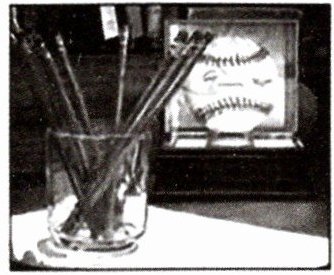
"Sure, kid, sure," Mays replied kindly. "Have you got a pencil?"
Auster didn't have a pencil with him, neither(也不)did his father or his mother or anyone else in his group.
Mays waited patiently, but when it became clear that no one there had anything to write with, he said, "Sorry, kid. We've got no pencil. I can't give you my autograph."
From that day on, Auster made it a habit to never leave the house without a pencil in his pocket. "It's not that I had any special plans for that pencil," Auster writes, "but I didn't want to be unprepared. I had been caught empty-handed once, and I wasn't about to let it happen again. The years have taught me this: If there's a pencil in your pocket, there's a good chance that one day you'll feel like starting to use it. That's how I became a writer."
What is your pencil? What is so important that without it you feel unprepared? I know some cartoonists always carry pens and paper and some photographers always have a camera in their pockets. They are always prepared.
1. To get Willie Mays' autograph, what did Auster need ______ ?
2. How old was Auster when the story happened ______ ?
3. What habit did Auster form after that day ______ ?
4. What is Auster now ______ ?
5. What do you think of Auster's habit?
In his lovely piece of writing Why Write, the writer Paul Auster shares a story about growing up as an eight-year-old in New York City. He was crazy about baseball, especially the New York Giants. The only thing he remembers about attending his first baseball game is that he saw his hero Willie Mays after the game. Young Auster gathered his courage(勇气)and went close to his hero. "Mr Mays," he said, "could I please have your autograph(签名)?"
"Sure, kid, sure," Mays replied kindly. "Have you got a pencil?"
Auster didn't have a pencil with him, neither(也不)did his father or his mother or anyone else in his group.
Mays waited patiently, but when it became clear that no one there had anything to write with, he said, "Sorry, kid. We've got no pencil. I can't give you my autograph."
From that day on, Auster made it a habit to never leave the house without a pencil in his pocket. "It's not that I had any special plans for that pencil," Auster writes, "but I didn't want to be unprepared. I had been caught empty-handed once, and I wasn't about to let it happen again. The years have taught me this: If there's a pencil in your pocket, there's a good chance that one day you'll feel like starting to use it. That's how I became a writer."
What is your pencil? What is so important that without it you feel unprepared? I know some cartoonists always carry pens and paper and some photographers always have a camera in their pockets. They are always prepared.
1. To get Willie Mays' autograph, what did Auster need ______ ?
2. How old was Auster when the story happened ______ ?
3. What habit did Auster form after that day ______ ?
4. What is Auster now ______ ?
5. What do you think of Auster's habit?
答案:1. A pencil. 2. Eight years old.
3. Always taking a pencil with him when going outside./Never leaving the house without a
pencil in his pocket.
4. A writer. 5. I think it's helpful/it's a good idea.
3. Always taking a pencil with him when going outside./Never leaving the house without a
pencil in his pocket.
4. A writer. 5. I think it's helpful/it's a good idea.
解析:
【分析】
1. 第1题:先定位文中Willie Mays与Auster的对话内容,Mays明确询问是否有铅笔,且说明没有铅笔无法签名,由此可推断出获取签名的必备物品。
2. 第2题:聚焦短文开头,文中直接提及故事发生时Auster的年龄,提取该信息即可。
3. 第3题:找到文中"From that day on"引导的句子,该句清晰阐述了Auster养成的习惯,整理相关内容作答。
4. 第4题:根据短文结尾处Auster成为作家的表述,结合开头对他的身份介绍,确定其现在的职业。
5. 第5题:结合文章中该习惯对Auster的积极影响,从准备充分、抓住机会等积极角度评价这个习惯即可。
【解析】
1. 阅读短文,找到Willie Mays的对话"Have you got a pencil?"以及"We've got no pencil. I can't give you my autograph.",可知要得到签名需要一支铅笔。
2. 根据短文第一段"growing up as an eight-year-old in New York City",可知故事发生时Auster八岁。
3. 从第五段"From that day on, Auster made it a habit to never leave the house without a pencil in his pocket."提取出他养成的习惯。
4. 由短文第五段"That's how I became a writer."可知Auster现在是一名作家。
5. 结合文章内容,该习惯让Auster避免再次陷入无准备的境地,还助力他成为作家,因此可从积极角度评价,比如认为它能让人时刻做好准备,是有帮助的好习惯。
【答案】
1. A pencil.
2. Eight years old.
3. Always taking a pencil with him when going outside./Never leaving the house without a pencil in his pocket.
4. A writer.
5. I think it's helpful/it's a good idea.
【知识点】
细节信息提取,阅读理解,观点表达
【点评】
本题围绕作家Paul Auster的成长经历展开,主要考查对文章细节信息的定位与提取能力,同时最后一题考查结合文章主旨表达观点的能力。解题时需精准定位文中对应内容,开放性问题需结合文章给出合理积极的评价。
【难度系数】
0.7
1. 第1题:先定位文中Willie Mays与Auster的对话内容,Mays明确询问是否有铅笔,且说明没有铅笔无法签名,由此可推断出获取签名的必备物品。
2. 第2题:聚焦短文开头,文中直接提及故事发生时Auster的年龄,提取该信息即可。
3. 第3题:找到文中"From that day on"引导的句子,该句清晰阐述了Auster养成的习惯,整理相关内容作答。
4. 第4题:根据短文结尾处Auster成为作家的表述,结合开头对他的身份介绍,确定其现在的职业。
5. 第5题:结合文章中该习惯对Auster的积极影响,从准备充分、抓住机会等积极角度评价这个习惯即可。
【解析】
1. 阅读短文,找到Willie Mays的对话"Have you got a pencil?"以及"We've got no pencil. I can't give you my autograph.",可知要得到签名需要一支铅笔。
2. 根据短文第一段"growing up as an eight-year-old in New York City",可知故事发生时Auster八岁。
3. 从第五段"From that day on, Auster made it a habit to never leave the house without a pencil in his pocket."提取出他养成的习惯。
4. 由短文第五段"That's how I became a writer."可知Auster现在是一名作家。
5. 结合文章内容,该习惯让Auster避免再次陷入无准备的境地,还助力他成为作家,因此可从积极角度评价,比如认为它能让人时刻做好准备,是有帮助的好习惯。
【答案】
1. A pencil.
2. Eight years old.
3. Always taking a pencil with him when going outside./Never leaving the house without a pencil in his pocket.
4. A writer.
5. I think it's helpful/it's a good idea.
【知识点】
细节信息提取,阅读理解,观点表达
【点评】
本题围绕作家Paul Auster的成长经历展开,主要考查对文章细节信息的定位与提取能力,同时最后一题考查结合文章主旨表达观点的能力。解题时需精准定位文中对应内容,开放性问题需结合文章给出合理积极的评价。
【难度系数】
0.7