四、阅读理解。(30 分)
A(2026·泰州市靖江期末改编)
As the 2026 Year of the Horse draws near, four cute Spring Festival Gala mascots(吉祥物) catch people's attention. They are Qiqi, Jiji, Chichi and Chengcheng. Their names together mean "galloping forward(骐骥驰骋)", which perfectly matches the gala's theme, "Unstoppable Momentum(势不可挡)".
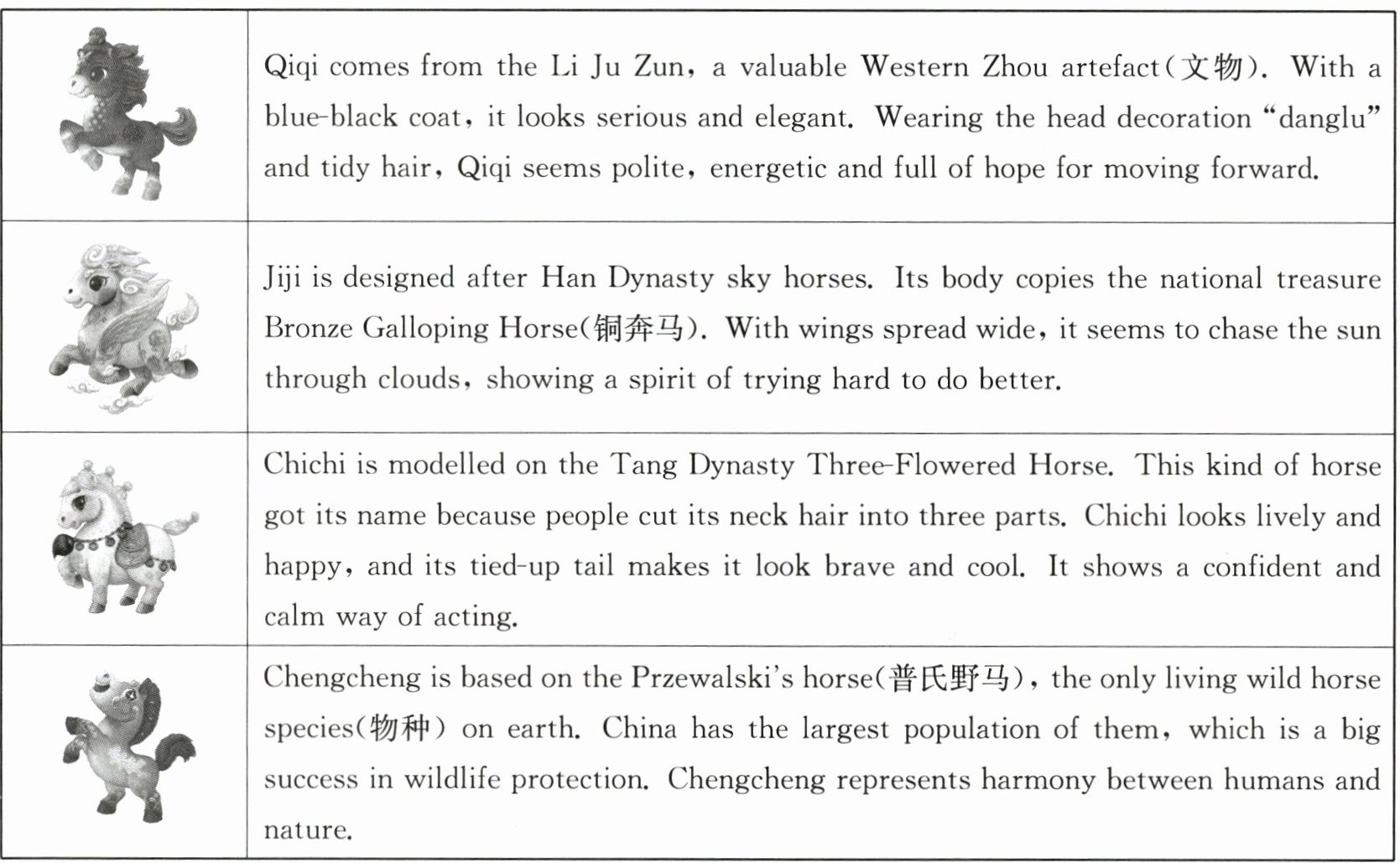
In Chinese culture, horses stand for strength, bravery and good luck. These four mascots not only carry forward traditional Chinese culture, but also show the beauty of nature and ecological(生态的) progress. They will surely bring joy and good luck to everyone during the Spring Festival.
(
A. It had a blue-black coat.
B. Its neck hair was cut into three parts.
C. It was a national treasure of the Han Dynasty.
D. It was the only wild horse species left on earth.
(
A. They all carry forward traditional culture.
B. They all have wings and head decorations.
C. They all represent confidence and bravery.
D. They all come from ancient Chinese artefacts.
(
A. talk about the cultural meaning of horses in China
B. describe the theme of the 2026 Spring Festival Gala
C. introduce the four mascots of the 2026 Spring Festival Gala
D. explain the success of Przewalski's horse protection in China
A(2026·泰州市靖江期末改编)
As the 2026 Year of the Horse draws near, four cute Spring Festival Gala mascots(吉祥物) catch people's attention. They are Qiqi, Jiji, Chichi and Chengcheng. Their names together mean "galloping forward(骐骥驰骋)", which perfectly matches the gala's theme, "Unstoppable Momentum(势不可挡)".
In Chinese culture, horses stand for strength, bravery and good luck. These four mascots not only carry forward traditional Chinese culture, but also show the beauty of nature and ecological(生态的) progress. They will surely bring joy and good luck to everyone during the Spring Festival.
(
B
)1. How did the Three-Flowered Horse get its name?A. It had a blue-black coat.
B. Its neck hair was cut into three parts.
C. It was a national treasure of the Han Dynasty.
D. It was the only wild horse species left on earth.
(
A
)2. What do the four mascots have in common?A. They all carry forward traditional culture.
B. They all have wings and head decorations.
C. They all represent confidence and bravery.
D. They all come from ancient Chinese artefacts.
(
C
)3. 新考法 写作意图 The purpose of the passage is to .A. talk about the cultural meaning of horses in China
B. describe the theme of the 2026 Spring Festival Gala
C. introduce the four mascots of the 2026 Spring Festival Gala
D. explain the success of Przewalski's horse protection in China
答案:1. B 【解析】根据方框第三栏中“Chichi is modelled on the Tang Dynasty Three-Flowered Horse. This kind of horse got its name because people cut its neck hair into three parts.”可知答案。
2. A 【解析】根据最后一段中“These four mascots not only carry forward traditional Chinese culture, but also show the beauty of nature and ecological progress.”可知,这四个吉祥物不仅弘扬了中国传统文化,还展示了自然之美和生态进步。
3. C 【解析】通读全文可知,本文主要介绍了2026年春晚的四个吉祥物,包括它们的设计灵感、主要特征和所代表的文化内涵等。
2. A 【解析】根据最后一段中“These four mascots not only carry forward traditional Chinese culture, but also show the beauty of nature and ecological progress.”可知,这四个吉祥物不仅弘扬了中国传统文化,还展示了自然之美和生态进步。
3. C 【解析】通读全文可知,本文主要介绍了2026年春晚的四个吉祥物,包括它们的设计灵感、主要特征和所代表的文化内涵等。
解析:
【分析】
这是一篇介绍2026马年春晚吉祥物的说明类阅读理解,解题时可以按照先划题干关键词、回文定位找对应信息、逐一比对选项排除错项的思路推进:
1. 第一题提取关键词Three-Flowered Horse和get its name,直接定位到介绍Chichi的第三栏内容,就能直接找到名称由来的描述,快速筛选正确答案。
2. 第二题要找四个吉祥物的共同特点,优先查看文末的总结性语句,也可以逐个验证选项:比如B选项只有Jiji带有翅膀,其余吉祥物没有,直接排除;C选项只有Chichi体现自信勇敢,Chengcheng代表人与自然和谐,不符合描述;D选项Chengcheng的原型是现存的普氏野马,不属于古代文物,排除错项后就能得到正确结果。
3. 第三题判断写作意图,通读全文后可以发现,开头引出四个春晚吉祥物,中间分别介绍每个吉祥物的设计来源、形象特点,最后介绍它们的文化内涵,很容易归纳出全文的核心写作目的。
【解析】
1. 细节理解题:根据原文第三栏介绍Chichi的内容“This kind of horse got its name because people cut its neck hair into three parts.”,可知三花马的名字由来是人们把它颈部的毛发剪成三部分,对应选项B。A是Qiqi的外形特征,C是Jiji的原型相关内容,D是普氏野马的特点,均不符合题意。
2. 细节理解题:根据全文最后一段“These four mascots not only carry forward traditional Chinese culture, but also show the beauty of nature and ecological progress.”,可知四个吉祥物的共同特点是都弘扬了中国传统文化。B选项并非所有吉祥物都有翅膀和头饰,C选项并非所有吉祥物都代表自信勇敢,D选项Chengcheng的原型是现存的普氏野马,不属于古代文物,三个选项均错误,选A。
3. 主旨大意题:通读全文,文章开篇引出2026年春晚的四个吉祥物,中间分别介绍每个吉祥物的设计灵感来源、形象特征,最后介绍它们承载的文化意义,全文核心是介绍2026年春晚的四个吉祥物,对应选项C。A、B、D都只是文章的局部内容,不能概括全文写作目的。
【答案】
1. B 2. A 3. C
【知识点】
细节信息定位,主旨大意归纳,说明文阅读
【点评】
本题属于热点情境类阅读理解,素材结合了春晚吉祥物的热点内容,融入了中国传统马文化、文物相关的常识,题目设置以基础细节题为主,干扰项辨识度高,既考察学生快速从文本中提取关键信息的能力,也能引导学生关注传统文化和社会热点,整体难度偏低。
【难度系数】
0.8
这是一篇介绍2026马年春晚吉祥物的说明类阅读理解,解题时可以按照先划题干关键词、回文定位找对应信息、逐一比对选项排除错项的思路推进:
1. 第一题提取关键词Three-Flowered Horse和get its name,直接定位到介绍Chichi的第三栏内容,就能直接找到名称由来的描述,快速筛选正确答案。
2. 第二题要找四个吉祥物的共同特点,优先查看文末的总结性语句,也可以逐个验证选项:比如B选项只有Jiji带有翅膀,其余吉祥物没有,直接排除;C选项只有Chichi体现自信勇敢,Chengcheng代表人与自然和谐,不符合描述;D选项Chengcheng的原型是现存的普氏野马,不属于古代文物,排除错项后就能得到正确结果。
3. 第三题判断写作意图,通读全文后可以发现,开头引出四个春晚吉祥物,中间分别介绍每个吉祥物的设计来源、形象特点,最后介绍它们的文化内涵,很容易归纳出全文的核心写作目的。
【解析】
1. 细节理解题:根据原文第三栏介绍Chichi的内容“This kind of horse got its name because people cut its neck hair into three parts.”,可知三花马的名字由来是人们把它颈部的毛发剪成三部分,对应选项B。A是Qiqi的外形特征,C是Jiji的原型相关内容,D是普氏野马的特点,均不符合题意。
2. 细节理解题:根据全文最后一段“These four mascots not only carry forward traditional Chinese culture, but also show the beauty of nature and ecological progress.”,可知四个吉祥物的共同特点是都弘扬了中国传统文化。B选项并非所有吉祥物都有翅膀和头饰,C选项并非所有吉祥物都代表自信勇敢,D选项Chengcheng的原型是现存的普氏野马,不属于古代文物,三个选项均错误,选A。
3. 主旨大意题:通读全文,文章开篇引出2026年春晚的四个吉祥物,中间分别介绍每个吉祥物的设计灵感来源、形象特征,最后介绍它们承载的文化意义,全文核心是介绍2026年春晚的四个吉祥物,对应选项C。A、B、D都只是文章的局部内容,不能概括全文写作目的。
【答案】
1. B 2. A 3. C
【知识点】
细节信息定位,主旨大意归纳,说明文阅读
【点评】
本题属于热点情境类阅读理解,素材结合了春晚吉祥物的热点内容,融入了中国传统马文化、文物相关的常识,题目设置以基础细节题为主,干扰项辨识度高,既考察学生快速从文本中提取关键信息的能力,也能引导学生关注传统文化和社会热点,整体难度偏低。
【难度系数】
0.8