六、阅读与回答问题(本题共5小题;每小题2分,满分10分)
请认真阅读下面短文,并根据短文内容回答问题。
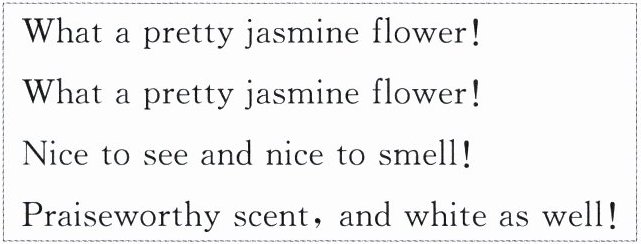
Have you ever heard of this famous song, "Mo Li Hua" ("Jasmine Flower")? "Mo Li Hua" is a Chinese folk song from Jiangsu Province. The song is so well known that the jasmine flower became the Provincial Flower of Jiangsu in 2007. It was one of the first Chinese folk songs to be liked by people outside China. The song describes a custom of giving jasmine flowers, popular in the south of the Yangtze River Delta region.
As time goes by, "Mo Li Hua" is popular both in China and abroad. The song made its first appearance in the 18th century. It was created during the Qianlong Period of the Qing Dynasty. In 1896, the song was played as a representative Chinese folk melody by the Qing Chinese officials in Europe. In 1982, the song found a place on a UNESCO list of recommended songs and was put into the musical textbooks in Asia. When Hong Kong and Macau returned to China in 1997 and 1999, this music was played in the handover ceremonies. An adaptation(改编) by Tan Dun and Wang Hesheng was played during the medal ceremonies at the 2008 Beijing Olympic Games. In 2018, with "Second Farewell to Cambridge" by the famous Chinese poet Xu Zhimo, "Mo Li Hua" was sung in Chinese by the King's College Choir(合唱团) in Cambridge University. On the evening of February 15, 2022, Wang Yaping played part of the song "Mo Li Hua" on Shenzhou-13 to celebrate the Lantern Festival.
The song expresses sincere and simple feelings of Chinese people. People describe it as "heart-touching". It is such a beautiful song that it almost stands for China all over the world. This melody is a cultural gift from Chinese people to the world. With music, friendship is our message to the world, having no boundaries(界限).
66. Where is the folk song "Mo Li Hua" from?
67. When was "Mo Li Hua" first created?
68. How did "Mo Li Hua" show its charm at the 2008 Beijing Olympics?
69. What does the song "Mo Li Hua" express?
70. Why do you think "Mo Li Hua" is popular all over the world? (请自拟一句话作答)
请认真阅读下面短文,并根据短文内容回答问题。
Have you ever heard of this famous song, "Mo Li Hua" ("Jasmine Flower")? "Mo Li Hua" is a Chinese folk song from Jiangsu Province. The song is so well known that the jasmine flower became the Provincial Flower of Jiangsu in 2007. It was one of the first Chinese folk songs to be liked by people outside China. The song describes a custom of giving jasmine flowers, popular in the south of the Yangtze River Delta region.
As time goes by, "Mo Li Hua" is popular both in China and abroad. The song made its first appearance in the 18th century. It was created during the Qianlong Period of the Qing Dynasty. In 1896, the song was played as a representative Chinese folk melody by the Qing Chinese officials in Europe. In 1982, the song found a place on a UNESCO list of recommended songs and was put into the musical textbooks in Asia. When Hong Kong and Macau returned to China in 1997 and 1999, this music was played in the handover ceremonies. An adaptation(改编) by Tan Dun and Wang Hesheng was played during the medal ceremonies at the 2008 Beijing Olympic Games. In 2018, with "Second Farewell to Cambridge" by the famous Chinese poet Xu Zhimo, "Mo Li Hua" was sung in Chinese by the King's College Choir(合唱团) in Cambridge University. On the evening of February 15, 2022, Wang Yaping played part of the song "Mo Li Hua" on Shenzhou-13 to celebrate the Lantern Festival.
The song expresses sincere and simple feelings of Chinese people. People describe it as "heart-touching". It is such a beautiful song that it almost stands for China all over the world. This melody is a cultural gift from Chinese people to the world. With music, friendship is our message to the world, having no boundaries(界限).
66. Where is the folk song "Mo Li Hua" from?
It is from Jiangsu Province.
67. When was "Mo Li Hua" first created?
It was created during the Qianlong Period of the Qing Dynasty.
68. How did "Mo Li Hua" show its charm at the 2008 Beijing Olympics?
Its adaptation was played during the medal ceremonies.
69. What does the song "Mo Li Hua" express?
It expresses sincere and simple feelings of Chinese people.
70. Why do you think "Mo Li Hua" is popular all over the world? (请自拟一句话作答)
Because it is beautiful in melody and carries traditional Chinese culture.(言之有理即可)
答案:66. It is from Jiangsu Province.
67. It was created during the Qianlong Period of the Qing Dynasty.
68. Its adaptation was played during the medal ceremonies.
69. It expresses sincere and simple feelings of Chinese people.
70. Because it is beautiful in melody and carries traditional Chinese culture.(言之有理即可)
67. It was created during the Qianlong Period of the Qing Dynasty.
68. Its adaptation was played during the medal ceremonies.
69. It expresses sincere and simple feelings of Chinese people.
70. Because it is beautiful in melody and carries traditional Chinese culture.(言之有理即可)
解析:
【分析】
本题为英语阅读理解题,需根据短文内容逐一解答问题:1. 第66题是细节查找题,定位短文第一段关于《茉莉花》的出处;2. 第67题是细节查找题,定位短文第二段关于《茉莉花》的创作时间;3. 第68题是细节查找题,定位短文第二段关于2008北京奥运会时《茉莉花》的使用情况;4. 第69题是细节查找题,定位短文第三段关于歌曲表达的情感;5. 第70题是开放表达题,结合短文提到的歌曲特点自拟合理答案。
【解析】
66. 短文第一段明确说明《茉莉花》来自江苏省,故答案为对应内容;
67. 短文第二段提到《茉莉花》创作于清朝乾隆时期,据此作答;
68. 短文第二段指出《茉莉花》的改编版在2008北京奥运会颁奖仪式上演奏,据此作答;
69. 短文第三段第一句直接说明歌曲表达的情感,据此作答;
70. 结合短文提到的歌曲旋律优美、承载中国传统文化等特点,自拟合理答案即可。
【答案】
66. It is from Jiangsu Province.
67. It was created during the Qianlong Period of the Qing Dynasty.
68. Its adaptation was played during the medal ceremonies.
69. It expresses sincere and simple feelings of Chinese people.
70. Because it is beautiful in melody and carries traditional Chinese culture.
【知识点】
英语阅读理解、细节理解、开放表达
【点评】
本题考查英语阅读理解的细节查找与开放表达能力,大部分题目为原文定位题,难度较低,最后一题需结合文章内容合理作答,整体符合初中英语阅读题的考查要求。
【难度系数】
0.6
本题为英语阅读理解题,需根据短文内容逐一解答问题:1. 第66题是细节查找题,定位短文第一段关于《茉莉花》的出处;2. 第67题是细节查找题,定位短文第二段关于《茉莉花》的创作时间;3. 第68题是细节查找题,定位短文第二段关于2008北京奥运会时《茉莉花》的使用情况;4. 第69题是细节查找题,定位短文第三段关于歌曲表达的情感;5. 第70题是开放表达题,结合短文提到的歌曲特点自拟合理答案。
【解析】
66. 短文第一段明确说明《茉莉花》来自江苏省,故答案为对应内容;
67. 短文第二段提到《茉莉花》创作于清朝乾隆时期,据此作答;
68. 短文第二段指出《茉莉花》的改编版在2008北京奥运会颁奖仪式上演奏,据此作答;
69. 短文第三段第一句直接说明歌曲表达的情感,据此作答;
70. 结合短文提到的歌曲旋律优美、承载中国传统文化等特点,自拟合理答案即可。
【答案】
66. It is from Jiangsu Province.
67. It was created during the Qianlong Period of the Qing Dynasty.
68. Its adaptation was played during the medal ceremonies.
69. It expresses sincere and simple feelings of Chinese people.
70. Because it is beautiful in melody and carries traditional Chinese culture.
【知识点】
英语阅读理解、细节理解、开放表达
【点评】
本题考查英语阅读理解的细节查找与开放表达能力,大部分题目为原文定位题,难度较低,最后一题需结合文章内容合理作答,整体符合初中英语阅读题的考查要求。
【难度系数】
0.6