B 核心素养 中华优秀传统文化
[2025如皋市石庄初级中学模拟]Have you ever thought that an actor can change his face on stage in the blink of an eye? It's not just an amazing performance skill, but also the secret weapon(武器) of Sichuan Opera.
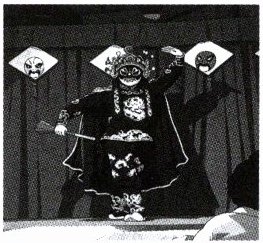
The "face-changing" skill in Sichuan Opera is very special. It actually comes from the wisdom of ancient people. Long ago, people painted different patterns(图案) on their faces to scare off(吓跑) wild animals and keep themselves safe. Over time, this method has turned into a performance skill in drama.
You can see the actor's face suddenly change to red, white, or blue. These changes are not done randomly(随机地). They have deep meanings, and they allow the audience(观众) to feel the character's happiness, anger, sadness, or nervousness. So, how does the actor do the face-changing? There are three methods of face-changing in Sichuan Opera: smearing(涂抹), blowing, and pulling the face. Each method is very interesting.
"Smearing the face" is the easiest method. The actor smears coloured paints on his face. With just a quick smear, the face colour changes quickly, showing a different expression.
Next is "blowing the face". The actor uses a small box filled with gold powder(粉末), silver powder, and other fine powders. Standing by the box, he makes a dance move and blows the powder onto his face, and his face quickly changes to a new one.
Lastly, "pulling the face" is the most complicated(复杂的) one. The actor paints different face patterns on silk cloth, ties them with thread, and hides them in his clothes. As the story develops, he pulls the face off one by one and puts on a new one.
Face-changing is not only the symbol of Sichuan Opera, but also an important part of Sichuan's culture. So, next time you watch a Sichuan Opera performance, try to pay attention to the actor's face, and see how he cleverly changes his face to show different feelings.
(
A. To look beautiful.
B. To scare animals.
C. To perform dances.
D. To make friends.
(
A. Pulling the face.
B. Smearing the face.
C. Blowing the face.
D. Hiding the face.
(
A. The actor changes his face to red, white, or blue randomly.
B. The actor changes his face to show his colourful clothes.
C. The actor sells silk masks by using the face-changing skill.
D. The actor changes his face to show the character's feelings.
(
A. Different Kinds of Chinese Operas
B. The History of Traditional Chinese Culture
C. How Actors Show Different Emotions
D. The Special Skill of Sichuan Opera: Face-changing
[2025如皋市石庄初级中学模拟]Have you ever thought that an actor can change his face on stage in the blink of an eye? It's not just an amazing performance skill, but also the secret weapon(武器) of Sichuan Opera.
The "face-changing" skill in Sichuan Opera is very special. It actually comes from the wisdom of ancient people. Long ago, people painted different patterns(图案) on their faces to scare off(吓跑) wild animals and keep themselves safe. Over time, this method has turned into a performance skill in drama.
You can see the actor's face suddenly change to red, white, or blue. These changes are not done randomly(随机地). They have deep meanings, and they allow the audience(观众) to feel the character's happiness, anger, sadness, or nervousness. So, how does the actor do the face-changing? There are three methods of face-changing in Sichuan Opera: smearing(涂抹), blowing, and pulling the face. Each method is very interesting.
"Smearing the face" is the easiest method. The actor smears coloured paints on his face. With just a quick smear, the face colour changes quickly, showing a different expression.
Next is "blowing the face". The actor uses a small box filled with gold powder(粉末), silver powder, and other fine powders. Standing by the box, he makes a dance move and blows the powder onto his face, and his face quickly changes to a new one.
Lastly, "pulling the face" is the most complicated(复杂的) one. The actor paints different face patterns on silk cloth, ties them with thread, and hides them in his clothes. As the story develops, he pulls the face off one by one and puts on a new one.
Face-changing is not only the symbol of Sichuan Opera, but also an important part of Sichuan's culture. So, next time you watch a Sichuan Opera performance, try to pay attention to the actor's face, and see how he cleverly changes his face to show different feelings.
(
B
)29. Why did ancient people paint their faces long ago?A. To look beautiful.
B. To scare animals.
C. To perform dances.
D. To make friends.
(
B
)30. In which method does the actor use coloured paints to change his face colour?A. Pulling the face.
B. Smearing the face.
C. Blowing the face.
D. Hiding the face.
(
D
)31. According to the passage, which of the following is true?A. The actor changes his face to red, white, or blue randomly.
B. The actor changes his face to show his colourful clothes.
C. The actor sells silk masks by using the face-changing skill.
D. The actor changes his face to show the character's feelings.
(
D
)32. What's the best title for the passage?A. Different Kinds of Chinese Operas
B. The History of Traditional Chinese Culture
C. How Actors Show Different Emotions
D. The Special Skill of Sichuan Opera: Face-changing
答案:29. B 30. B 31. D
32. D 标题概括题。通读全文可知,本文主要介绍川剧变脸的起源、象征含义和三种表演方式,核心主题是川剧的变脸绝技。故 D 选项为最佳标题。
32. D 标题概括题。通读全文可知,本文主要介绍川剧变脸的起源、象征含义和三种表演方式,核心主题是川剧的变脸绝技。故 D 选项为最佳标题。
解析:
【分析】
本题是一篇关于川剧变脸的英语阅读理解题,需根据文章内容逐一分析题目:29题需定位古代人画脸的原因,30题需找到使用颜料的变脸方法,31题需判断符合文章内容的选项,32题需概括文章最佳标题,解题关键是精准定位原文信息并理解主旨。
【解析】
29题:根据文章第一段“Long ago, people painted different patterns on their faces to scare off wild animals and keep themselves safe.”可知,古代人在脸上画图案是为了吓跑野生动物,对应选项B。
30题:文章中“Smearing the face is the easiest method. The actor smears coloured paints on his face.”明确说明“涂抹变脸法”是使用颜料改变脸部颜色,对应选项B。
31题:文章提到变脸的变化有深层含义,目的是让观众感受角色的喜怒哀乐等情绪,对应选项D;A选项与文中“These changes are not done randomly”矛盾,B、C选项文中未提及,均错误。
32题:全文围绕川剧变脸的起源、表演方法、文化意义展开,核心主题是川剧的变脸绝技,因此最佳标题为D选项。
【答案】
29.B 30.B 31.D 32.D
【知识点】
阅读理解、细节理解、标题概括
【点评】
本题考查英语阅读理解的细节查找和主旨概括能力,需准确提取原文信息,整体难度适中。
【难度系数】
0.5
本题是一篇关于川剧变脸的英语阅读理解题,需根据文章内容逐一分析题目:29题需定位古代人画脸的原因,30题需找到使用颜料的变脸方法,31题需判断符合文章内容的选项,32题需概括文章最佳标题,解题关键是精准定位原文信息并理解主旨。
【解析】
29题:根据文章第一段“Long ago, people painted different patterns on their faces to scare off wild animals and keep themselves safe.”可知,古代人在脸上画图案是为了吓跑野生动物,对应选项B。
30题:文章中“Smearing the face is the easiest method. The actor smears coloured paints on his face.”明确说明“涂抹变脸法”是使用颜料改变脸部颜色,对应选项B。
31题:文章提到变脸的变化有深层含义,目的是让观众感受角色的喜怒哀乐等情绪,对应选项D;A选项与文中“These changes are not done randomly”矛盾,B、C选项文中未提及,均错误。
32题:全文围绕川剧变脸的起源、表演方法、文化意义展开,核心主题是川剧的变脸绝技,因此最佳标题为D选项。
【答案】
29.B 30.B 31.D 32.D
【知识点】
阅读理解、细节理解、标题概括
【点评】
本题考查英语阅读理解的细节查找和主旨概括能力,需准确提取原文信息,整体难度适中。
【难度系数】
0.5