作业52 Assessment & Further study(单元写作提升)
话题分析
本单元的话题是“季节”,让学生了解不同季节及天气的特点,学习其他国家的季节特点,并且培养学生热爱大自然和乐于参加户外活动的生活情趣。学完本单元,要求学生运用所学知识,谈论自己所喜欢的季节的一些特征以及给出喜欢这个季节的理由。
素材积累
◆开头句
1. Winter is my favourite season.
2. I always enjoy the winter here in Harbin.
◆中间句
1. The temperature is usually below zero.
2. Everything is covered with deep white snow.
3. We throw snowballs at each other, running and laughing.
◆结尾句
1. Winter in Harbin is really great and I have many fun activities.
2. I love winter, and I hope you can come here some day.
◆谚语积累
1. A year's plan starts with spring. 一年之计在于春。
2. If winter comes, can spring be far away? 冬天来了,春天还会远吗?
经典例题
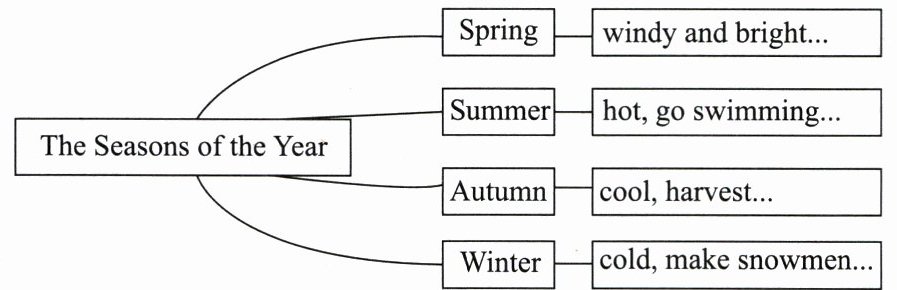
请根据以上信息,以“The Seasons of the Year”为题,写一篇英语短文。
【要求】1. 不要写成诗歌,词数90左右。 2. 不要遗漏任何要点,句子表达正确,行文连贯。
写作指导
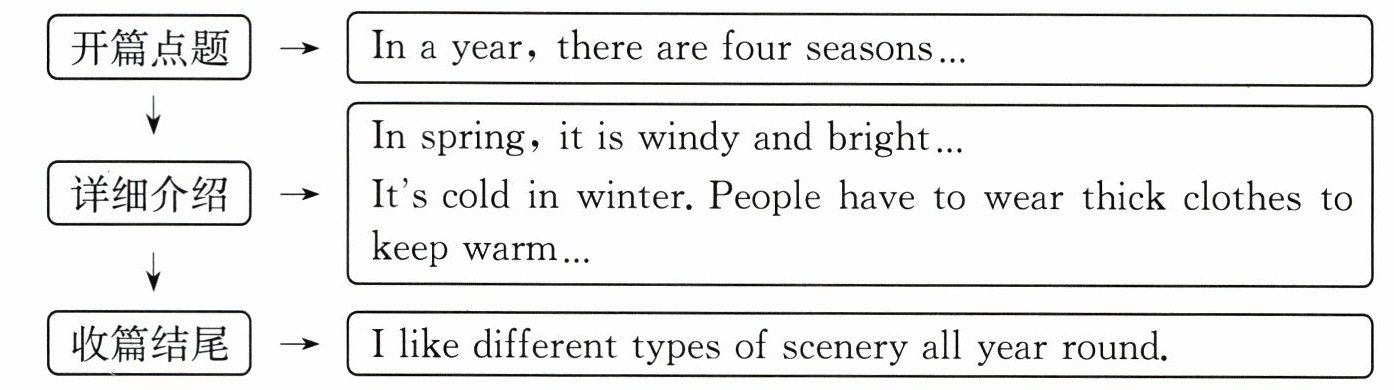
1. 主要用第三人称来写。 2. 时态为一般现在时。
3. 要写出每个季节的特点及对应的活动,可以适当发挥。
写作模板
遣词造句
1. 春天风和日丽。(windy and bright)
2. 秋天树叶变黄,农民收割庄稼。(turn yellow)
3. 在下雪天,孩子们高兴地堆着雪人。(make a snowman)
话题分析
本单元的话题是“季节”,让学生了解不同季节及天气的特点,学习其他国家的季节特点,并且培养学生热爱大自然和乐于参加户外活动的生活情趣。学完本单元,要求学生运用所学知识,谈论自己所喜欢的季节的一些特征以及给出喜欢这个季节的理由。
素材积累
◆开头句
1. Winter is my favourite season.
2. I always enjoy the winter here in Harbin.
◆中间句
1. The temperature is usually below zero.
2. Everything is covered with deep white snow.
3. We throw snowballs at each other, running and laughing.
◆结尾句
1. Winter in Harbin is really great and I have many fun activities.
2. I love winter, and I hope you can come here some day.
◆谚语积累
1. A year's plan starts with spring. 一年之计在于春。
2. If winter comes, can spring be far away? 冬天来了,春天还会远吗?
经典例题
请根据以上信息,以“The Seasons of the Year”为题,写一篇英语短文。
【要求】1. 不要写成诗歌,词数90左右。 2. 不要遗漏任何要点,句子表达正确,行文连贯。
写作指导
1. 主要用第三人称来写。 2. 时态为一般现在时。
3. 要写出每个季节的特点及对应的活动,可以适当发挥。
写作模板
遣词造句
1. 春天风和日丽。(windy and bright)
In spring, it is windy and bright.
2. 秋天树叶变黄,农民收割庄稼。(turn yellow)
In autumn, leaves turn yellow and farmers harvest crops.
3. 在下雪天,孩子们高兴地堆着雪人。(make a snowman)
Children happily make a snowman on a snowy day.
答案:[遣词造句]
1. In spring, it is windy and bright.
2. In autumn, leaves turn yellow and farmers harvest crops.
3. Children happily make a snowman on a snowy day.
1. In spring, it is windy and bright.
2. In autumn, leaves turn yellow and farmers harvest crops.
3. Children happily make a snowman on a snowy day.
解析:
【分析】
本题为单元写作的基础遣词造句练习,需结合中文提示和给定的核心短语,运用一般现在时(写作指导要求时态为一般现在时),注意季节前用介词in、具体天气前用介词on,副词修饰动词时置于动词短语前,确保句子符合英语表达习惯,不遗漏要点。
【解析】
1. 对应“春天风和日丽”:用“In spring”表示“在春天”,用it指代天气,结合短语“windy and bright”,构成符合要求的句子;
2. 对应“秋天树叶变黄,农民收割庄稼”:用“In autumn”表示“在秋天”,“leaves”对应“树叶”,“turn yellow”对应“变黄”,“farmers”对应“农民”,“harvest crops”对应“收割庄稼”,按英语并列结构组合句子;
3. 对应“在下雪天,孩子们高兴地堆着雪人”:“Children”对应“孩子们”,副词“happily”修饰动词短语“make a snowman”,“on a snowy day”对应“在下雪天”,构成句子。
【答案】
1. In spring, it is windy and bright.
2. In autumn, leaves turn yellow and farmers harvest crops.
3. Children happily make a snowman on a snowy day.
【知识点】
一般现在时、季节英语表达、副词的用法
【点评】
本题紧扣“季节”单元话题,是写作的基础遣词练习,帮助学生巩固季节相关的英语句式和核心短语,为后续短文写作铺垫,难度适中,适合夯实单元基础。
【难度系数】
0.7
本题为单元写作的基础遣词造句练习,需结合中文提示和给定的核心短语,运用一般现在时(写作指导要求时态为一般现在时),注意季节前用介词in、具体天气前用介词on,副词修饰动词时置于动词短语前,确保句子符合英语表达习惯,不遗漏要点。
【解析】
1. 对应“春天风和日丽”:用“In spring”表示“在春天”,用it指代天气,结合短语“windy and bright”,构成符合要求的句子;
2. 对应“秋天树叶变黄,农民收割庄稼”:用“In autumn”表示“在秋天”,“leaves”对应“树叶”,“turn yellow”对应“变黄”,“farmers”对应“农民”,“harvest crops”对应“收割庄稼”,按英语并列结构组合句子;
3. 对应“在下雪天,孩子们高兴地堆着雪人”:“Children”对应“孩子们”,副词“happily”修饰动词短语“make a snowman”,“on a snowy day”对应“在下雪天”,构成句子。
【答案】
1. In spring, it is windy and bright.
2. In autumn, leaves turn yellow and farmers harvest crops.
3. Children happily make a snowman on a snowy day.
【知识点】
一般现在时、季节英语表达、副词的用法
【点评】
本题紧扣“季节”单元话题,是写作的基础遣词练习,帮助学生巩固季节相关的英语句式和核心短语,为后续短文写作铺垫,难度适中,适合夯实单元基础。
【难度系数】
0.7