听一段对话,回答第11、12小题。答题完毕,请等待“嘀”的信号,进入下一篇短文。
(
A. To the supermarket. B. To the park. C. To the bridge.
(
A. chat in the park B. go back to their home C. buy some food
(
B
)11. Where will the speakers finally go?A. To the supermarket. B. To the park. C. To the bridge.
(
B
)12. If they are hungry, they may .A. chat in the park B. go back to their home C. buy some food
答案:11.B 12.B
听第一篇短文,回答第13—15小题。请根据短文内容,选择正确答案,完成信息记录表。答题完毕,请等待“嘀”的信号,进入下一篇短文。
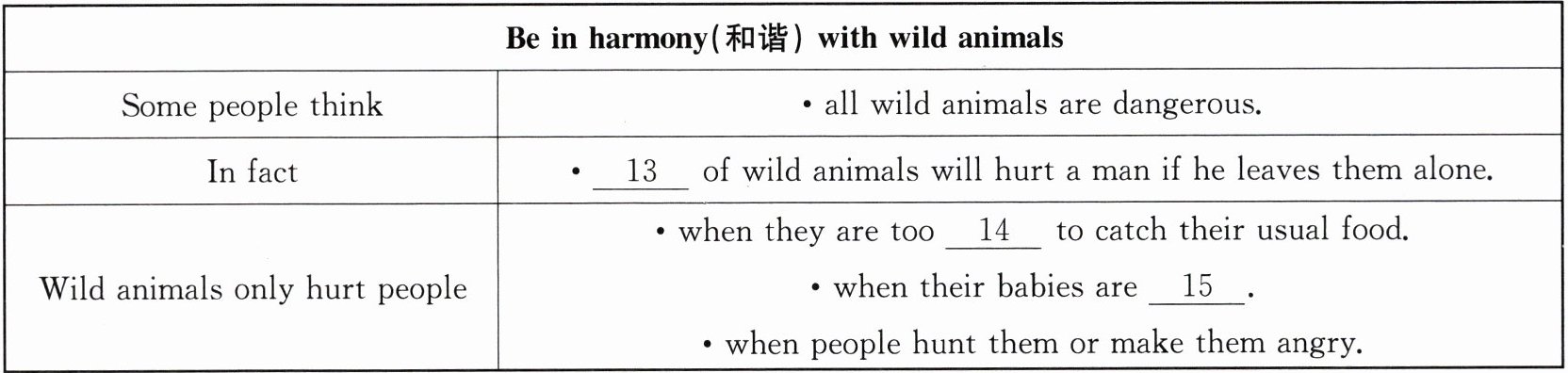
(
(
(
(
C
)13. A. most B. quite a few C. very few(
A
)14. A. old B. lazy C. tired(
C
)15. A. angry B. afraid C. in danger答案:13.C 14.A 15.C
听第二篇短文,回答第16-20小题。
(
A. On a winter morning. B. On a winter afternoon. C. On a winter evening.
(
A. A mouse's. B. The little mouse's. C. A snake's.
(
A. He was sleeping. B. He was singing. C. He was eating.
(
A. She felt sleepy.
B. She felt afraid of the snake.
C. She wasn't afraid of the snake.
(
A. Snakes sleep in winter.
B. Snakes never eat mice.
C. Mice like to live next to snakes.
(
B
)16. When did the story take place?A. On a winter morning. B. On a winter afternoon. C. On a winter evening.
(
C
)17. Whose house did the little mouse enter?A. A mouse's. B. The little mouse's. C. A snake's.
(
A
)18. What was the snake doing?A. He was sleeping. B. He was singing. C. He was eating.
(
C
)19. How did the little mouse's mother feel?A. She felt sleepy.
B. She felt afraid of the snake.
C. She wasn't afraid of the snake.
(
A
)20. What can we learn from the story?A. Snakes sleep in winter.
B. Snakes never eat mice.
C. Mice like to live next to snakes.
答案:16.B 17.C 18.A 19.C 20.A