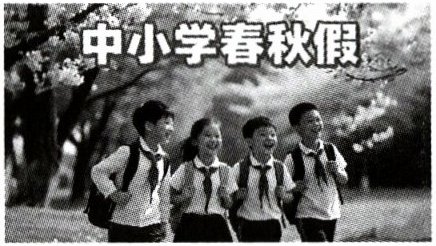
In October, 2025, Zhejiang became the first province in China to have spring and autumn breaks for all primary and middle schools. These are short breaks, different from the long summer and winter holidays. The spring break is usually in late April near the May Day holiday. The autumn break is often in late September near National Day, or in mid-to-late November together with a weekend.
During the 2025 summer holiday, Zhejiang did a survey(调查) and asked 100,000 parents and 25,000 teachers about the new breaks. Here are the results: 89.2% of the parents liked the idea; 95% of the parents and 99% of the teachers agreed they were good for learning.
Zhou Yuchao, a parent of two primary schoolchildren from Hangzhou, travelled to Beijing with his family during the autumn break. They enjoyed a five-day trip. “The autumn break is really great,” he says. In the past, the family didn’t think about visiting places like the Palace Museum during holidays because of the large group of tourists. “There are fewer tourists. It greatly improves our family travel experience,” Zhou says. “And it costs(花费) less money.”
Jiang Yiyi, a teacher at Beijing Sport University, thinks spring and autumn are the best seasons for educational(与教育有关的) trips. She says, “Combining(结合) study with travel helps students learn outside the classroom and understand things better.”
(
A. They were good for students.
B. They made holidays too long.
C. They caused problems for schools.
D. They made the school life too busy.
(
A. Because there were too many people.
B. Because it would cost more money.
C. Because they were not interested in it.
D. Because it was hard to buy tickets(票).
(
①Combining study with travel is helpful to students.
②The longer the holiday is, the better students learn.
③It’s more important for students to learn outside the classroom.
④It’s great for students to have educational trips in spring and autumn.
A. ①② B. ①③ C. ①④ D. ③④

C
Now, I'm studying in the USA. I find there are some differences between schools in the USA and in Vietnam.
One big difference is the clothes students wear at school and how they look. In my country, all the students should wear uniforms when they go to school. Boys aren't allowed to have long hair. Girls aren't allowed to have long nails(指甲) and coloured nails and hair.
Another difference is about the rules for parents. In Vietnam, when we begin a new school year, our parents have to go to a meeting in our class. If they don't go to that meeting, their children won't have a grade or a report card from school. However, in the USA, there aren't such strict rules.
In Vietnam, a class lasts for only 45 minutes and we have only five classes each weekday. When the bell rings, the students just sit in their own classroom. They can't move to a different one, but students can in the USA.
In Vietnam, students can't go to work because they can't find a job if they're under 18. But in the USA, many students work after school. This helps them make money. More importantly, this helps them become more independent. They're able to do things by themselves in their own way, without asking other people for help.
(
A. China. B. Japan. C. America. D. Vietnam.
(
A. To keep their hair long. B. To have long nails.
C. To colour their hair. D. To colour their nails.
(
A. 勇敢的 B. 独立的 C. 依赖的 D. 自信的
(
A. They have five classes each weekday.
B. They can go to work under eighteen.
C. They should wear uniforms at school.
D. When the bell rings, they can’t move to a different classroom.
During the 2025 summer holiday, Zhejiang did a survey(调查) and asked 100,000 parents and 25,000 teachers about the new breaks. Here are the results: 89.2% of the parents liked the idea; 95% of the parents and 99% of the teachers agreed they were good for learning.
Zhou Yuchao, a parent of two primary schoolchildren from Hangzhou, travelled to Beijing with his family during the autumn break. They enjoyed a five-day trip. “The autumn break is really great,” he says. In the past, the family didn’t think about visiting places like the Palace Museum during holidays because of the large group of tourists. “There are fewer tourists. It greatly improves our family travel experience,” Zhou says. “And it costs(花费) less money.”
Jiang Yiyi, a teacher at Beijing Sport University, thinks spring and autumn are the best seasons for educational(与教育有关的) trips. She says, “Combining(结合) study with travel helps students learn outside the classroom and understand things better.”
(
A
)49. What did most parents and teachers think about the spring and autumn breaks according to the survey?A. They were good for students.
B. They made holidays too long.
C. They caused problems for schools.
D. They made the school life too busy.
(
A
)50. Why didn’t Zhou’s family visit the Palace Museum during holidays in the past?A. Because there were too many people.
B. Because it would cost more money.
C. Because they were not interested in it.
D. Because it was hard to buy tickets(票).
(
C
)51. Which of the following might Jiang agree with?①Combining study with travel is helpful to students.
②The longer the holiday is, the better students learn.
③It’s more important for students to learn outside the classroom.
④It’s great for students to have educational trips in spring and autumn.
A. ①② B. ①③ C. ①④ D. ③④
C
Now, I'm studying in the USA. I find there are some differences between schools in the USA and in Vietnam.
One big difference is the clothes students wear at school and how they look. In my country, all the students should wear uniforms when they go to school. Boys aren't allowed to have long hair. Girls aren't allowed to have long nails(指甲) and coloured nails and hair.
Another difference is about the rules for parents. In Vietnam, when we begin a new school year, our parents have to go to a meeting in our class. If they don't go to that meeting, their children won't have a grade or a report card from school. However, in the USA, there aren't such strict rules.
In Vietnam, a class lasts for only 45 minutes and we have only five classes each weekday. When the bell rings, the students just sit in their own classroom. They can't move to a different one, but students can in the USA.
In Vietnam, students can't go to work because they can't find a job if they're under 18. But in the USA, many students work after school. This helps them make money. More importantly, this helps them become more independent. They're able to do things by themselves in their own way, without asking other people for help.
(
D
)52. Where does the writer come from?A. China. B. Japan. C. America. D. Vietnam.
(
A
)53. What are the girl students allowed to do in the writer’s country?A. To keep their hair long. B. To have long nails.
C. To colour their hair. D. To colour their nails.
(
B
)54. What’s the meaning of the underlined word “independent”?A. 勇敢的 B. 独立的 C. 依赖的 D. 自信的
(
B
)55. Which is NOT true about the Vietnamese students according to the passage?A. They have five classes each weekday.
B. They can go to work under eighteen.
C. They should wear uniforms at school.
D. When the bell rings, they can’t move to a different classroom.
答案:49.A 50.A 51.C 52.D 53.A 54.B 55.B
解析:
【分析】
这是英语阅读理解题,解题思路是先通读原文把握大意,再针对每道题的题干关键词,回到原文定位相关句子,将选项与原文内容逐一比对,排除错误选项,选出正确答案,重点考查细节查找和信息理解能力。
【解析】
49题:根据原文第二段“95% of the parents and 99% of the teachers agreed they were good for learning.”可知,大多数家长和老师认为春秋假期对学习有益,对应选项A。
50题:根据原文第三段“In the past, the family didn’t think about visiting places like the Palace Museum during holidays because of the large group of tourists.”可知,过去周的家人不参观故宫是因为游客太多,对应选项A。
51题:根据原文第四段Jiang的话“Combining study with travel helps students learn outside the classroom and understand things better.”以及前文提到春秋是教育旅行的最佳季节,可知①“结合学习与旅行对学生有帮助”和④“学生在春秋进行教育旅行是很好的”符合Jiang的观点,对应选项C。
52题:根据原文开头“Now, I'm studying in the USA. I find there are some differences between schools in the USA and in Vietnam.”可知,作者来自越南,对应选项D。
53题:根据原文第二段“Girls aren't allowed to have long nails and coloured nails and hair.”可知,越南的女生不允许留长指甲、染指甲和染头发,因此允许留长发,对应选项A。
54题:根据原文最后一段“They're able to do things by themselves in their own way, without asking other people for help.”可知,independent意为“独立的”,对应选项B。
55题:根据原文最后一段“In Vietnam, students can't go to work because they can't find a job if they're under 18.”可知,越南学生18岁以下不能工作,选项B表述错误,对应选项B。
【答案】
49.A 50.A 51.C 52.D 53.A 54.B 55.B
【知识点】
英语阅读理解、细节理解题、推理判断题
【点评】
本题为两篇英语阅读理解材料,侧重考查学生对原文细节信息的定位与理解能力,题目难度适中,只要认真阅读原文、找准对应语句即可顺利解答,适合初中阶段学生练习。
【难度系数】
0.6
这是英语阅读理解题,解题思路是先通读原文把握大意,再针对每道题的题干关键词,回到原文定位相关句子,将选项与原文内容逐一比对,排除错误选项,选出正确答案,重点考查细节查找和信息理解能力。
【解析】
49题:根据原文第二段“95% of the parents and 99% of the teachers agreed they were good for learning.”可知,大多数家长和老师认为春秋假期对学习有益,对应选项A。
50题:根据原文第三段“In the past, the family didn’t think about visiting places like the Palace Museum during holidays because of the large group of tourists.”可知,过去周的家人不参观故宫是因为游客太多,对应选项A。
51题:根据原文第四段Jiang的话“Combining study with travel helps students learn outside the classroom and understand things better.”以及前文提到春秋是教育旅行的最佳季节,可知①“结合学习与旅行对学生有帮助”和④“学生在春秋进行教育旅行是很好的”符合Jiang的观点,对应选项C。
52题:根据原文开头“Now, I'm studying in the USA. I find there are some differences between schools in the USA and in Vietnam.”可知,作者来自越南,对应选项D。
53题:根据原文第二段“Girls aren't allowed to have long nails and coloured nails and hair.”可知,越南的女生不允许留长指甲、染指甲和染头发,因此允许留长发,对应选项A。
54题:根据原文最后一段“They're able to do things by themselves in their own way, without asking other people for help.”可知,independent意为“独立的”,对应选项B。
55题:根据原文最后一段“In Vietnam, students can't go to work because they can't find a job if they're under 18.”可知,越南学生18岁以下不能工作,选项B表述错误,对应选项B。
【答案】
49.A 50.A 51.C 52.D 53.A 54.B 55.B
【知识点】
英语阅读理解、细节理解题、推理判断题
【点评】
本题为两篇英语阅读理解材料,侧重考查学生对原文细节信息的定位与理解能力,题目难度适中,只要认真阅读原文、找准对应语句即可顺利解答,适合初中阶段学生练习。
【难度系数】
0.6