2. 从Ⅱ栏中选出与Ⅰ栏句子相对应的应答句。(有多余选项)
Ⅰ
()(1) What did Liu Tao do for the play?
()(2) Why don’t you take part?
()(3) How did you feel?
()(4) Did Meng Xin sell the ox?
()(5) Was the ox young and strong?
Ⅱ
A. Er, I’m not good at singing.
B. No, he didn’t.
C. He remembered all the words.
D. I felt good.
E. Yes, he does.
F. No, it was old and sick.
Ⅰ
()(1) What did Liu Tao do for the play?
()(2) Why don’t you take part?
()(3) How did you feel?
()(4) Did Meng Xin sell the ox?
()(5) Was the ox young and strong?
Ⅱ
A. Er, I’m not good at singing.
B. No, he didn’t.
C. He remembered all the words.
D. I felt good.
E. Yes, he does.
F. No, it was old and sick.
答案:(1)C (2)A (3)D (4)B (5)F
解析:
我们逐句匹配问答:
1. 第一句询问刘涛为戏剧做了什么,答句需要描述他做的相关动作,C选项“他记住了所有台词”符合语境。
2. 第二句询问对方为什么不参加,答句需要说明原因,A选项“呃,我不擅长唱歌”是合理的不参加的理由。
3. 第三句询问对方感受如何,答句需要回应自己的感受,D选项“我感觉很不错”对应问题。
4. 第四句是Did引导的一般过去时的一般疑问句,要用did的对应形式回答,B选项“不,他没有”是正确的否定回答。
5. 第五句询问这头牛是不是年轻强壮,F选项“不,它又老又体弱”是对应的否定回答。
多余选项E是一般现在时的回答,不符合本题所有问句的一般过去时语境,属于多余选项。
1. 第一句询问刘涛为戏剧做了什么,答句需要描述他做的相关动作,C选项“他记住了所有台词”符合语境。
2. 第二句询问对方为什么不参加,答句需要说明原因,A选项“呃,我不擅长唱歌”是合理的不参加的理由。
3. 第三句询问对方感受如何,答句需要回应自己的感受,D选项“我感觉很不错”对应问题。
4. 第四句是Did引导的一般过去时的一般疑问句,要用did的对应形式回答,B选项“不,他没有”是正确的否定回答。
5. 第五句询问这头牛是不是年轻强壮,F选项“不,它又老又体弱”是对应的否定回答。
多余选项E是一般现在时的回答,不符合本题所有问句的一般过去时语境,属于多余选项。
1. 用数字给下列句子排序,组成一段完整的短文。
() He ran back to the shop quickly and gave the money to the seller.
() The seller smiled and said, “You are an honest boy!”
() One day, Jack bought a new pen from a shop.
() Jack thought, “Oh, no. I didn’t pay for the pen.”
() When he got home, he found a 10-yuan note in his pocket.
() He ran back to the shop quickly and gave the money to the seller.
() The seller smiled and said, “You are an honest boy!”
() One day, Jack bought a new pen from a shop.
() Jack thought, “Oh, no. I didn’t pay for the pen.”
() When he got home, he found a 10-yuan note in his pocket.
答案:4;5;1;3;2
解析:
这是叙事类的句子排序题,我们按照事件发生的先后逻辑梳理顺序:
1. 首先交代故事的开端:One day, Jack bought a new pen from a shop.(有一天,杰克从一家商店买了一支新钢笔),是排序的第1句。
2. 接下来事件推进:When he got home, he found a 10-yuan note in his pocket.(当他到家的时候,他在口袋里发现了一张10元纸币),说明买完钢笔后钱还留在身上,是排序的第2句。
3. 紧接着杰克意识到问题:Jack thought, “Oh, no. I didn’t pay for the pen.”(杰克想:“哦不,我没有付钢笔的钱”),是排序的第3句。
4. 之后是杰克的行动:He ran back to the shop quickly and gave the money to the seller.(他快速跑回商店,把钱交给了店主),是排序的第4句。
5. 最后是故事的结尾:The seller smiled and said, “You are an honest boy!”(店主笑着说:“你是一个诚实的男孩!”),是排序的第5句。
对应题干里5个句子的排序数字依次为4、5、1、3、2。
1. 首先交代故事的开端:One day, Jack bought a new pen from a shop.(有一天,杰克从一家商店买了一支新钢笔),是排序的第1句。
2. 接下来事件推进:When he got home, he found a 10-yuan note in his pocket.(当他到家的时候,他在口袋里发现了一张10元纸币),说明买完钢笔后钱还留在身上,是排序的第2句。
3. 紧接着杰克意识到问题:Jack thought, “Oh, no. I didn’t pay for the pen.”(杰克想:“哦不,我没有付钢笔的钱”),是排序的第3句。
4. 之后是杰克的行动:He ran back to the shop quickly and gave the money to the seller.(他快速跑回商店,把钱交给了店主),是排序的第4句。
5. 最后是故事的结尾:The seller smiled and said, “You are an honest boy!”(店主笑着说:“你是一个诚实的男孩!”),是排序的第5句。
对应题干里5个句子的排序数字依次为4、5、1、3、2。
2. 连词成句,将对话补充完整。
Blue Fairy: Hi, Pinocchio! (1) ?
(you, go, today, Did, to, school)
Pinocchio: Yes, I did.
Blue Fairy: Are you sure? (2) .
(longer, nose, is becoming, your, Now)
Pinocchio: I’m sorry. I shouldn’t lie to you. (3) .
(go, didn’t, school, to, I)
I went to play with my friends in the forest.
Blue Fairy: Honesty is important. (4) . (lie, Never, a, tell)
Pinocchio: OK! I’ll be honest.
Blue Fairy: Good! (5) . (again, nose, is, Your, short)
Pinocchio: Thank you, Blue Fairy.
Blue Fairy: Hi, Pinocchio! (1) ?
(you, go, today, Did, to, school)
Pinocchio: Yes, I did.
Blue Fairy: Are you sure? (2) .
(longer, nose, is becoming, your, Now)
Pinocchio: I’m sorry. I shouldn’t lie to you. (3) .
(go, didn’t, school, to, I)
I went to play with my friends in the forest.
Blue Fairy: Honesty is important. (4) . (lie, Never, a, tell)
Pinocchio: OK! I’ll be honest.
Blue Fairy: Good! (5) . (again, nose, is, Your, short)
Pinocchio: Thank you, Blue Fairy.
答案:(1) Did you go to school today
(2) Now your nose is becoming longer
(3) I didn't go to school
(4) Never tell a lie
(5) Your nose is short again
(2) Now your nose is becoming longer
(3) I didn't go to school
(4) Never tell a lie
(5) Your nose is short again
解析:
本题考查连词成句,结合对话语境和提示词汇,按照对应句式的正确语序组合即可:
1. 第一句是一般过去时的一般疑问句,助动词Did置于句首,后接主语you、动词短语go to school,时间状语today放在句末。
2. 第二句是现在进行时的陈述句,时间标志词Now置于句首,后接主语your nose,再接现在进行时结构is becoming longer。
3. 第三句是一般过去时的否定句,主语I置于句首,后接否定助动词didn't,再接动词短语go to school。
4. 第四句是否定祈使句,否定副词Never置于句首,后接固定搭配tell a lie。
5. 第五句是一般现在时的陈述句,主语Your nose置于句首,后接be动词is,再接表语short,副词again放在句末。
1. 第一句是一般过去时的一般疑问句,助动词Did置于句首,后接主语you、动词短语go to school,时间状语today放在句末。
2. 第二句是现在进行时的陈述句,时间标志词Now置于句首,后接主语your nose,再接现在进行时结构is becoming longer。
3. 第三句是一般过去时的否定句,主语I置于句首,后接否定助动词didn't,再接动词短语go to school。
4. 第四句是否定祈使句,否定副词Never置于句首,后接固定搭配tell a lie。
5. 第五句是一般现在时的陈述句,主语Your nose置于句首,后接be动词is,再接表语short,副词again放在句末。
根据图片和提示词,写一篇日记。不少于5句话。
break the vase (花瓶) worried afraid say sorry
tell the truth try to clean the floor happy
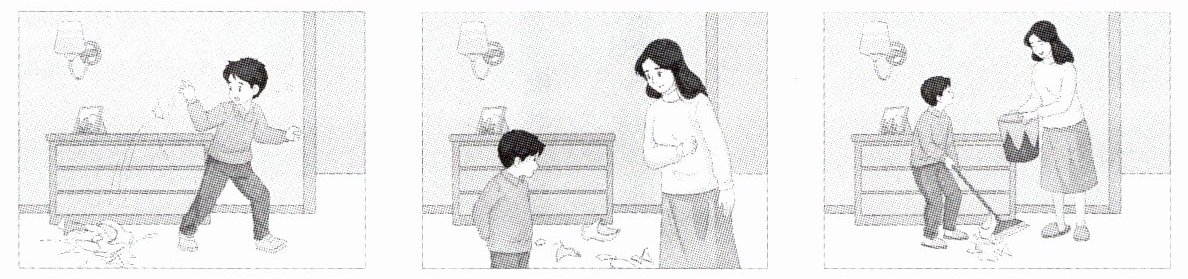
Dear Diary,
Today I .
I .
Finally, we .
I .
break the vase (花瓶) worried afraid say sorry
tell the truth try to clean the floor happy
Dear Diary,
Today I .
I .
Finally, we .
I .
答案:参考范文:
Dear Diary,
Today I ran in the living room carelessly and broke the vase on the shelf.
I stood there and did not dare to move at first.
I felt very worried and afraid, I thought Mum would be angry with me.
Soon I walked to Mum, I decided to tell the truth and said sorry to her.
Finally, we tried to clean the broken pieces on the floor together.
I felt very happy, because Mum said I was an honest child.
Dear Diary,
Today I ran in the living room carelessly and broke the vase on the shelf.
I stood there and did not dare to move at first.
I felt very worried and afraid, I thought Mum would be angry with me.
Soon I walked to Mum, I decided to tell the truth and said sorry to her.
Finally, we tried to clean the broken pieces on the floor together.
I felt very happy, because Mum said I was an honest child.
解析:
这是译林版六年级上册的看图写日记习题,需要结合给出的全部提示词,按照图片的事件发展顺序,使用一般过去时完成内容,保证不少于5句话,叙事逻辑通顺,符合该年级的词汇和语法难度。事件发展顺序为:玩耍时不小心打碎花瓶,一开始慌乱担忧害怕,之后主动向妈妈坦白真相道歉,最后和妈妈一起清理地面,因为诚实得到谅解,最终心情愉快。