Reading 2
任务一 阅读理解
阅读下面的短文,从短文后各题所给的A、B、C、D四个选项中,选出最佳选项。
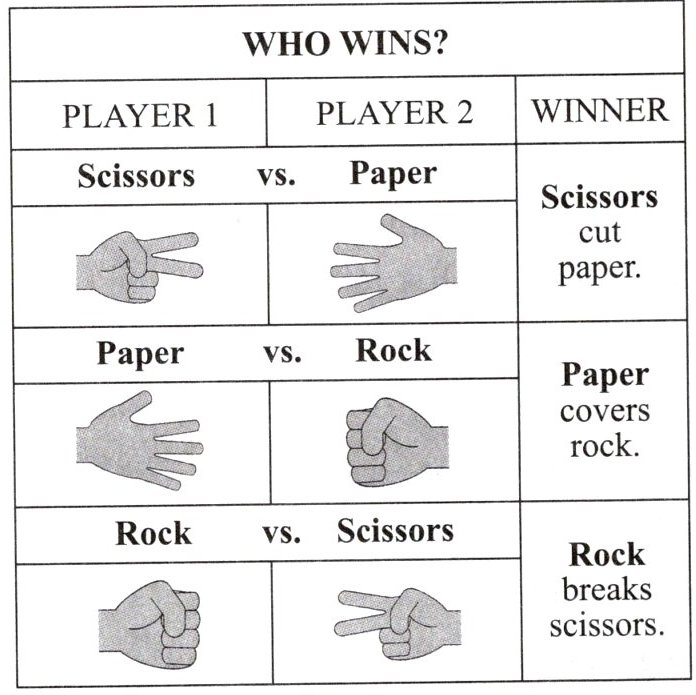
Wyatt Baldwin has been playing rock, paper, scissors for as long as he can remember. Baldwin is the founder and president of the World Rock Paper Scissors Association. As Baldwin and all serious rock, paper, scissors players know, there's more to the game than luck.
Rock, paper, scissors probably originated in China about 2,000 years ago. Today, people everywhere play it. While some cultures use different symbols, the
初中英语听读空间 加强版
九年级
idea remains the same. You and an opponent each "throw" one of three hand symbols, and you either win, lose, or tie (see "WHO WINS?").
Many people think rock, paper, scissors is all luck. Your probability of winning a round seems as good as your chance of losing one. But in reality, the outcome of the game isn't completely random(随机的) because human behaviour isn't random. There are patterns(模式) in the way people make decisions, even quick ones.
A 2014 study at Zhejiang University, in China, looked at the psychology(心理) of how people play rock, paper, scissors. It followed 360 students in a tournament(锦标赛). Each student played 300 rounds of the game in random groups. Researchers discovered two key patterns: Winners tended(倾向) to repeat their winning hand symbols. Losers tended to go from rock to paper to scissors.
Knowing the psychology of rock, paper, scissors isn't a sure way to win a match, but it can help. Ken White Watson is one of the best players in the world. According to him, winning the game takes skill and knowledge. "You have to size up(判断) your opponent," he says. "Though luck and chance play a part, you have to be prepared and have a strategy. Part of my strategy is being confident."
Confidence comes with practice, and according to Baldwin, "practice, practice, practice" is the key to success. "You can even try practising against yourself in front of a mirror," he says, "but for me that always ended up in a tie."
() 1. What may happen in the next round according to the findings of the study?
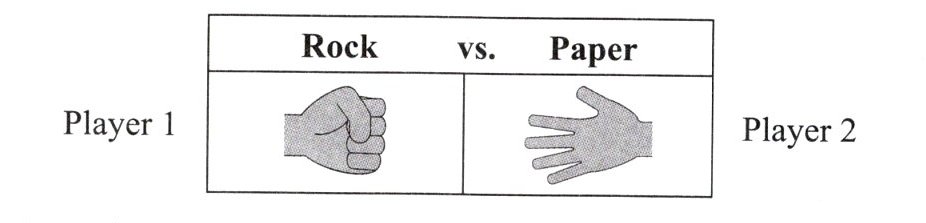
Player 1 Player 2
A. Player 2 tends to show rock. B. Player 1 tends to show scissors.
C. Player 2 tends to show scissors. D. Player 2 tends to show paper.
() 2. What does the underlined word "It" in paragraph 4 refer to?
A. A study. B. A researcher.
C. Zhejiang University. D. The game—rock, paper, scissors.
() 3. Which of the following can be inferred from the passage?
A. Rock, paper, scissors is all luck.
B. Confidence is something one is born with.
C. Winners often reuse their winning hand symbols.
D. Wyatt has been playing rock, paper, scissors since he worked.
() 4. What would be the best title for the passage?
A. Playing to win
B. The key to success
C. A study at Zhejiang University
D. The World Rock Paper Scissors Association
任务一 阅读理解
阅读下面的短文,从短文后各题所给的A、B、C、D四个选项中,选出最佳选项。
Wyatt Baldwin has been playing rock, paper, scissors for as long as he can remember. Baldwin is the founder and president of the World Rock Paper Scissors Association. As Baldwin and all serious rock, paper, scissors players know, there's more to the game than luck.
Rock, paper, scissors probably originated in China about 2,000 years ago. Today, people everywhere play it. While some cultures use different symbols, the
初中英语听读空间 加强版
九年级
idea remains the same. You and an opponent each "throw" one of three hand symbols, and you either win, lose, or tie (see "WHO WINS?").
Many people think rock, paper, scissors is all luck. Your probability of winning a round seems as good as your chance of losing one. But in reality, the outcome of the game isn't completely random(随机的) because human behaviour isn't random. There are patterns(模式) in the way people make decisions, even quick ones.
A 2014 study at Zhejiang University, in China, looked at the psychology(心理) of how people play rock, paper, scissors. It followed 360 students in a tournament(锦标赛). Each student played 300 rounds of the game in random groups. Researchers discovered two key patterns: Winners tended(倾向) to repeat their winning hand symbols. Losers tended to go from rock to paper to scissors.
Knowing the psychology of rock, paper, scissors isn't a sure way to win a match, but it can help. Ken White Watson is one of the best players in the world. According to him, winning the game takes skill and knowledge. "You have to size up(判断) your opponent," he says. "Though luck and chance play a part, you have to be prepared and have a strategy. Part of my strategy is being confident."
Confidence comes with practice, and according to Baldwin, "practice, practice, practice" is the key to success. "You can even try practising against yourself in front of a mirror," he says, "but for me that always ended up in a tie."
() 1. What may happen in the next round according to the findings of the study?
Player 1 Player 2
A. Player 2 tends to show rock. B. Player 1 tends to show scissors.
C. Player 2 tends to show scissors. D. Player 2 tends to show paper.
() 2. What does the underlined word "It" in paragraph 4 refer to?
A. A study. B. A researcher.
C. Zhejiang University. D. The game—rock, paper, scissors.
() 3. Which of the following can be inferred from the passage?
A. Rock, paper, scissors is all luck.
B. Confidence is something one is born with.
C. Winners often reuse their winning hand symbols.
D. Wyatt has been playing rock, paper, scissors since he worked.
() 4. What would be the best title for the passage?
A. Playing to win
B. The key to success
C. A study at Zhejiang University
D. The World Rock Paper Scissors Association
答案:1. D
2. A
3. C
4. A
2. A
3. C
4. A
解析:
【解析】
1. 第1题:根据文中第四段研究结论“Losers tended to go from rock to paper to scissors”,结合插图中本轮Player1出石头、Player2出纸,由“纸包石头”可知Player1是输家,Player2是赢家;同时赢家倾向于重复自己获胜的手势,Player2本轮出的是纸,因此下一轮Player2倾向于继续出纸,对应选项D。
2. 第2题:划线词It定位到第四段前一句“A 2014 study at Zhejiang University, in China, looked at the psychology of how people play rock, paper, scissors.”,本句意为“它在一场锦标赛中追踪了360名学生”,可知It指代的就是前文提到的这项研究,对应选项A。
3. 第3题:A选项与第三段“Many people think rock, paper, scissors is all luck. But in reality, the outcome of the game isn't completely random”表述矛盾;B选项与最后一段“Confidence comes with practice”表述矛盾;C选项和第四段“Winners tended to repeat their winning hand symbols”表述一致,可从文中推断得出;D选项和第一段“Wyatt Baldwin has been playing rock, paper, scissors for as long as he can remember”表述矛盾,因此选C。
4. 第4题:全文围绕石头剪刀布游戏不止靠运气,还可以依靠策略、技巧来取胜展开,A选项“Playing to win”最能概括全文核心内容;B选项范围过于宽泛,C、D都只是文中的局部细节,不能作为全文标题,因此选A。
【答案】
1. D
2. A
3. C
4. A
【知识点】
阅读理解细节查找
代词指代判断
文章主旨大意
【点评】
这是一篇介绍石头剪刀布游戏背后策略的阅读理解题,考点覆盖细节定位、代词指代、主旨判断,要求学生能够准确从文本中匹配对应信息,区分局部细节和全文核心,整体设问梯度合理,符合九年级英语阅读的考查要求。
【难度系数】
0.7