Ⅵ. 句子翻译(每小题 2 分,满分 10 分)
1. 不要错过布莱顿的日落。
2. 这学院始于 20 世纪。
3. 我们在伦敦时体验了一下英国人的生活。
We
4. 让我带你参观这座城市的名胜古迹。
Let me
5. 从南京到我的家乡大约需要一个小时。
It
1. 不要错过布莱顿的日落。
Don't miss the sunset
in Brighton.2. 这学院始于 20 世纪。
The college dates from
the 20th century.3. 我们在伦敦时体验了一下英国人的生活。
We
got a taste of British life
while in London.4. 让我带你参观这座城市的名胜古迹。
Let me
show you around the places of interest
in the city.5. 从南京到我的家乡大约需要一个小时。
It
takes about one hour to get to my hometown
from Nanjing.答案:Ⅵ. 1. Don't miss the sunset
2. The college dates from
3. got a taste of British life
4. show you around the places of interest
5. takes about one hour to get to my hometown
2. The college dates from
3. got a taste of British life
4. show you around the places of interest
5. takes about one hour to get to my hometown
解析:
【解析】
1. 本句为祈使句的否定形式,结构为Don't+动词原形,“错过”用miss,“日落”译为the sunset,组合后得到Don't miss the sunset。
2. 表示“始于、追溯到”的常用固定搭配是date from,主语the college是单数,谓语动词用第三人称单数形式,得到The college dates from。
3. “体验……的生活”的固定表达是get a taste of ...,根据语境动作发生在过去,用一般过去时,“英国人的生活”译为British life,组合后为got a taste of British life。
4. 固定搭配show sb around表示“带某人参观”,“名胜古迹”译为the places of interest,let后接动词原形,组合后为show you around the places of interest。
5. 固定句型It takes some time to do sth表示“做某事花费多长时间”,“大约一个小时”是about one hour,“到达我的家乡”译为get to my hometown,组合后为takes about one hour to get to my hometown。
【答案】
1. Don't miss the sunset
2. The college dates from
3. got a taste of British life
4. show you around the places of interest
5. takes about one hour to get to my hometown
【知识点】
祈使句;固定短语;It固定句型
【点评】
本题考查基础的英语句子翻译填空,侧重常用固定搭配、基础句型的识记运用,需要学生准确掌握单元核心短语和常见句式的用法,注意时态和非谓语的规则变化。
【难度系数】
0.7
1. 本句为祈使句的否定形式,结构为Don't+动词原形,“错过”用miss,“日落”译为the sunset,组合后得到Don't miss the sunset。
2. 表示“始于、追溯到”的常用固定搭配是date from,主语the college是单数,谓语动词用第三人称单数形式,得到The college dates from。
3. “体验……的生活”的固定表达是get a taste of ...,根据语境动作发生在过去,用一般过去时,“英国人的生活”译为British life,组合后为got a taste of British life。
4. 固定搭配show sb around表示“带某人参观”,“名胜古迹”译为the places of interest,let后接动词原形,组合后为show you around the places of interest。
5. 固定句型It takes some time to do sth表示“做某事花费多长时间”,“大约一个小时”是about one hour,“到达我的家乡”译为get to my hometown,组合后为takes about one hour to get to my hometown。
【答案】
1. Don't miss the sunset
2. The college dates from
3. got a taste of British life
4. show you around the places of interest
5. takes about one hour to get to my hometown
【知识点】
祈使句;固定短语;It固定句型
【点评】
本题考查基础的英语句子翻译填空,侧重常用固定搭配、基础句型的识记运用,需要学生准确掌握单元核心短语和常见句式的用法,注意时态和非谓语的规则变化。
【难度系数】
0.7
Ⅶ. 中考趋势 语法填空(每小题 1 分,满分 10 分)
根据短文内容,在横线上填入一个适当的单词或括号内单词的正确形式。
文化意识 文化鉴赏 People say the real culture of Beijing lies in the culture of hutong and siheyuan. How true it is! They give an understanding of the old lifestyle of ordinary Beijingers. If you want to
Starting during the Yuan Dynasty (1271—1368), hutongs are narrow (狭窄的) streets. They are formed by lines of siheyuan,
The word “hutong” comes from Mongolian and means “water well”. People in ancient times dug a well and lived around it, so “water well” became the name of the
If the Forbidden City is
Many famous operas and dramas are based on the theme of “hutong life”. A visit to hutongs by day with a drama by the Beijing People’s Art Theatre in the evening will help you
1.
2.
3.
4.
5.
6.
7.
8.
9.
10.
根据短文内容,在横线上填入一个适当的单词或括号内单词的正确形式。
文化意识 文化鉴赏 People say the real culture of Beijing lies in the culture of hutong and siheyuan. How true it is! They give an understanding of the old lifestyle of ordinary Beijingers. If you want to
truly
(true) know the real life of Beijingers, a half-day hutong tour is
(be) a good choice.Starting during the Yuan Dynasty (1271—1368), hutongs are narrow (狭窄的) streets. They are formed by lines of siheyuan,
and
at the centre of old neighbourhood life in Beijing.The word “hutong” comes from Mongolian and means “water well”. People in ancient times dug a well and lived around it, so “water well” became the name of the
living
(live) area and then the name of the narrow streets. From the name of a hutong, you can guess its origin (起源). However, the meaning of hutong has cultural
(culture) parts.If the Forbidden City is
a
symbol of the Chinese royal (皇家的) family, then hutongs are the epitome (缩影) of the life of millions
(million) of Beijing people. They are like museums of folk arts, showing the culture of Beijingers. Every hutong has its story to tell
(tell). Neighbours in Beijing hutongs sit down and chat over
a cup of tea, catching up with each other’s play, shopping, and conversation.Many famous operas and dramas are based on the theme of “hutong life”. A visit to hutongs by day with a drama by the Beijing People’s Art Theatre in the evening will help you
better
(well) understand this basic part of life in Beijing. So don’t miss it.1.
truly
2.
is
3.
and
4.
living
5.
cultural
6.
a
7.
millions
8.
to tell
9.
over
10.
better
答案:Ⅶ.【语篇解读】本文是一篇说明文,主要介绍了北京的胡同文化。
1. truly 解析:此处需用副词修饰动词“know”(了解),“true”(真实的,形容词)的副词形式为“truly”(真正地)。
2. is 解析:主语“a half-day hutong tour”(半天的胡同游)为单数,描述客观情况用一般现在时,故填“is”。
3. and 解析:“formed by lines of siheyuan”(由一排排四合院形成)与“at the centre of old neighbourhood life”(位于老街社区生活的中心)为并列关系,故填“and”。
4. living 解析:此处需用形容词修饰“area”(区域),“live”(居住,动词)的形容词形式为“living”(居住的)。
5. cultural 解析:此处需用形容词修饰“parts”(部分),“culture”(文化,名词)的形容词形式为“cultural”(文化的)。
6. a 解析:“a symbol of”为固定短语,意为“……的象征”,“symbol”的发音以辅音音素开头,用不定冠词“a”。
7. millions 解析:“millions of”为固定短语,意为“数百万的”,故填“millions”。
8. to tell 解析:此处用动词不定式作后置定语,“has its story to tell”(有它的故事要讲),故填“to tell”。
9. over 解析:“chat over a cup of tea”为固定短语,意为“边喝茶边聊天”,故填“over”。
10. better 解析:此处表示“更好地理解”,用副词比较级,“well”的比较级为“better”。
1. truly 解析:此处需用副词修饰动词“know”(了解),“true”(真实的,形容词)的副词形式为“truly”(真正地)。
2. is 解析:主语“a half-day hutong tour”(半天的胡同游)为单数,描述客观情况用一般现在时,故填“is”。
3. and 解析:“formed by lines of siheyuan”(由一排排四合院形成)与“at the centre of old neighbourhood life”(位于老街社区生活的中心)为并列关系,故填“and”。
4. living 解析:此处需用形容词修饰“area”(区域),“live”(居住,动词)的形容词形式为“living”(居住的)。
5. cultural 解析:此处需用形容词修饰“parts”(部分),“culture”(文化,名词)的形容词形式为“cultural”(文化的)。
6. a 解析:“a symbol of”为固定短语,意为“……的象征”,“symbol”的发音以辅音音素开头,用不定冠词“a”。
7. millions 解析:“millions of”为固定短语,意为“数百万的”,故填“millions”。
8. to tell 解析:此处用动词不定式作后置定语,“has its story to tell”(有它的故事要讲),故填“to tell”。
9. over 解析:“chat over a cup of tea”为固定短语,意为“边喝茶边聊天”,故填“over”。
10. better 解析:此处表示“更好地理解”,用副词比较级,“well”的比较级为“better”。
Ⅷ. 书面表达(满分 15 分)
假如你是阳光中学的七年级学生李海,你的英国朋友 Sam 希望了解你的家乡。请参考下列提示,用英文写一封邮件介绍你的家乡。
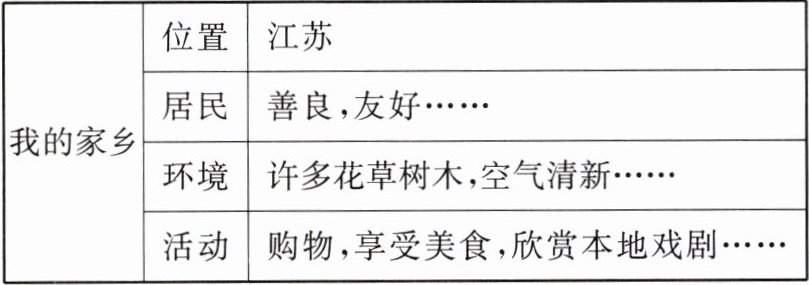
要求:1. 邮件须包括所有提示内容,可适当发挥;
2. 词数 100 左右,邮件首尾已给出,不计入总词数。
Dear Sam,
I’m glad that you are interested in my hometown.
I’d like to invite you to visit my hometown. Looking forward to seeing you here!
Yours,
Li Hai
假如你是阳光中学的七年级学生李海,你的英国朋友 Sam 希望了解你的家乡。请参考下列提示,用英文写一封邮件介绍你的家乡。
要求:1. 邮件须包括所有提示内容,可适当发挥;
2. 词数 100 左右,邮件首尾已给出,不计入总词数。
Dear Sam,
I’m glad that you are interested in my hometown.
I’d like to invite you to visit my hometown. Looking forward to seeing you here!
Yours,
Li Hai
答案:Ⅷ. One possible version:
Dear Sam,
I'm glad that you are interested in my hometown.
My hometown is a small but beautiful and modern city in Jiangsu. People here are kind and friendly. There are many flowers and trees in the city so the air is very fresh. In the morning, we can smell the flowers and hear the birds sing. There are also many interesting things to do here. You can do some shopping, eat delicious food and enjoy local opera here. The traditional Chinese opera is so interesting that I have watched some famous stories many times by now. Besides, you can visit some famous places of interest in your spare time.
I'd like to invite you to visit my hometown. Looking forward to seeing you here!
Yours,
Li Hai
思路梳理 总体分析:①题材:本文是一封邮件;②时态:时态为“一般现在时”;③提示:根据所给提示完成写作,不能遗漏信息,可适当发挥。
写作步骤:第一步,介绍家乡的位置以及居民;第二步,介绍家乡的环境以及可以做的活动;第三步,欢迎对方来自己的家乡。
Dear Sam,
I'm glad that you are interested in my hometown.
My hometown is a small but beautiful and modern city in Jiangsu. People here are kind and friendly. There are many flowers and trees in the city so the air is very fresh. In the morning, we can smell the flowers and hear the birds sing. There are also many interesting things to do here. You can do some shopping, eat delicious food and enjoy local opera here. The traditional Chinese opera is so interesting that I have watched some famous stories many times by now. Besides, you can visit some famous places of interest in your spare time.
I'd like to invite you to visit my hometown. Looking forward to seeing you here!
Yours,
Li Hai
思路梳理 总体分析:①题材:本文是一封邮件;②时态:时态为“一般现在时”;③提示:根据所给提示完成写作,不能遗漏信息,可适当发挥。
写作步骤:第一步,介绍家乡的位置以及居民;第二步,介绍家乡的环境以及可以做的活动;第三步,欢迎对方来自己的家乡。