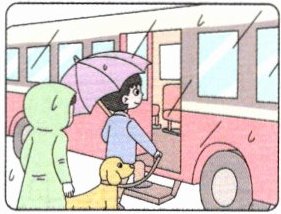
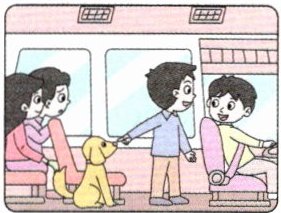
四、新趋势 事件排序 看图,将下列文段重新排序,组成一个完整的幽默小故事。
(
(
(
(
(
4
)The bus driver looks at the dog and says, "Yes, sir. But like the other people, he cannot put his feet on the chair."(
3
)But the man says to the bus driver, "Oh, I can pay for my dog. Can he sit here like the other people?"(
1
)It's raining outside. John gets on the bus.(
2
)Then, a man with a dog gets on the bus. It is a yellow dog and its feet are not clean. People on the bus don't want the dog to sit near them.答案:4 3 1 2
解析:
【分析】
要解决事件排序题,需梳理故事的逻辑发展顺序:首先找故事的开端,通常是场景引入句,“It's raining outside. John gets on the bus.”交代了故事发生的背景,是开篇;接着看承接性语句,“Then”表明“Then, a man with a dog gets on the bus...”是John上车之后的后续事件;然后是对话的逻辑,先由带狗的男人向司机提出请求,即“But the man says to the bus driver...”;最后是司机针对请求给出回应,即“The bus driver looks at the dog and says...”。按照这个开端→发展→对话请求→对话回应的逻辑,就能确定每个句子的位置。
【解析】
1. 确定开篇事件:“It's raining outside. John gets on the bus.”是故事的背景引入,为第1个发生的事件,对应第三个括号填1;
2. 承接开篇的后续事件:“Then, a man with a dog gets on the bus. It is a yellow dog and its feet are not clean. People on the bus don't want the dog to sit near them.”中“Then”体现时间先后,是John上车后的事件,为第2个发生的事件,对应第四个括号填2;
3. 对话的请求环节:带狗的男人向司机提出让狗坐座位的请求,即“But the man says to the bus driver, 'Oh, I can pay for my dog. Can he sit here like the other people?'”,为第3个发生的事件,对应第二个括号填3;
4. 对话的回应环节:司机针对男人的请求给出回应,即“The bus driver looks at the dog and says, 'Yes, sir. But like the other people, he cannot put his feet on the chair.'”,为第4个发生的事件,对应第一个括号填4。
因此,四个括号依次填入的数字为4、3、1、2。
【答案】
4 3 1 2
【知识点】
英语语篇逻辑,事件排序方法,情景对话逻辑
【点评】
本题考查学生对英语语篇逻辑的把握能力,需通过关键词(如Then)和对话的先后顺序梳理事件脉络,明确故事开端、发展、对话互动的逻辑链条,有助于提升学生的语篇理解和逻辑推理能力。
【难度系数】
0.6
要解决事件排序题,需梳理故事的逻辑发展顺序:首先找故事的开端,通常是场景引入句,“It's raining outside. John gets on the bus.”交代了故事发生的背景,是开篇;接着看承接性语句,“Then”表明“Then, a man with a dog gets on the bus...”是John上车之后的后续事件;然后是对话的逻辑,先由带狗的男人向司机提出请求,即“But the man says to the bus driver...”;最后是司机针对请求给出回应,即“The bus driver looks at the dog and says...”。按照这个开端→发展→对话请求→对话回应的逻辑,就能确定每个句子的位置。
【解析】
1. 确定开篇事件:“It's raining outside. John gets on the bus.”是故事的背景引入,为第1个发生的事件,对应第三个括号填1;
2. 承接开篇的后续事件:“Then, a man with a dog gets on the bus. It is a yellow dog and its feet are not clean. People on the bus don't want the dog to sit near them.”中“Then”体现时间先后,是John上车后的事件,为第2个发生的事件,对应第四个括号填2;
3. 对话的请求环节:带狗的男人向司机提出让狗坐座位的请求,即“But the man says to the bus driver, 'Oh, I can pay for my dog. Can he sit here like the other people?'”,为第3个发生的事件,对应第二个括号填3;
4. 对话的回应环节:司机针对男人的请求给出回应,即“The bus driver looks at the dog and says, 'Yes, sir. But like the other people, he cannot put his feet on the chair.'”,为第4个发生的事件,对应第一个括号填4。
因此,四个括号依次填入的数字为4、3、1、2。
【答案】
4 3 1 2
【知识点】
英语语篇逻辑,事件排序方法,情景对话逻辑
【点评】
本题考查学生对英语语篇逻辑的把握能力,需通过关键词(如Then)和对话的先后顺序梳理事件脉络,明确故事开端、发展、对话互动的逻辑链条,有助于提升学生的语篇理解和逻辑推理能力。
【难度系数】
0.6
五、完形填空。
Jessica is an 11-year-old girl in the Philippines. She 1
"My favourite subjects are Maths, English and Filipino(菲律宾语)," says Jessica. "I like to 7
(
B. walks
C. runs
(
B. from
C. with
(
B. because
C. or
(
B. Before
C. Behind
(
B. shines
C. works
(
B. pushes
C. learns
(
B. read
C. get
(
B. either
C. also
(
B. visit
C. help
(
B. comes from
C. waits for
Jessica is an 11-year-old girl in the Philippines. She 1
B
to school from Monday to Friday. "I walk to school 2 C
my two siblings(兄弟姐妹). We walk for an hour," she says. "It's dangerous when we go across a small river, 3 A
I hold them in my arms." 4 B
going to her own class, Jessica first sends her siblings to their classrooms. Not all the children there can go to school. Jessica wants to go to school. "If it 5 A
hard, we ride a horse to school. We wear raincoats," she says. She 6 C
how to ride a horse from her cousin."My favourite subjects are Maths, English and Filipino(菲律宾语)," says Jessica. "I like to 7
B
stories in English or Filipino." She wants to be a teacher. Jessica 8 C
loves sport. She is a member of her school's track and field team(田径队). "I can take part in games. I can 9 B
places, such as schools, the sea, buildings, fields, mountains, and people from other towns. Sport 10 A
children. It helps us keep healthy and strong."(
B
)1. A. ridesB. walks
C. runs
(
C
)2. A. forB. from
C. with
(
A
)3. A. soB. because
C. or
(
B
)4. A. AfterB. Before
C. Behind
(
A
)5. A. rainsB. shines
C. works
(
C
)6. A. buysB. pushes
C. learns
(
B
)7. A. workB. read
C. get
(
C
)8. A. tooB. either
C. also
(
B
)9. A. driveB. visit
C. help
(
A
)10. A. is good forB. comes from
C. waits for
答案:1. B 解析 由下文中“I walk to school”可知,Jessica星期一到星期五走路去上学。故选B。
2. C
3. A 解析 设空处前的“It’s dangerous when we go across a small river”和设空处后的“I hold them in my arms”之间是因果关系,且前为因后为果,所以两者用连词so连接。故选A。
4. B
5. A 解析 由下文中“We wear raincoats”可知,下雨时,他们就骑马去上学。故选A。
6. C 7. B
8. C 解析 在肯定句中谓语动词前表示“也”用also。故选C。
9. B 10. A
2. C
3. A 解析 设空处前的“It’s dangerous when we go across a small river”和设空处后的“I hold them in my arms”之间是因果关系,且前为因后为果,所以两者用连词so连接。故选A。
4. B
5. A 解析 由下文中“We wear raincoats”可知,下雨时,他们就骑马去上学。故选A。
6. C 7. B
8. C 解析 在肯定句中谓语动词前表示“也”用also。故选C。
9. B 10. A
解析:
【分析】
做这篇完形填空时,首先要通读全文,了解菲律宾女孩Jessica的上学日常和相关情况,再结合上下文语境、逻辑关系、固定搭配及词汇用法逐个确定答案:
1. 第1题可通过下文中的“I walk to school”直接锁定出行方式;
2. 第2题需选择表示“和……一起”的介词搭配;
3. 第3题要分析前后句子的因果关系,根据前因后果的逻辑选合适连词;
4. 第4题依据“先送兄弟姐妹去教室,再去自己班级”的动作顺序选时间连词;
5. 第5题结合下文中的“raincoats”判断对应的天气情况;
6. 第6题根据“from her cousin”确定是学习骑马技能;
7. 第7题考虑与“stories”搭配的常用动词;
8. 第8题要区分“也”在不同句式和位置的副词用法差异;
9. 第9题结合语境判断参加比赛能完成的行为;
10. 第10题根据后文“It helps us keep healthy and strong”确定运动对孩子的作用。
【解析】
1. B 解析:由下文中“I walk to school”可知,Jessica周一到周五走路去上学,故选B。
2. C 解析:表示“和……一起”用介词with,此处指Jessica和她的两个兄弟姐妹一起步行上学,故选C。
3. A 解析:设空处前“过河的时候很危险”和设空处后“我把他们抱在怀里”是前因后果的因果关系,因此用连词so连接,故选A。
4. B 解析:根据“Jessica first sends her siblings to their classrooms”可知,在去自己班级之前,她先送兄弟姐妹去教室,before表示“在……之前”,故选B。
5. A 解析:由下文中“We wear raincoats”可知,下大雨的时候,他们会骑马去上学,故选A。
6. C 解析:learn...from...是固定搭配,意为“从……学习……”,此处指她从表哥那里学会了骑马,故选C。
7. B 解析:“read stories”是常用搭配,意为“读故事”,符合语境,故选B。
8. C 解析:在肯定句中,放在谓语动词前表示“也”要用also;too常用于肯定句末尾;either用于否定句末尾,故选C。
9. B 解析:结合语境,参加比赛可以参观不同的地方,比如学校、海边等,visit表示“参观,拜访”,符合题意,故选B。
10. A 解析:由后文“It helps us keep healthy and strong”可知,运动对孩子们有好处,be good for意为“对……有好处”,故选A。
【答案】
1.B 2.C 3.A 4.B 5.A 6.C 7.B 8.C 9.B 10.A
【知识点】
1. 上下文语境推理
2. 连词逻辑运用
3. 副词“也”的用法
【点评】
这篇完形填空围绕菲律宾女孩Jessica的上学经历展开,题目多考查结合上下文语境的推理判断,同时涉及介词、连词、副词和固定搭配的用法辨析,贴近学生生活,能引导学生了解不同地区的上学情况,需要学生仔细捕捉文中细节信息来作答。
【难度系数】
0.6
做这篇完形填空时,首先要通读全文,了解菲律宾女孩Jessica的上学日常和相关情况,再结合上下文语境、逻辑关系、固定搭配及词汇用法逐个确定答案:
1. 第1题可通过下文中的“I walk to school”直接锁定出行方式;
2. 第2题需选择表示“和……一起”的介词搭配;
3. 第3题要分析前后句子的因果关系,根据前因后果的逻辑选合适连词;
4. 第4题依据“先送兄弟姐妹去教室,再去自己班级”的动作顺序选时间连词;
5. 第5题结合下文中的“raincoats”判断对应的天气情况;
6. 第6题根据“from her cousin”确定是学习骑马技能;
7. 第7题考虑与“stories”搭配的常用动词;
8. 第8题要区分“也”在不同句式和位置的副词用法差异;
9. 第9题结合语境判断参加比赛能完成的行为;
10. 第10题根据后文“It helps us keep healthy and strong”确定运动对孩子的作用。
【解析】
1. B 解析:由下文中“I walk to school”可知,Jessica周一到周五走路去上学,故选B。
2. C 解析:表示“和……一起”用介词with,此处指Jessica和她的两个兄弟姐妹一起步行上学,故选C。
3. A 解析:设空处前“过河的时候很危险”和设空处后“我把他们抱在怀里”是前因后果的因果关系,因此用连词so连接,故选A。
4. B 解析:根据“Jessica first sends her siblings to their classrooms”可知,在去自己班级之前,她先送兄弟姐妹去教室,before表示“在……之前”,故选B。
5. A 解析:由下文中“We wear raincoats”可知,下大雨的时候,他们会骑马去上学,故选A。
6. C 解析:learn...from...是固定搭配,意为“从……学习……”,此处指她从表哥那里学会了骑马,故选C。
7. B 解析:“read stories”是常用搭配,意为“读故事”,符合语境,故选B。
8. C 解析:在肯定句中,放在谓语动词前表示“也”要用also;too常用于肯定句末尾;either用于否定句末尾,故选C。
9. B 解析:结合语境,参加比赛可以参观不同的地方,比如学校、海边等,visit表示“参观,拜访”,符合题意,故选B。
10. A 解析:由后文“It helps us keep healthy and strong”可知,运动对孩子们有好处,be good for意为“对……有好处”,故选A。
【答案】
1.B 2.C 3.A 4.B 5.A 6.C 7.B 8.C 9.B 10.A
【知识点】
1. 上下文语境推理
2. 连词逻辑运用
3. 副词“也”的用法
【点评】
这篇完形填空围绕菲律宾女孩Jessica的上学经历展开,题目多考查结合上下文语境的推理判断,同时涉及介词、连词、副词和固定搭配的用法辨析,贴近学生生活,能引导学生了解不同地区的上学情况,需要学生仔细捕捉文中细节信息来作答。
【难度系数】
0.6