四、根据图片或首字母提示填空,完成短文。
Thumbelina(拇指姑娘) w
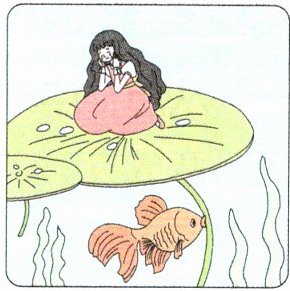
Hearing her crying, a fish comes and asks her w
Thumbelina lives in the forest. She s
Thumbelina(拇指姑娘) w
akes
up and finds herself on a lily pad (睡莲的浮叶). She is afraid
and starts to cry.Hearing her crying, a fish comes and asks her w
hy
. “I want to go back to the shore(岸), but I can’t swim
,” Thumbelina says. The fish
bites off the stalk(叶柄) and the lily pad takes Thumbelina away with the running water. Finally, it stops
beside a forest.Thumbelina lives in the forest. She s
leeps
on a small grass bed. The cold winter is coming, but she still wears her summer clothes
. She is so cold. She has/hopes
to find a warm
place.答案:四、wakes,afraid,why,swim,fish,stops,sleeps,clothes,has/hopes,warm
解析:
【分析】
首先我们先通读短文,理解故事的大致情节:拇指姑娘醒来后在睡莲叶上,害怕哭泣,鱼帮助她,最后她到了森林,冬天来了想找温暖的地方。然后逐个分析每个空:
1. 第一空,结合短语“wake up(醒来)”,主语Thumbelina是第三人称单数,一般现在时,所以要填wake的第三人称单数形式。
2. 第二空,根据后文“starts to cry(开始哭)”,结合首字母a,可知拇指姑娘此时很害怕,确定要填的单词。
3. 第三空,鱼听到哭声过来询问原因,结合首字母w,用对应的疑问词来问她哭泣的原因。
4. 第四空,拇指姑娘想回岸但无法做到,结合语境可知她不会游泳,can't后接动词原形,确定单词。
5. 第五空,前文提到了a fish,这里是这条鱼帮助她咬断叶柄,所以填对应的名词。
6. 第六空,睡莲叶随着水流移动,最后停在森林旁,主语it是第三人称单数,一般现在时,要填stop的第三人称单数形式。
7. 第七空,她在小草床上睡觉,主语she是第三人称单数,一般现在时,要填sleep的第三人称单数形式。
8. 第八空,冬天来了她还穿着夏天的衣服,结合首字母c,确定要填的单词。
9. 第九空,她很冷,所以不得不/希望找温暖的地方,结合首字母h,确定符合语境的单词。
10. 第十空,对应前面的cold winter,需要找温暖的地方,确定单词。
【解析】
1. 第一空:固定短语wake up表示“醒来”,主语Thumbelina是第三人称单数,一般现在时中谓语动词用第三人称单数形式,故填wakes。
2. 第二空:根据后文“starts to cry”可知拇指姑娘很害怕,首字母为a,故填afraid。
3. 第三空:鱼听到哭声过来询问原因,结合首字母w,用why表示“为什么”,故填why。
4. 第四空:拇指姑娘想回岸边但不会游泳,can't是情态动词,后接动词原形,故填swim。
5. 第五空:前文提到a fish,此处指这条鱼咬断叶柄,故填fish。
6. 第六空:睡莲叶随着水流移动,最后停在森林旁边,主语it是第三人称单数,一般现在时谓语动词用第三人称单数形式,故填stops。
7. 第七空:她在小草床上睡觉,主语she是第三人称单数,一般现在时谓语动词用第三人称单数形式,故填sleeps。
8. 第八空:寒冷的冬天来了,她还穿着夏天的衣服,结合首字母c,故填clothes。
9. 第九空:她很冷,所以不得不/希望找到一个温暖的地方,结合首字母h,has to表示“不得不”,hopes表示“希望”,都符合语境,故填has/hopes。
10. 第十空:对应前文的“cold winter”,她需要找温暖的地方,故填warm。
【答案】
wakes,afraid,why,swim,fish,stops,sleeps,clothes,has/hopes,warm
【知识点】
1. 一般现在时
2. 固定短语搭配
3. 语境推理填空
【点评】
这道题通过拇指姑娘的趣味故事,结合图片和首字母提示,考查学生对一般现在时的运用、固定短语的掌握以及结合语境推理单词的能力,既充满趣味性,又能全面检测学生的英语基础和语篇理解能力。
【难度系数】
0.7
首先我们先通读短文,理解故事的大致情节:拇指姑娘醒来后在睡莲叶上,害怕哭泣,鱼帮助她,最后她到了森林,冬天来了想找温暖的地方。然后逐个分析每个空:
1. 第一空,结合短语“wake up(醒来)”,主语Thumbelina是第三人称单数,一般现在时,所以要填wake的第三人称单数形式。
2. 第二空,根据后文“starts to cry(开始哭)”,结合首字母a,可知拇指姑娘此时很害怕,确定要填的单词。
3. 第三空,鱼听到哭声过来询问原因,结合首字母w,用对应的疑问词来问她哭泣的原因。
4. 第四空,拇指姑娘想回岸但无法做到,结合语境可知她不会游泳,can't后接动词原形,确定单词。
5. 第五空,前文提到了a fish,这里是这条鱼帮助她咬断叶柄,所以填对应的名词。
6. 第六空,睡莲叶随着水流移动,最后停在森林旁,主语it是第三人称单数,一般现在时,要填stop的第三人称单数形式。
7. 第七空,她在小草床上睡觉,主语she是第三人称单数,一般现在时,要填sleep的第三人称单数形式。
8. 第八空,冬天来了她还穿着夏天的衣服,结合首字母c,确定要填的单词。
9. 第九空,她很冷,所以不得不/希望找温暖的地方,结合首字母h,确定符合语境的单词。
10. 第十空,对应前面的cold winter,需要找温暖的地方,确定单词。
【解析】
1. 第一空:固定短语wake up表示“醒来”,主语Thumbelina是第三人称单数,一般现在时中谓语动词用第三人称单数形式,故填wakes。
2. 第二空:根据后文“starts to cry”可知拇指姑娘很害怕,首字母为a,故填afraid。
3. 第三空:鱼听到哭声过来询问原因,结合首字母w,用why表示“为什么”,故填why。
4. 第四空:拇指姑娘想回岸边但不会游泳,can't是情态动词,后接动词原形,故填swim。
5. 第五空:前文提到a fish,此处指这条鱼咬断叶柄,故填fish。
6. 第六空:睡莲叶随着水流移动,最后停在森林旁边,主语it是第三人称单数,一般现在时谓语动词用第三人称单数形式,故填stops。
7. 第七空:她在小草床上睡觉,主语she是第三人称单数,一般现在时谓语动词用第三人称单数形式,故填sleeps。
8. 第八空:寒冷的冬天来了,她还穿着夏天的衣服,结合首字母c,故填clothes。
9. 第九空:她很冷,所以不得不/希望找到一个温暖的地方,结合首字母h,has to表示“不得不”,hopes表示“希望”,都符合语境,故填has/hopes。
10. 第十空:对应前文的“cold winter”,她需要找温暖的地方,故填warm。
【答案】
wakes,afraid,why,swim,fish,stops,sleeps,clothes,has/hopes,warm
【知识点】
1. 一般现在时
2. 固定短语搭配
3. 语境推理填空
【点评】
这道题通过拇指姑娘的趣味故事,结合图片和首字母提示,考查学生对一般现在时的运用、固定短语的掌握以及结合语境推理单词的能力,既充满趣味性,又能全面检测学生的英语基础和语篇理解能力。
【难度系数】
0.7
五、完形填空。
There is a little old woman and a little old man. One day, the little old woman 1 a gingerbread man(姜饼人). She 2 him on a tray(托盘) to bake in the oven(烤炉).
The little old man is 3. He wants to eat the gingerbread man. The little old woman has a 4 at the oven and she opens the 5.
Oh! The gingerbread man jumps 6. He runs away and shouts, “You can’t eat me!” “Come 7!” says the little old man.
The gingerbread man turns his head and laughs, “Run! Run as fast as you can! You can’t get me 8 I’m the gingerbread man!”
The little old woman and the little old man 9 him. But the gingerbread man is really 10! He can run faster than the man and the woman. He runs on the grass and doesn’t stop.
(
B. makes
C. takes
(
B. puts
C. plays
(
B. tired
C. hungry
(
B. try
C. fun
(
B. door
C. window
(
B. out
C. on
(
B. from
C. back
(
B. so
C. but
(
B. run after
C. show around
(
B. clever
C. late
There is a little old woman and a little old man. One day, the little old woman 1 a gingerbread man(姜饼人). She 2 him on a tray(托盘) to bake in the oven(烤炉).
The little old man is 3. He wants to eat the gingerbread man. The little old woman has a 4 at the oven and she opens the 5.
Oh! The gingerbread man jumps 6. He runs away and shouts, “You can’t eat me!” “Come 7!” says the little old man.
The gingerbread man turns his head and laughs, “Run! Run as fast as you can! You can’t get me 8 I’m the gingerbread man!”
The little old woman and the little old man 9 him. But the gingerbread man is really 10! He can run faster than the man and the woman. He runs on the grass and doesn’t stop.
(
B
)1. A. buysB. makes
C. takes
(
B
)2. A. findsB. puts
C. plays
(
C
)3. A. thirstyB. tired
C. hungry
(
A
)4. A. lookB. try
C. fun
(
B
)5. A. gingerbreadB. door
C. window
(
B
)6. A. inB. out
C. on
(
C
)7. A. outB. from
C. back
(
A
)8. A. becauseB. so
C. but
(
B
)9. A. wait forB. run after
C. show around
(
A
)10. A. fastB. clever
C. late
答案:五、1. B 2. B 3. C 4. A
5. B 解析·由下文中“The gingerbread man jumps _6. He runs away and shouts ...”可知,应该是小老太太把烤炉的门打开了,姜饼人才能逃跑。故选 B。
6. B 解析·由下文中“He runs away”可知,姜饼人从烤炉里逃跑了,所以此处指的是姜饼人从烤炉里跳出来。jump out 意为“跳出来”。故选 B。
7. C
8. A 解析·设空处前的“You can't get me”和设空处后的“I'm the gingerbread man”之间是因果关系,且前为果后为因,所以用连词 because 连接。故选 A。
9. B 10. A
5. B 解析·由下文中“The gingerbread man jumps _6. He runs away and shouts ...”可知,应该是小老太太把烤炉的门打开了,姜饼人才能逃跑。故选 B。
6. B 解析·由下文中“He runs away”可知,姜饼人从烤炉里逃跑了,所以此处指的是姜饼人从烤炉里跳出来。jump out 意为“跳出来”。故选 B。
7. C
8. A 解析·设空处前的“You can't get me”和设空处后的“I'm the gingerbread man”之间是因果关系,且前为果后为因,所以用连词 because 连接。故选 A。
9. B 10. A
解析:
【分析】
这是一篇趣味故事类完形填空,解题时首先要通读全文,了解故事整体情节:小老太太制作姜饼人准备烘烤,姜饼人跳出来逃跑,老夫妇追赶却追不上。然后逐个分析每个空,结合上下文语境提示、固定搭配和逻辑关系来选择合适选项。比如第3题,根据后文“He wants to eat the gingerbread man”可推断小老头是饿了;第8题要判断前后句因果关系,前句是结果、后句是原因,所以用because。
【解析】
1. 第1题:根据后文“to bake in the oven”可知,小老太太是制作了姜饼人,buys(买)、takes(拿)不符合语境,故选B。
2. 第2题:结合语境,制作好姜饼人后要把它放在托盘上放进烤炉,puts(放)符合动作逻辑,finds(发现)、plays(玩)不合适,故选B。
3. 第3题:由“He wants to eat the gingerbread man”可知,小老头是饿了,thirsty(渴的)、tired(累的)不符合,故选C。
4. 第4题:“have a look at”是固定搭配,意为“看一看”,符合小老太太查看烤炉的动作,try(尝试)、fun(乐趣)不构成搭配,故选A。
5. 第5题:根据后文“The gingerbread man jumps out. He runs away”可知,只有打开烤炉的门,姜饼人才能逃跑,gingerbread(姜饼人)、window(窗户)不符合语境,故选B。
6. 第6题:由“He runs away”可知姜饼人从烤炉里跳出来了,“jump out”意为“跳出来”,符合语境,jump in(跳进去)、jump on(跳上)不符合,故选B。
7. 第7题:姜饼人跑了,小老头应该喊“回来”,“come back”是固定短语,符合语境,come out(出来)、come from(来自)不合适,故选C。
8. 第8题:前句“You can't get me”是结果,后句“I'm the gingerbread man”是原因,两者是前果后因的因果关系,用because连接,so(因此,前因后果)、but(但是,转折)不符合逻辑,故选A。
9. 第9题:姜饼人跑了,老夫妇应该是追赶它,“run after”意为“追赶”,wait for(等待)、show around(带领参观)不符合语境,故选B。
10. 第10题:根据后文“He can run faster than the man and the woman”可知,姜饼人跑得很快,clever(聪明的)、late(晚的)不符合,故选A。
【答案】
1. B 2. B 3. C 4. A 5. B 6. B 7. C 8. A 9. B 10. A
【知识点】
1. 固定短语搭配
2. 语境逻辑推理
3. 连词因果用法
【点评】
这篇完形填空以趣味姜饼人逃跑的故事为载体,考查学生对日常词汇、固定短语的掌握以及结合上下文语境进行逻辑推理的能力。题目贴近小学生认知,情节生动,解题时需紧扣上下文线索,理清句子间的逻辑关系,就能顺利完成答题。
【难度系数】
0.7
这是一篇趣味故事类完形填空,解题时首先要通读全文,了解故事整体情节:小老太太制作姜饼人准备烘烤,姜饼人跳出来逃跑,老夫妇追赶却追不上。然后逐个分析每个空,结合上下文语境提示、固定搭配和逻辑关系来选择合适选项。比如第3题,根据后文“He wants to eat the gingerbread man”可推断小老头是饿了;第8题要判断前后句因果关系,前句是结果、后句是原因,所以用because。
【解析】
1. 第1题:根据后文“to bake in the oven”可知,小老太太是制作了姜饼人,buys(买)、takes(拿)不符合语境,故选B。
2. 第2题:结合语境,制作好姜饼人后要把它放在托盘上放进烤炉,puts(放)符合动作逻辑,finds(发现)、plays(玩)不合适,故选B。
3. 第3题:由“He wants to eat the gingerbread man”可知,小老头是饿了,thirsty(渴的)、tired(累的)不符合,故选C。
4. 第4题:“have a look at”是固定搭配,意为“看一看”,符合小老太太查看烤炉的动作,try(尝试)、fun(乐趣)不构成搭配,故选A。
5. 第5题:根据后文“The gingerbread man jumps out. He runs away”可知,只有打开烤炉的门,姜饼人才能逃跑,gingerbread(姜饼人)、window(窗户)不符合语境,故选B。
6. 第6题:由“He runs away”可知姜饼人从烤炉里跳出来了,“jump out”意为“跳出来”,符合语境,jump in(跳进去)、jump on(跳上)不符合,故选B。
7. 第7题:姜饼人跑了,小老头应该喊“回来”,“come back”是固定短语,符合语境,come out(出来)、come from(来自)不合适,故选C。
8. 第8题:前句“You can't get me”是结果,后句“I'm the gingerbread man”是原因,两者是前果后因的因果关系,用because连接,so(因此,前因后果)、but(但是,转折)不符合逻辑,故选A。
9. 第9题:姜饼人跑了,老夫妇应该是追赶它,“run after”意为“追赶”,wait for(等待)、show around(带领参观)不符合语境,故选B。
10. 第10题:根据后文“He can run faster than the man and the woman”可知,姜饼人跑得很快,clever(聪明的)、late(晚的)不符合,故选A。
【答案】
1. B 2. B 3. C 4. A 5. B 6. B 7. C 8. A 9. B 10. A
【知识点】
1. 固定短语搭配
2. 语境逻辑推理
3. 连词因果用法
【点评】
这篇完形填空以趣味姜饼人逃跑的故事为载体,考查学生对日常词汇、固定短语的掌握以及结合上下文语境进行逻辑推理的能力。题目贴近小学生认知,情节生动,解题时需紧扣上下文线索,理清句子间的逻辑关系,就能顺利完成答题。
【难度系数】
0.7