A
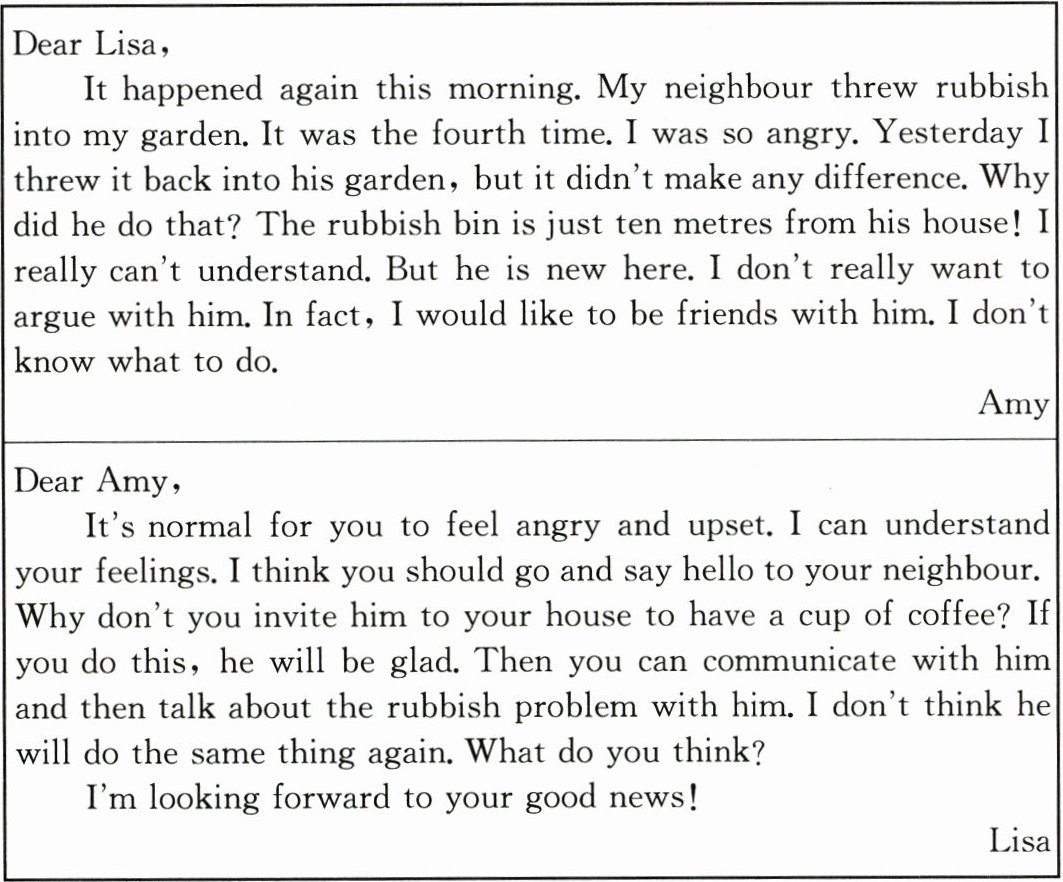
Dear Lisa,
()1. Why was Amy angry?
A. Because her neighbour refused her invitation.
B. Because her neighbour threw rubbish into her garden again.
C. Because she had an unhappy communication with her neighbour.
D. Because her neighbour was noisy.
()2. Why doesn’t Amy want to argue with her neighbour?
A. Because he is new here.
B. Because he is very strong.
C. Because she is afraid of him.
D. Because he is very shy.
()3. What does Lisa advise Amy to do?
A. Throw the rubbish back.
B. Invite her neighbour for coffee.
C. Tell the police about it.
D. Write a letter to her neighbour.
Dear Lisa,
()1. Why was Amy angry?
A. Because her neighbour refused her invitation.
B. Because her neighbour threw rubbish into her garden again.
C. Because she had an unhappy communication with her neighbour.
D. Because her neighbour was noisy.
()2. Why doesn’t Amy want to argue with her neighbour?
A. Because he is new here.
B. Because he is very strong.
C. Because she is afraid of him.
D. Because he is very shy.
()3. What does Lisa advise Amy to do?
A. Throw the rubbish back.
B. Invite her neighbour for coffee.
C. Tell the police about it.
D. Write a letter to her neighbour.
答案:1. B 【点拨】根据埃米的信中“It happened again this morning. My neighbour threw rubbish into my garden.”可知,埃米生气是因为邻居再次把垃圾扔到她的花园里。故选B。
2. A 【点拨】根据埃米的信中“But he is new here. I don’t really want to argue with him.”可知,埃米不想和邻居争吵是因为邻居是新来的。故选A。
3. B 【点拨】莉萨在回信中建议“Why don’t you invite him to your house to have a cup of coffee?”可知,是邀请邻居喝咖啡。故选B。
2. A 【点拨】根据埃米的信中“But he is new here. I don’t really want to argue with him.”可知,埃米不想和邻居争吵是因为邻居是新来的。故选A。
3. B 【点拨】莉萨在回信中建议“Why don’t you invite him to your house to have a cup of coffee?”可知,是邀请邻居喝咖啡。故选B。
解析:
翻译:
A
亲爱的莉萨:
( )1. 艾米为什么生气?
A. 因为她的邻居拒绝了她的邀请。
B. 因为她的邻居又把垃圾扔到她的花园里了。
C. 因为她和邻居沟通得不愉快。
D. 因为她的邻居很吵闹。
( )2. 艾米为什么不想和邻居争吵?
A. 因为他是新来的。
B. 因为他很强壮。
C. 因为她害怕他。
D. 因为他很害羞。
( )3. 莉萨建议艾米做什么?
A. 把垃圾扔回去。
B. 邀请她的邻居喝咖啡。
C. 把这件事告诉警察。
D. 给她的邻居写一封信。
A
亲爱的莉萨:
( )1. 艾米为什么生气?
A. 因为她的邻居拒绝了她的邀请。
B. 因为她的邻居又把垃圾扔到她的花园里了。
C. 因为她和邻居沟通得不愉快。
D. 因为她的邻居很吵闹。
( )2. 艾米为什么不想和邻居争吵?
A. 因为他是新来的。
B. 因为他很强壮。
C. 因为她害怕他。
D. 因为他很害羞。
( )3. 莉萨建议艾米做什么?
A. 把垃圾扔回去。
B. 邀请她的邻居喝咖啡。
C. 把这件事告诉警察。
D. 给她的邻居写一封信。
B(2025·江苏南京联合体期末)
Most people who move to a foreign country may experience a period of time when they feel very homesick and have a lot of worries. This feeling is often called “culture shock(冲击)”. It is important to understand it and learn what to do with it if you want to adapt to your new home’s culture successfully.
Generally speaking,there are four stages(阶段) that you will experience after you move to a foreign country. The first stage is usually called the “excitement” stage. When you are in a new environment,you’ll be interested in the new culture. Everything may seem exciting and everyone may seem friendly.
But it won’t be long before you move from the “excitement” stage to the second stage. The excitement you felt at first turns into worries. It seems that everything is difficult. The language is hard to learn,friends are difficult to make,and even simple things like shopping have become a difficult problem. It is at this “stress” stage that you may feel worried and homesick:This is the stage which is called “culture shock”.
However,culture shock doesn’t last for very long. If you are one of those who manage to get through it,you will move to the “recovery(恢复)” stage. At this stage,you start to understand and accept the way things are done and the way people behave in your new environment.
The last stage is the “home” stage. This is the stage when you start to feel at home in the new culture. You start to learn from your new home and to like some ways of the new culture better.
Culture shock is common. Everyone in a new situation will go through it. Continue to be brave! And getting through culture shock will be a piece of cake.
()4. Among the four stages,which stage can explain how “culture shock” happens?
A. The “recovery” stage.
B. The “stress” stage.
C. The “excitement” stage.
D. The “home” stage.
()5. What does the underlined phrase “adapt to” in Paragraph 1 mean?
A. get used to B. get tired of
C. have trouble with D. look forward to
()6. Jane went to study in Germany for the first time last year. What might be the correct order according to the passage?
①Jane couldn’t understand German very well in class.
②After half a year’s hard work,Jane had no language problems.
③Everything in the college was so fresh.
④Jane enjoyed spending good time with her German friends.
A. ①②③④ B. ③①②④
C. ②④③① D. ③①④②
()7. What can we infer from the last paragraph of the passage?
A. Culture shock is easy to get through for everyone.
B. People should avoid culture shock in a new country.
C. Being brave helps people deal with culture shock.
D. Only a few people will experience culture shock.
Most people who move to a foreign country may experience a period of time when they feel very homesick and have a lot of worries. This feeling is often called “culture shock(冲击)”. It is important to understand it and learn what to do with it if you want to adapt to your new home’s culture successfully.
Generally speaking,there are four stages(阶段) that you will experience after you move to a foreign country. The first stage is usually called the “excitement” stage. When you are in a new environment,you’ll be interested in the new culture. Everything may seem exciting and everyone may seem friendly.
But it won’t be long before you move from the “excitement” stage to the second stage. The excitement you felt at first turns into worries. It seems that everything is difficult. The language is hard to learn,friends are difficult to make,and even simple things like shopping have become a difficult problem. It is at this “stress” stage that you may feel worried and homesick:This is the stage which is called “culture shock”.
However,culture shock doesn’t last for very long. If you are one of those who manage to get through it,you will move to the “recovery(恢复)” stage. At this stage,you start to understand and accept the way things are done and the way people behave in your new environment.
The last stage is the “home” stage. This is the stage when you start to feel at home in the new culture. You start to learn from your new home and to like some ways of the new culture better.
Culture shock is common. Everyone in a new situation will go through it. Continue to be brave! And getting through culture shock will be a piece of cake.
()4. Among the four stages,which stage can explain how “culture shock” happens?
A. The “recovery” stage.
B. The “stress” stage.
C. The “excitement” stage.
D. The “home” stage.
()5. What does the underlined phrase “adapt to” in Paragraph 1 mean?
A. get used to B. get tired of
C. have trouble with D. look forward to
()6. Jane went to study in Germany for the first time last year. What might be the correct order according to the passage?
①Jane couldn’t understand German very well in class.
②After half a year’s hard work,Jane had no language problems.
③Everything in the college was so fresh.
④Jane enjoyed spending good time with her German friends.
A. ①②③④ B. ③①②④
C. ②④③① D. ③①④②
()7. What can we infer from the last paragraph of the passage?
A. Culture shock is easy to get through for everyone.
B. People should avoid culture shock in a new country.
C. Being brave helps people deal with culture shock.
D. Only a few people will experience culture shock.
答案:4. B 【点拨】根据第三段中“It is at this ‘stress’ stage that you may feel worried and homesick: This is the stage which is called ‘culture shock’.”可知,文化冲击发生在“压力”期。故选B。
5. A 【点拨】根据语境可知,此处adapt to与get used to意思相近。故选A。
6. B 【点拨】根据文章四个阶段的描述可知,正确顺序为③①②④。故选B。
7. C 【点拨】根据“Continue to be brave! And getting through culture shock will be a piece of cake.”可推断出,勇敢是应对文化冲击的关键。故选C。
5. A 【点拨】根据语境可知,此处adapt to与get used to意思相近。故选A。
6. B 【点拨】根据文章四个阶段的描述可知,正确顺序为③①②④。故选B。
7. C 【点拨】根据“Continue to be brave! And getting through culture shock will be a piece of cake.”可推断出,勇敢是应对文化冲击的关键。故选C。
解析:
翻译:
B(2025·江苏南京联合体期末)
大多数移居国外的人可能会经历一段非常想家且有很多烦恼的时期。这种感觉通常被称为“文化冲击”。如果你想成功地适应你新家的文化,了解它并学习如何应对它是很重要的。
一般来说,在你移居国外后,你会经历四个阶段。第一个阶段通常被称为“兴奋”阶段。当你处于一个新环境中时,你会对新文化感兴趣。一切似乎都令人兴奋,每个人似乎都很友好。
但没过多久,你就会从“兴奋”阶段进入第二阶段。你最初感受到的兴奋变成了担忧。似乎一切都很困难。语言很难学,朋友很难交,甚至像购物这样简单的事情也成了一个难题。正是在这个“压力”阶段,你可能会感到担忧和想家:这个阶段被称为“文化冲击”。
然而,文化冲击不会持续很长时间。如果你是那些成功度过它的人之一,你将进入“恢复”阶段。在这个阶段,你开始理解并接受在你的新环境中事情的处理方式和人们的行为方式。
最后一个阶段是“归属”阶段。这是你开始在新文化中感到自在的阶段。你开始从你的新家学习,并更喜欢新文化的一些方式。
文化冲击是很常见的。处于新环境中的每个人都会经历它。继续勇敢吧!度过文化冲击将是小菜一碟。
4. 在这四个阶段中,哪个阶段可以解释“文化冲击”是如何发生的?
A. “恢复”阶段。
B. “压力”阶段。
C. “兴奋”阶段。
D. “归属”阶段。
5. 第一段中划线短语“adapt to”是什么意思?
A. 习惯于
B. 对……感到厌倦
C. 对……有困难
D. 期待
6. 简去年第一次去德国学习。根据文章,正确的顺序可能是什么?
①简在课堂上不太懂德语。
②经过半年的努力,简没有语言问题了。
③大学里的一切都很新鲜。
④简喜欢和她的德国朋友共度美好时光。
A. ①②③④
B. ③①②④
C. ②④③①
D. ③①④②
7. 从文章的最后一段我们可以推断出什么?
A. 文化冲击对每个人来说都很容易度过。
B. 人们应该在新国家避免文化冲击。
C. 勇敢有助于人们应对文化冲击。
D. 只有少数人会经历文化冲击。
B(2025·江苏南京联合体期末)
大多数移居国外的人可能会经历一段非常想家且有很多烦恼的时期。这种感觉通常被称为“文化冲击”。如果你想成功地适应你新家的文化,了解它并学习如何应对它是很重要的。
一般来说,在你移居国外后,你会经历四个阶段。第一个阶段通常被称为“兴奋”阶段。当你处于一个新环境中时,你会对新文化感兴趣。一切似乎都令人兴奋,每个人似乎都很友好。
但没过多久,你就会从“兴奋”阶段进入第二阶段。你最初感受到的兴奋变成了担忧。似乎一切都很困难。语言很难学,朋友很难交,甚至像购物这样简单的事情也成了一个难题。正是在这个“压力”阶段,你可能会感到担忧和想家:这个阶段被称为“文化冲击”。
然而,文化冲击不会持续很长时间。如果你是那些成功度过它的人之一,你将进入“恢复”阶段。在这个阶段,你开始理解并接受在你的新环境中事情的处理方式和人们的行为方式。
最后一个阶段是“归属”阶段。这是你开始在新文化中感到自在的阶段。你开始从你的新家学习,并更喜欢新文化的一些方式。
文化冲击是很常见的。处于新环境中的每个人都会经历它。继续勇敢吧!度过文化冲击将是小菜一碟。
4. 在这四个阶段中,哪个阶段可以解释“文化冲击”是如何发生的?
A. “恢复”阶段。
B. “压力”阶段。
C. “兴奋”阶段。
D. “归属”阶段。
5. 第一段中划线短语“adapt to”是什么意思?
A. 习惯于
B. 对……感到厌倦
C. 对……有困难
D. 期待
6. 简去年第一次去德国学习。根据文章,正确的顺序可能是什么?
①简在课堂上不太懂德语。
②经过半年的努力,简没有语言问题了。
③大学里的一切都很新鲜。
④简喜欢和她的德国朋友共度美好时光。
A. ①②③④
B. ③①②④
C. ②④③①
D. ③①④②
7. 从文章的最后一段我们可以推断出什么?
A. 文化冲击对每个人来说都很容易度过。
B. 人们应该在新国家避免文化冲击。
C. 勇敢有助于人们应对文化冲击。
D. 只有少数人会经历文化冲击。