(
—He must be in the garden. I saw him
A.lying
B.lay
C.to lie
D.lied
A
)5.—Where is my little brother?—He must be in the garden. I saw him
A
under the tree when I walked past.A.lying
B.lay
C.to lie
D.lied
答案:5. A 【点拨】see sb doing sth 看到某人正在做某事。故选 A。
解析:
【分析】
拿到这道题首先要定位考点是感官动词see的固定搭配用法,第一步先观察句中的时间提示:"when I walked past"(我路过的时候),这是一个明确的过去瞬时时间点,说明动作是在我路过的那一瞬间正在发生的;第二步回忆see的两个核心常用搭配:see sb do sth表示看见某人做某事的完整全过程,see sb doing sth表示看见某人正在做某事,对应瞬时时间点的场景;第三步再辨析动词lie(躺)的不同形式,匹配see sb doing的结构就能选出正确答案。
【解析】
1. 语境判断:句中时间状语"when I walked past"强调我路过的那个过去瞬间,动作正处于发生的状态。
2. 搭配匹配:see sb. doing sth. 是固定用法,含义为“看见某人正在做某事”,完全符合此处“路过时看见他正躺在树下”的语义。
3. 形式辨析:动词lie表示“躺”时,对应的现在分词形式为lying,对应选项A。
其余选项错误原因:B选项lay是lie的过去式,不符合see的搭配规则;C选项to lie是不定式,see后接不定式作宾补时需要省略to;D选项lied是lie作“说谎”含义时的过去式,既不符合语义也不符合结构要求。
【答案】
A
【知识点】
see的固定搭配,现在分词作宾补
【点评】
本题属于基础的动词搭配辨析题,核心区分感官动词see后接do和doing作宾补的不同适用场景,只要熟记两个搭配的语义差异,结合题干给出的瞬时时间提示就能快速选出正确答案,是初中英语非谓语部分的常规基础考点。
【难度系数】
0.8
拿到这道题首先要定位考点是感官动词see的固定搭配用法,第一步先观察句中的时间提示:"when I walked past"(我路过的时候),这是一个明确的过去瞬时时间点,说明动作是在我路过的那一瞬间正在发生的;第二步回忆see的两个核心常用搭配:see sb do sth表示看见某人做某事的完整全过程,see sb doing sth表示看见某人正在做某事,对应瞬时时间点的场景;第三步再辨析动词lie(躺)的不同形式,匹配see sb doing的结构就能选出正确答案。
【解析】
1. 语境判断:句中时间状语"when I walked past"强调我路过的那个过去瞬间,动作正处于发生的状态。
2. 搭配匹配:see sb. doing sth. 是固定用法,含义为“看见某人正在做某事”,完全符合此处“路过时看见他正躺在树下”的语义。
3. 形式辨析:动词lie表示“躺”时,对应的现在分词形式为lying,对应选项A。
其余选项错误原因:B选项lay是lie的过去式,不符合see的搭配规则;C选项to lie是不定式,see后接不定式作宾补时需要省略to;D选项lied是lie作“说谎”含义时的过去式,既不符合语义也不符合结构要求。
【答案】
A
【知识点】
see的固定搭配,现在分词作宾补
【点评】
本题属于基础的动词搭配辨析题,核心区分感官动词see后接do和doing作宾补的不同适用场景,只要熟记两个搭配的语义差异,结合题干给出的瞬时时间提示就能快速选出正确答案,是初中英语非谓语部分的常规基础考点。
【难度系数】
0.8
四、根据短文内容,在文中空白处填入 1 个适当的单词,或用括号内所给单词的正确形式填空。
Teahouse is one of Lao She’s most famous plays. He
Lao She was born
At Lao She Teahouse today, customers can drink tea
1. 2. 3. 4. 5.
6. 7. 8. 9. 10.
Teahouse is one of Lao She’s most famous plays. He
wrote
(write)it in 1957. The play has three acts and shows the lives of common people in China from the end of the nineteenth
(nineteen)century(世纪)to the middle of the twentieth century. It tells
(tell)us the story of Wang Lifa and the customers(顾客)of his teahouse in Beijing. It describes the changes(变化)of China over fifty years.Lao She was born
in
Beijing in 1899. His mother sent him
(he)to a teacher’s school in 1913. After finishing school in 1918, he became a head teacher of a primary school. In 1924, Lao She left home and went to England. He taught Chinese at a
college in London and decided to come
(come)back to China five years later. He created many plays, novels and short stories about people’s lives, and was named “the People’s Artist”. Lao She is one of the greatest
(great)Chinese writers of the twentieth century.At Lao She Teahouse today, customers can drink tea
and
eat delicious Beijing food. If you like Beijing opera, traditional music or magic shows, you can enjoy them at the teahouse. Lao She Teahouse welcomes everyone from all over the world warmly
(warm).1. 2. 3. 4. 5.
6. 7. 8. 9. 10.
答案:1. wrote 2. nineteenth 3. tells 4. in 5. him 6. a 7. to come 8. greatest 9. and 10. warmly
解析:
【分析】
这是一篇初中英语语法填空题,解题时首先通读全文,明确文章核心是介绍老舍的代表作《茶馆》、老舍生平以及当下老舍茶馆的相关内容。之后逐个分析空格:遇到给出动词提示的空,先判断时态、是否需要用非谓语形式;给出数词、代词、形容词提示的空,结合语境判断对应的正确变形;没有给出提示词的空,结合固定搭配、句子逻辑判断需要填写的介词、冠词、连词等虚词,最后代入所有答案通读全文验证逻辑和语法是否通顺即可。
【解析】
1. 句中时间状语为in 1957,是明确的过去时间,谓语动词要用一般过去时,write的过去式为wrote。
2. 表达“第几世纪”要使用序数词,nineteen对应的序数词是nineteenth,the nineteenth century意为“十九世纪”。
3. 主语It指代《茶馆》这部作品,此处是对作品内容的客观介绍,用一般现在时,主语是第三人称单数,谓语动词tell变为tells。
4. 表示“出生在某地”的固定搭配为be born in + 地点,此处地点为Beijing,填介词in。
5. 动词sent后要接人称代词的宾格作宾语,主格he对应的宾格是him。
6. 此处泛指“伦敦的一所大学”,college以辅音音素开头,要用不定冠词a。
7. 固定搭配decide to do sth. 意为“决定做某事”,因此填to come。
8. 固定结构one of the + 形容词最高级 + 名词复数,意为“最……的之一”,great的最高级为greatest。
9. 空格前后的“drink tea”和“eat delicious Beijing food”是并列的动作,用并列连词and连接。
10. 此处需要修饰动词welcomes,要用副词形式,形容词warm对应的副词是warmly。
【答案】
1. wrote 2. nineteenth 3. tells 4. in 5. him 6. a 7. to come 8. greatest 9. and 10. warmly
【知识点】
动词时态变形,词性转换,固定搭配
【点评】
本题属于初中阶段的基础语法填空题,选取和中国传统文化相关的老舍茶馆主题,考点覆盖了初中核心的词法、句法基础知识点,既考察学生对提示词的变形能力,也考察学生对虚词用法和固定搭配的掌握,整体难度偏低,适合巩固基础语法使用。
【难度系数】
0.8
这是一篇初中英语语法填空题,解题时首先通读全文,明确文章核心是介绍老舍的代表作《茶馆》、老舍生平以及当下老舍茶馆的相关内容。之后逐个分析空格:遇到给出动词提示的空,先判断时态、是否需要用非谓语形式;给出数词、代词、形容词提示的空,结合语境判断对应的正确变形;没有给出提示词的空,结合固定搭配、句子逻辑判断需要填写的介词、冠词、连词等虚词,最后代入所有答案通读全文验证逻辑和语法是否通顺即可。
【解析】
1. 句中时间状语为in 1957,是明确的过去时间,谓语动词要用一般过去时,write的过去式为wrote。
2. 表达“第几世纪”要使用序数词,nineteen对应的序数词是nineteenth,the nineteenth century意为“十九世纪”。
3. 主语It指代《茶馆》这部作品,此处是对作品内容的客观介绍,用一般现在时,主语是第三人称单数,谓语动词tell变为tells。
4. 表示“出生在某地”的固定搭配为be born in + 地点,此处地点为Beijing,填介词in。
5. 动词sent后要接人称代词的宾格作宾语,主格he对应的宾格是him。
6. 此处泛指“伦敦的一所大学”,college以辅音音素开头,要用不定冠词a。
7. 固定搭配decide to do sth. 意为“决定做某事”,因此填to come。
8. 固定结构one of the + 形容词最高级 + 名词复数,意为“最……的之一”,great的最高级为greatest。
9. 空格前后的“drink tea”和“eat delicious Beijing food”是并列的动作,用并列连词and连接。
10. 此处需要修饰动词welcomes,要用副词形式,形容词warm对应的副词是warmly。
【答案】
1. wrote 2. nineteenth 3. tells 4. in 5. him 6. a 7. to come 8. greatest 9. and 10. warmly
【知识点】
动词时态变形,词性转换,固定搭配
【点评】
本题属于初中阶段的基础语法填空题,选取和中国传统文化相关的老舍茶馆主题,考点覆盖了初中核心的词法、句法基础知识点,既考察学生对提示词的变形能力,也考察学生对虚词用法和固定搭配的掌握,整体难度偏低,适合巩固基础语法使用。
【难度系数】
0.8
五、阅读理解。
Shang Yang was an official(官员)in the state of Qin during the Warring States Period(战国时期). To make Qin into a stronger and better state, Shang Yang made some new laws(法律). But the question was: How could he make people trust(信任)him and follow the rules?
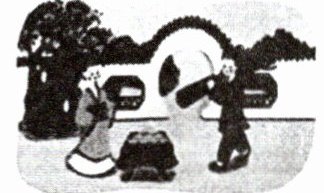
Shang Yang got an idea. He set up a tall wooden pole near the south gate of the city. Then he brought his people together and told them, “Anyone who can move(移动)the pole to the north gate will get 10 pieces of gold. ” People thought this was very strange and didn’t try to move the pole.
After seeing that no one was coming, Shang Yang said, “Now I will give 50 pieces of gold to the one who can move the pole to the north gate. ” This time, a man stood up and moved the pole. Shang Yang gave him 50 pieces of gold as he said.
After that, people thought that they could Shang Yang. So they followed Shang Yang’s new laws. Qin became stronger.
(
A. Follow his new laws.
B. Ask him questions.
C. Become good officials.
D. Make friends with others.
(
A. To help people build a new north gate.
B. To test if the people were strong enough.
C. To teach people a lesson about hard work.
D. To let people know he can keep his word.
(
A. change into
B. move to
C. believe in
D. think about
(
A. There were no laws in the state of Qin.
B. People in the state of Qin lived a free life.
C. Keeping one’s word can win people’s trust.
D. Using a wooden pole to build trust is strange.
Shang Yang was an official(官员)in the state of Qin during the Warring States Period(战国时期). To make Qin into a stronger and better state, Shang Yang made some new laws(法律). But the question was: How could he make people trust(信任)him and follow the rules?
Shang Yang got an idea. He set up a tall wooden pole near the south gate of the city. Then he brought his people together and told them, “Anyone who can move(移动)the pole to the north gate will get 10 pieces of gold. ” People thought this was very strange and didn’t try to move the pole.
After seeing that no one was coming, Shang Yang said, “Now I will give 50 pieces of gold to the one who can move the pole to the north gate. ” This time, a man stood up and moved the pole. Shang Yang gave him 50 pieces of gold as he said.
After that, people thought that they could Shang Yang. So they followed Shang Yang’s new laws. Qin became stronger.
(
A
)1. From Paragraph 1, what did Shang Yang want people to do?A. Follow his new laws.
B. Ask him questions.
C. Become good officials.
D. Make friends with others.
(
D
)2. Why did Shang Yang give gold to the person who moved a wooden pole?A. To help people build a new north gate.
B. To test if the people were strong enough.
C. To teach people a lesson about hard work.
D. To let people know he can keep his word.
(
C
)3. 创新考法—句意理解题 Which of the following can we use to fill in the blank in the last paragraph?A. change into
B. move to
C. believe in
D. think about
(
C
)4. What can we learn from the passage?A. There were no laws in the state of Qin.
B. People in the state of Qin lived a free life.
C. Keeping one’s word can win people’s trust.
D. Using a wooden pole to build trust is strange.
答案:1. A 【点拨】根据“But the question was: How could he make people trust(信任) him and follow the rules?”可知,他想让人们信服并遵守他制定的法律。故选 A。
2. D 【点拨】根据第三段可知,有人把木杆移走后,商鞅给这个人五十金,说明他言而有信,他这样做是为了让人们知道他能信守诺言。故选 D。
3. C 【点拨】根据“So they followed Shang Yang's new laws.”可知,人们遵守商鞅的新法,故推测出空处指人们“信任”他,才会遵守新法。故选 C。
4. C 【点拨】通读全文可知,本文讲述了商鞅改革初期很难启动,他想到用奖励搬木杆的人的办法让人们相信他是一个言出必行的人,从而使得改革顺利施行的故事。我们从中学到:守信用才能赢得人们的信任。故选 C。
2. D 【点拨】根据第三段可知,有人把木杆移走后,商鞅给这个人五十金,说明他言而有信,他这样做是为了让人们知道他能信守诺言。故选 D。
3. C 【点拨】根据“So they followed Shang Yang's new laws.”可知,人们遵守商鞅的新法,故推测出空处指人们“信任”他,才会遵守新法。故选 C。
4. C 【点拨】通读全文可知,本文讲述了商鞅改革初期很难启动,他想到用奖励搬木杆的人的办法让人们相信他是一个言出必行的人,从而使得改革顺利施行的故事。我们从中学到:守信用才能赢得人们的信任。故选 C。
解析:
【分析】
这是一篇故事类阅读理解,解题时可以按照先读题干明确考点,再回原文定位对应信息的思路推进:1. 第1题直接锁定第一段末尾的内容,直接查找商鞅希望民众完成的行为即可;2. 第2题要结合开篇交代的商鞅面临的核心难题,推导他实施搬木杆赏金行为的根本目的,排除无关干扰选项;3. 第3题结合空格前后的逻辑关系,前文商鞅兑现了高额赏金的承诺,后文民众愿意遵守新法,中间的逻辑衔接就是民众对商鞅的态度转变,匹配对应词义的选项即可;4. 第4题是主旨题,梳理整个故事的脉络,提炼核心传递的道理,排除不符合原文表述的错项就能得到答案。
【解析】
1. 定位原文第一段最后一句"But the question was: How could he make people trust(信任) him and follow the rules?",此处的rules指代前文商鞅制定的新法律,说明商鞅想要民众遵守他的新法律,B、C、D选项的内容在第一段完全没有提及,因此选A。
2. 开篇就点明商鞅的核心困境是无法让民众信任自己、遵守新法,他当众兑现了搬木杆就给50金的承诺,本质是向民众证明自己言出必行,其余选项“帮民众建北门”“测试民众力气”“教民众努力工作”都不符合故事的核心逻辑,因此选D。
3. 空格后说明民众之后都愿意遵守商鞅的新法,说明此时民众已经信任商鞅了,空处需要填入表达“信任”含义的短语,change into意为变成,move to意为搬到,think about意为考虑,都不符合语境,只有believe in表示信任,符合逻辑,因此选C。
4. 全文讲述的是“立木取信”的经典典故,核心传递的道理是信守承诺才能获得他人的信任,A选项“秦国没有法律”和原文“商鞅制定新法律”表述矛盾,B选项“秦国民众生活自由”原文完全没有提及,D选项“用木杆建立信任很奇怪”不是文章想要传递的核心主旨,因此选C。
【答案】
1. A 2. D 3. C 4. C
【知识点】
细节信息定位,词义辨析,主旨归纳
【点评】
本题选取了大众熟悉的中国传统历史典故作为阅读素材,考点设置梯度合理,既考察学生快速从文本中抓取关键信息的基础阅读能力,也引导学生理解诚信的重要性,兼顾语言能力考察和文化素养引导,难度适中。
【难度系数】
0.7
这是一篇故事类阅读理解,解题时可以按照先读题干明确考点,再回原文定位对应信息的思路推进:1. 第1题直接锁定第一段末尾的内容,直接查找商鞅希望民众完成的行为即可;2. 第2题要结合开篇交代的商鞅面临的核心难题,推导他实施搬木杆赏金行为的根本目的,排除无关干扰选项;3. 第3题结合空格前后的逻辑关系,前文商鞅兑现了高额赏金的承诺,后文民众愿意遵守新法,中间的逻辑衔接就是民众对商鞅的态度转变,匹配对应词义的选项即可;4. 第4题是主旨题,梳理整个故事的脉络,提炼核心传递的道理,排除不符合原文表述的错项就能得到答案。
【解析】
1. 定位原文第一段最后一句"But the question was: How could he make people trust(信任) him and follow the rules?",此处的rules指代前文商鞅制定的新法律,说明商鞅想要民众遵守他的新法律,B、C、D选项的内容在第一段完全没有提及,因此选A。
2. 开篇就点明商鞅的核心困境是无法让民众信任自己、遵守新法,他当众兑现了搬木杆就给50金的承诺,本质是向民众证明自己言出必行,其余选项“帮民众建北门”“测试民众力气”“教民众努力工作”都不符合故事的核心逻辑,因此选D。
3. 空格后说明民众之后都愿意遵守商鞅的新法,说明此时民众已经信任商鞅了,空处需要填入表达“信任”含义的短语,change into意为变成,move to意为搬到,think about意为考虑,都不符合语境,只有believe in表示信任,符合逻辑,因此选C。
4. 全文讲述的是“立木取信”的经典典故,核心传递的道理是信守承诺才能获得他人的信任,A选项“秦国没有法律”和原文“商鞅制定新法律”表述矛盾,B选项“秦国民众生活自由”原文完全没有提及,D选项“用木杆建立信任很奇怪”不是文章想要传递的核心主旨,因此选C。
【答案】
1. A 2. D 3. C 4. C
【知识点】
细节信息定位,词义辨析,主旨归纳
【点评】
本题选取了大众熟悉的中国传统历史典故作为阅读素材,考点设置梯度合理,既考察学生快速从文本中抓取关键信息的基础阅读能力,也引导学生理解诚信的重要性,兼顾语言能力考察和文化素养引导,难度适中。
【难度系数】
0.7