B
Suddenly, the little prince asked:
“A sheep—if it eats grass, does it eat flowers too?”
“A sheep eats anything it finds.”
“Even flowers that have thorns(刺)?”
“Yes, even flowers that have thorns.”
“Then the thorns—what use are they?”
I did not know. At that moment, I was so busy trying to repair my plane that I had no time to share. I answered with the first thing that came into my head:
“The thorns are of no use at all.”
“Oh...”
Just as I thought the little prince would keep quiet for some time, he continued:
“And you actually believe that the flowers...”
“Oh, no! No, no, no! I don’t believe anything. I answered you with the first thing that came into my head. Don’t you see—I am very busy with things of importance!”
“Things of importance? You talk just like the adults! I know a red - faced gentleman. He has never smelt a flower. He has never looked at a star. He has never loved anyone. He has never done anything in his life but count his money. And all day he says over and over again, just like you: ‘I am busy with things of importance!’ And that makes him so proud. He immerses himself in his own business so much that he is no longer a man—he is a mushroom(蘑菇)!”
“A what?”
“A selfish(自私的) mushroom! And so are you! If someone knows there is a flower growing on one star among the millions, it is enough to make him happy just to look at the stars. But if the sheep eats the flower, in one moment all the stars will become dark... And you think that is not important!”
His tears of anger as well as love made me suddenly stop, with tools falling off my hands. I never thought his feelings for a flower could be so strong. I was frozen by his love for flowers, stars and life.
Slowly, I took him in my arms and said softly to him that the flower he loved would not be in danger. I would do anything to protect it. But seeing the tears on the little prince’s face, I could continue no more. What I said earlier, which I wished to take back, had hurt him badly.
—Adapted from *The Little Prince*
6. What was the writer doing when the little prince started to ask questions?
A. He was looking at a flower.
B. He was repairing his plane.
C. He was shouting at a sheep.
D. He was watching the stars.
7. What does the underlined expression “immerses himself in” mean?
A. Pays attention to.
B. Has trouble in.
C. Gives answers to.
D. Shows dislike for.
8. According to the little prince’s words, which question did he care most about?
A. Who could give me a flower?
B. Why do some flowers have thorns?
C. Do sheep eat grass and flowers?
D. How can I protect my flower from a sheep?
9. Which of the following shows the change of the writer’s feelings?
Little prince’s actions The writer’s feelings
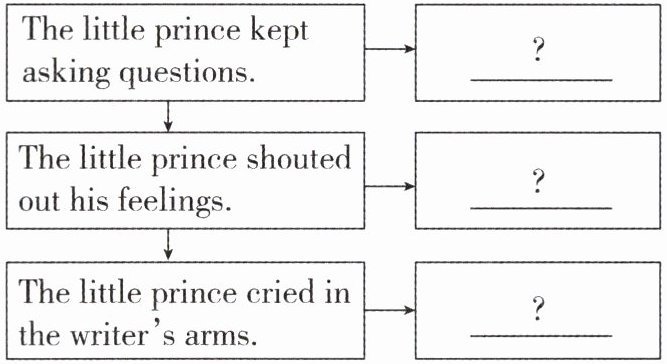
The little prince kept asking questions. ?
The little prince shouted out his feelings. ?
The little prince cried in the writer’s arms. ?
A. pleased—angry—sad
B. pleased—sad—angry
C. impatient—shocked—regretful
D. impatient—regretful—shocked
10. What can we learn from the passage?
A. Nothing is useless in the world.
B. Wisdom guides us through hard times.
C. Don’t be too busy for what truly matters.
D. Money is the key to happiness and success.
Suddenly, the little prince asked:
“A sheep—if it eats grass, does it eat flowers too?”
“A sheep eats anything it finds.”
“Even flowers that have thorns(刺)?”
“Yes, even flowers that have thorns.”
“Then the thorns—what use are they?”
I did not know. At that moment, I was so busy trying to repair my plane that I had no time to share. I answered with the first thing that came into my head:
“The thorns are of no use at all.”
“Oh...”
Just as I thought the little prince would keep quiet for some time, he continued:
“And you actually believe that the flowers...”
“Oh, no! No, no, no! I don’t believe anything. I answered you with the first thing that came into my head. Don’t you see—I am very busy with things of importance!”
“Things of importance? You talk just like the adults! I know a red - faced gentleman. He has never smelt a flower. He has never looked at a star. He has never loved anyone. He has never done anything in his life but count his money. And all day he says over and over again, just like you: ‘I am busy with things of importance!’ And that makes him so proud. He immerses himself in his own business so much that he is no longer a man—he is a mushroom(蘑菇)!”
“A what?”
“A selfish(自私的) mushroom! And so are you! If someone knows there is a flower growing on one star among the millions, it is enough to make him happy just to look at the stars. But if the sheep eats the flower, in one moment all the stars will become dark... And you think that is not important!”
His tears of anger as well as love made me suddenly stop, with tools falling off my hands. I never thought his feelings for a flower could be so strong. I was frozen by his love for flowers, stars and life.
Slowly, I took him in my arms and said softly to him that the flower he loved would not be in danger. I would do anything to protect it. But seeing the tears on the little prince’s face, I could continue no more. What I said earlier, which I wished to take back, had hurt him badly.
—Adapted from *The Little Prince*
6. What was the writer doing when the little prince started to ask questions?
A. He was looking at a flower.
B. He was repairing his plane.
C. He was shouting at a sheep.
D. He was watching the stars.
7. What does the underlined expression “immerses himself in” mean?
A. Pays attention to.
B. Has trouble in.
C. Gives answers to.
D. Shows dislike for.
8. According to the little prince’s words, which question did he care most about?
A. Who could give me a flower?
B. Why do some flowers have thorns?
C. Do sheep eat grass and flowers?
D. How can I protect my flower from a sheep?
9. Which of the following shows the change of the writer’s feelings?
Little prince’s actions The writer’s feelings
The little prince kept asking questions. ?
The little prince shouted out his feelings. ?
The little prince cried in the writer’s arms. ?
A. pleased—angry—sad
B. pleased—sad—angry
C. impatient—shocked—regretful
D. impatient—regretful—shocked
10. What can we learn from the passage?
A. Nothing is useless in the world.
B. Wisdom guides us through hard times.
C. Don’t be too busy for what truly matters.
D. Money is the key to happiness and success.
答案:6 - 10 BADCC
【语篇解读】本文是名著《小王子》的节选,通过小王子对花的守护与飞行员的反思,批判成人世界对“重要事务”的功利定义(如修飞机),颂扬孩童纯真情感的价值——一朵花的存亡能点亮整个星空,唤醒对生命本质的敬畏与珍视。
6. B 解析:细节理解题。根据“At that moment, I was so busy trying to repair my plane”可知,作者在修理飞机时小王子开始提问,故选 B。
7. A 解析:词义猜测题。根据上下文“He has never done anything in his life but count his money... ‘I am busy with things of importance!’”可知,红脸绅士只专注数钱,沉浸于自身事务,“immerses himself in”意为“专注于”,故选 A。
8. D 解析:推理判断题。根据小王子强调“if the sheep eats the flower, in one moment all the stars will become dark”可知核心担忧是花的安全,隐含“如何保护花不被羊吃掉”,故选 D。
9. C 解析:推理判断题。结合全文可知,作者一开始忙于修飞机,敷衍回答小王子的问题,推测此时他是不耐烦的;根据“His tears of anger... I was frozen by his love for flowers, stars and life.”可知,在小王子喊出自己的感受后,作者被小王子的眼泪震撼;最后根据“What I said... had hurt him badly.”可知,作者对自己之前的行为感到懊悔,故选 C。
10. C 解析:推理判断题。根据文章内容可知,“我”忙着修飞机(琐事),忽略了小王子对“花”(真正重要的事)的在意,还被小王子批评“像大人一样沉迷无关紧要的忙碌”;最终“我”的反思也印证了“不应因忙而错失重要事物”,故选 C。
易错提醒 选项所揭示的道理可能是正确的,但是不一定符合文章。
选项 A“世界上没有无用的东西。”若想得出“世界上没有无用的东西”,需要文本至少满足两个条件之一:① 明确证明“刺有用”,并扩展到其他“看似无用”的事物;② 反驳“‘无用’的存在”,给出“万物皆有用”的逻辑。故 A 错误。
选项 B“智慧指引我们渡过难关。”文章中“我”并未依靠“智慧”解决问题,反而因敷衍态度伤害了小王子;最终是小王子的纯真与坚持点醒了“我”,而非“智慧”的作用。故 B 错误。
【语篇解读】本文是名著《小王子》的节选,通过小王子对花的守护与飞行员的反思,批判成人世界对“重要事务”的功利定义(如修飞机),颂扬孩童纯真情感的价值——一朵花的存亡能点亮整个星空,唤醒对生命本质的敬畏与珍视。
6. B 解析:细节理解题。根据“At that moment, I was so busy trying to repair my plane”可知,作者在修理飞机时小王子开始提问,故选 B。
7. A 解析:词义猜测题。根据上下文“He has never done anything in his life but count his money... ‘I am busy with things of importance!’”可知,红脸绅士只专注数钱,沉浸于自身事务,“immerses himself in”意为“专注于”,故选 A。
8. D 解析:推理判断题。根据小王子强调“if the sheep eats the flower, in one moment all the stars will become dark”可知核心担忧是花的安全,隐含“如何保护花不被羊吃掉”,故选 D。
9. C 解析:推理判断题。结合全文可知,作者一开始忙于修飞机,敷衍回答小王子的问题,推测此时他是不耐烦的;根据“His tears of anger... I was frozen by his love for flowers, stars and life.”可知,在小王子喊出自己的感受后,作者被小王子的眼泪震撼;最后根据“What I said... had hurt him badly.”可知,作者对自己之前的行为感到懊悔,故选 C。
10. C 解析:推理判断题。根据文章内容可知,“我”忙着修飞机(琐事),忽略了小王子对“花”(真正重要的事)的在意,还被小王子批评“像大人一样沉迷无关紧要的忙碌”;最终“我”的反思也印证了“不应因忙而错失重要事物”,故选 C。
易错提醒 选项所揭示的道理可能是正确的,但是不一定符合文章。
选项 A“世界上没有无用的东西。”若想得出“世界上没有无用的东西”,需要文本至少满足两个条件之一:① 明确证明“刺有用”,并扩展到其他“看似无用”的事物;② 反驳“‘无用’的存在”,给出“万物皆有用”的逻辑。故 A 错误。
选项 B“智慧指引我们渡过难关。”文章中“我”并未依靠“智慧”解决问题,反而因敷衍态度伤害了小王子;最终是小王子的纯真与坚持点醒了“我”,而非“智慧”的作用。故 B 错误。
解析:
【分析】
这是一篇《小王子》节选的阅读理解题,解题需遵循以下思路:
1. 先通读全文,把握文章核心内容:飞行员忙于修飞机时,小王子围绕羊与花的问题展开提问,进而引发关于“重要事务”的讨论,展现孩童纯真与成人功利视角的冲突。
2. 针对不同题型采用对应方法:
细节理解题(第6题):定位原文相关语句,直接提取答案;
词义猜测题(第7题):结合上下文语境,分析划线短语所在句子及前后文的描述,推断词义;
推理判断题(第8、9、10题):结合人物的语言、动作,以及文章主旨,推导人物的核心诉求、情感变化和文章传递的道理,同时注意排除不符合文本的干扰选项。
【解析】
6. 细节理解题。根据原文“At that moment, I was so busy trying to repair my plane that I had no time to share.”可知,小王子开始提问时,作者正在修理飞机,故选B。
7. 词义猜测题。结合上下文“He has never done anything in his life but count his money. And all day he says over and over again, just like you: ‘I am busy with things of importance!’”可知,这位红脸绅士一生只专注于数钱,沉浸在自己的事务里,“immerses himself in”意为“专注于”,对应选项A。
8. 推理判断题。根据小王子的表述“if the sheep eats the flower, in one moment all the stars will become dark... And you think that is not important!”可知,他最在意的是自己的花的安全,核心问题是“如何保护花不被羊吃掉”,故选D。
9. 推理判断题。①小王子不断提问时,作者忙于修飞机,用敷衍的话回应,此时作者的感受是不耐烦的;②当小王子喊出自己的感受后,作者被小王子的眼泪和他对花、星星、生命的热爱震撼;③最后作者看到小王子哭泣,意识到自己的话伤害了他,内心充满懊悔。所以作者的情感变化是impatient—shocked—regretful,故选C。
10. 推理判断题。文章中作者忙着修飞机(自认为的“重要事务”),忽略了小王子在意的花(真正重要的事),还被小王子批评像大人一样沉迷无关紧要的忙碌,最终作者的反思印证了“不要因忙碌而错失生命中真正重要的事物”,故选C。
干扰项分析:
A选项:文中未明确证明“万物皆有用”,仅围绕花的刺展开讨论,无法推导该结论;
B选项:文中作者并未依靠智慧解决问题,是小王子的纯真点醒了作者,该选项不符合文意;
D选项:文中批判了沉迷金钱的成人,与该选项相悖。
【答案】
6-10 BADCC
【知识点】
细节理解、词义猜测、主旨推理
【点评】
本文节选自经典名著《小王子》,通过小王子与飞行员的对话,对比了孩童的纯真视角与成人的功利思维,引导读者思考生命中真正重要的事物。题目涵盖多种阅读理解题型,既考查对文本细节的捕捉能力,也考查对词义、人物情感和文章主旨的推理判断能力,有助于提升学生的阅读理解素养与思辨能力。
【难度系数】
0.6
这是一篇《小王子》节选的阅读理解题,解题需遵循以下思路:
1. 先通读全文,把握文章核心内容:飞行员忙于修飞机时,小王子围绕羊与花的问题展开提问,进而引发关于“重要事务”的讨论,展现孩童纯真与成人功利视角的冲突。
2. 针对不同题型采用对应方法:
细节理解题(第6题):定位原文相关语句,直接提取答案;
词义猜测题(第7题):结合上下文语境,分析划线短语所在句子及前后文的描述,推断词义;
推理判断题(第8、9、10题):结合人物的语言、动作,以及文章主旨,推导人物的核心诉求、情感变化和文章传递的道理,同时注意排除不符合文本的干扰选项。
【解析】
6. 细节理解题。根据原文“At that moment, I was so busy trying to repair my plane that I had no time to share.”可知,小王子开始提问时,作者正在修理飞机,故选B。
7. 词义猜测题。结合上下文“He has never done anything in his life but count his money. And all day he says over and over again, just like you: ‘I am busy with things of importance!’”可知,这位红脸绅士一生只专注于数钱,沉浸在自己的事务里,“immerses himself in”意为“专注于”,对应选项A。
8. 推理判断题。根据小王子的表述“if the sheep eats the flower, in one moment all the stars will become dark... And you think that is not important!”可知,他最在意的是自己的花的安全,核心问题是“如何保护花不被羊吃掉”,故选D。
9. 推理判断题。①小王子不断提问时,作者忙于修飞机,用敷衍的话回应,此时作者的感受是不耐烦的;②当小王子喊出自己的感受后,作者被小王子的眼泪和他对花、星星、生命的热爱震撼;③最后作者看到小王子哭泣,意识到自己的话伤害了他,内心充满懊悔。所以作者的情感变化是impatient—shocked—regretful,故选C。
10. 推理判断题。文章中作者忙着修飞机(自认为的“重要事务”),忽略了小王子在意的花(真正重要的事),还被小王子批评像大人一样沉迷无关紧要的忙碌,最终作者的反思印证了“不要因忙碌而错失生命中真正重要的事物”,故选C。
干扰项分析:
A选项:文中未明确证明“万物皆有用”,仅围绕花的刺展开讨论,无法推导该结论;
B选项:文中作者并未依靠智慧解决问题,是小王子的纯真点醒了作者,该选项不符合文意;
D选项:文中批判了沉迷金钱的成人,与该选项相悖。
【答案】
6-10 BADCC
【知识点】
细节理解、词义猜测、主旨推理
【点评】
本文节选自经典名著《小王子》,通过小王子与飞行员的对话,对比了孩童的纯真视角与成人的功利思维,引导读者思考生命中真正重要的事物。题目涵盖多种阅读理解题型,既考查对文本细节的捕捉能力,也考查对词义、人物情感和文章主旨的推理判断能力,有助于提升学生的阅读理解素养与思辨能力。
【难度系数】
0.6