Ⅴ. 首字母填空(每题1分,满分10分)
根据短文内容及首字母提示,在空格处填入一个适当的词使短文完整。
文化意识 跨文化交流 When travelling or communicating with foreigners,we often meet cultural differences—from dining rules to greetings. Adapting to these differences isn't just for foreigners;it's something everyone can work 1. o
First,2. s
Respecting local customs is another must. There's no 3. m
Patience matters too. You'll face awkward moments and misunderstandings. Don't get discouraged; calm down to ask and 5. k
A tolerant attitude avoids conflicts. When a foreign custom differs from yours,hold back judgment—this openness makes others feel accepted. Without it,small gaps may become big arguments;with it,cross-cultural chats are more pleasant. Tolerance plays a key 6. r
Avoid calling cultures "good" or "bad". Each has its own history and values. 7. F
Finally,understanding cultural differences is a journey,not a destination. Enjoy discoveries:learning a festival's origin,trying a traditional dish, or solving a misunderstanding—these broaden your eyes and make you a 8. b
In short,you can 9. r
根据短文内容及首字母提示,在空格处填入一个适当的词使短文完整。
文化意识 跨文化交流 When travelling or communicating with foreigners,we often meet cultural differences—from dining rules to greetings. Adapting to these differences isn't just for foreigners;it's something everyone can work 1. o
on
. The key is to stay curious and appreciate each culture's uniqueness.First,2. s
setting
clear goals for cultural learning is crucial. Vague goals like "learning Korean culture" will confuse you. Instead,try specific ones:"I'll learn 3 Korean table manners this month." This helps track progress and keep interest.Respecting local customs is another must. There's no 3. m
magic
shortcut(捷径)to it. Even strange customs should be followed to avoid offense. A tourist once took off shoes before entering a Korean home—this small act made the 4. hhost
feel respected.Patience matters too. You'll face awkward moments and misunderstandings. Don't get discouraged; calm down to ask and 5. k
keep
adjusting(调整). "Understanding takes time" holds true here.A tolerant attitude avoids conflicts. When a foreign custom differs from yours,hold back judgment—this openness makes others feel accepted. Without it,small gaps may become big arguments;with it,cross-cultural chats are more pleasant. Tolerance plays a key 6. r
role
in smooth communication.Avoid calling cultures "good" or "bad". Each has its own history and values. 7. F
Focus
on understanding,not judging superiority(优越性). Enjoy exploring differences,and the process will be more pleasant.Finally,understanding cultural differences is a journey,not a destination. Enjoy discoveries:learning a festival's origin,trying a traditional dish, or solving a misunderstanding—these broaden your eyes and make you a 8. b
better
communicator,one who connects easily with people from different backgrounds.In short,you can 9. r
reach/realize
smooth cross-cultural interaction. With clear goals,respect,patience and tolerance,you can handle any difference. Start today,and you'll be surprised at how much you can achieve. Wonderful experiences await—all you need is to take that first 10. sstep
.答案:Ⅴ.【语篇解读】本文是一篇说明文。文章主要介绍了在旅行或与外国人交流时,我们经常遇到文化差异,并给出了如何适应文化差异、顺利实现跨文化交流的建议。
1. on 解析:句意:适应这些差异不仅仅是为了外籍人士,这是每个人都可以努力去做的事情。适应文化差异是每个人都可以努力去做的事情,work on 表示“致力于,从事于”,固定搭配。
2. setting 解析:根据下文可知,本段介绍设定明确的目标,set“设定”,动词,在句中作主语,应用动名词形式。
3. magic 解析:根据上下文可知,尊重当地习俗是必须的,即使是奇怪的习俗也应该遵守,由此可推知此处表示没有神奇的捷径可走,magic“有魔力的,神奇的”,形容词作定语修饰名词 shortcut。
4. host 解析:根据上下文,进入的是“韩国人的家”,那么脱鞋这一行为会让“主人”感到被尊重。句意:这个小举动让主人感到被尊重。
5. keep 解析:上文提到“Patience matters too.”,下文“adjusting”需与动词搭配,keep doing sth“持续调整”,是“有耐心”的做法。
6. role 解析:根据“Without it, small gaps may become big arguments; with it, cross - cultural chats are more pleasant”可推知宽容在顺利沟通中起着关键作用,play a role in“在……中起作用”,固定搭配。
7. Focus 解析:根据上下文可知,应该关注文化本身,专注于理解文化的差异性,而不是评判优越性。“focus on”(专注于)是固定搭配,符合语境。
8. better 解析:根据“these broaden your eyes”以及“one who connects easily with people from different backgrounds”可推知此处表示成为一个更好的沟通者,应用 good 的比较级 better。
9. reach/realize 解析:根据上文可知,我们可以达到或实现顺畅互动,reach/realize 符合语境。
10. step 解析:根据“Wonderful experiences await—all you need is to take that first”以及上文“Start today”可知,实现文化交流首先要迈出第一步,step“步骤,脚步”,名词,此处指第一步,应用单数形式。
1. on 解析:句意:适应这些差异不仅仅是为了外籍人士,这是每个人都可以努力去做的事情。适应文化差异是每个人都可以努力去做的事情,work on 表示“致力于,从事于”,固定搭配。
2. setting 解析:根据下文可知,本段介绍设定明确的目标,set“设定”,动词,在句中作主语,应用动名词形式。
3. magic 解析:根据上下文可知,尊重当地习俗是必须的,即使是奇怪的习俗也应该遵守,由此可推知此处表示没有神奇的捷径可走,magic“有魔力的,神奇的”,形容词作定语修饰名词 shortcut。
4. host 解析:根据上下文,进入的是“韩国人的家”,那么脱鞋这一行为会让“主人”感到被尊重。句意:这个小举动让主人感到被尊重。
5. keep 解析:上文提到“Patience matters too.”,下文“adjusting”需与动词搭配,keep doing sth“持续调整”,是“有耐心”的做法。
6. role 解析:根据“Without it, small gaps may become big arguments; with it, cross - cultural chats are more pleasant”可推知宽容在顺利沟通中起着关键作用,play a role in“在……中起作用”,固定搭配。
7. Focus 解析:根据上下文可知,应该关注文化本身,专注于理解文化的差异性,而不是评判优越性。“focus on”(专注于)是固定搭配,符合语境。
8. better 解析:根据“these broaden your eyes”以及“one who connects easily with people from different backgrounds”可推知此处表示成为一个更好的沟通者,应用 good 的比较级 better。
9. reach/realize 解析:根据上文可知,我们可以达到或实现顺畅互动,reach/realize 符合语境。
10. step 解析:根据“Wonderful experiences await—all you need is to take that first”以及上文“Start today”可知,实现文化交流首先要迈出第一步,step“步骤,脚步”,名词,此处指第一步,应用单数形式。
解析:
【分析】
这是一篇关于跨文化交流的说明文,解题时需先通读全文,把握文章主旨——介绍适应文化差异、实现顺畅跨文化交流的方法。针对每个空,要从以下角度思考:1. 结合上下文语境推断词义,比如第4空,进入韩国家庭脱鞋的行为会让“主人”感到尊重,由此推断出host;2. 牢记固定短语搭配,如第1空work on(致力于)、第6空play a role in(在……中起作用)、第7空focus on(专注于)等;3. 注意词性变化,如第2空set作主语需变为动名词setting,第8空表示“更好的沟通者”要用good的比较级better。通过这几个步骤,逐一确定每个空的正确单词。
【解析】
1. on:根据语境“适应这些差异是每个人都可以努力去做的事情”,work on是固定搭配,意为“致力于,从事于”,符合句意。
2. setting:此处需要动词作主语,set goals是固定短语“设定目标”,动词作主语需用动名词形式,故填setting。
3. magic:结合上下文“尊重当地习俗没有捷径”,magic意为“有魔力的,神奇的”,作定语修饰shortcut,符合“没有神奇捷径”的语境。
4. host:根据“entering a Korean home”可知,脱鞋的行为会让房屋的主人感到被尊重,host意为“主人”,符合语境。
5. keep:前文提到“Patience matters too.”,keep doing sth是固定用法,意为“持续做某事”,此处表示持续调整,符合“有耐心”的要求。
6. role:play a role in是固定搭配,意为“在……中起作用”,结合语境“宽容在顺畅沟通中起着关键作用”,故填role。
7. Focus:focus on是固定搭配,意为“专注于”,此处表示要专注于理解文化而非评判优越性,句首单词首字母需大写,故填Focus。
8. better:根据“broaden your eyes”和“connects easily with people from different backgrounds”可知,此处表示成为“更好的”沟通者,good的比较级better符合语境。
9. reach/realize:结合前文介绍的方法,此处表示“你可以实现顺畅的跨文化互动”,reach或realize都有“达到、实现”的含义,符合语境。
10. step:根据“Start today”和“take that first”可知,此处表示迈出第一步,take the first step是固定表达,故填step。
【答案】
1. on
2. setting
3. magic
4. host
5. keep
6. role
7. Focus
8. better
9. reach/realize
10. step
【知识点】
1. 固定短语搭配
2. 动名词作主语
3. 形容词比较级
【点评】
本文围绕跨文化交流主题展开,考查学生在语境中运用词汇的能力,同时渗透跨文化意识教育。题目既涉及固定搭配的记忆,又需要结合上下文推断词义,对学生的综合语言运用能力有一定要求,能帮助学生提升跨文化交流的认知与语言素养。
【难度系数】
0.6
这是一篇关于跨文化交流的说明文,解题时需先通读全文,把握文章主旨——介绍适应文化差异、实现顺畅跨文化交流的方法。针对每个空,要从以下角度思考:1. 结合上下文语境推断词义,比如第4空,进入韩国家庭脱鞋的行为会让“主人”感到尊重,由此推断出host;2. 牢记固定短语搭配,如第1空work on(致力于)、第6空play a role in(在……中起作用)、第7空focus on(专注于)等;3. 注意词性变化,如第2空set作主语需变为动名词setting,第8空表示“更好的沟通者”要用good的比较级better。通过这几个步骤,逐一确定每个空的正确单词。
【解析】
1. on:根据语境“适应这些差异是每个人都可以努力去做的事情”,work on是固定搭配,意为“致力于,从事于”,符合句意。
2. setting:此处需要动词作主语,set goals是固定短语“设定目标”,动词作主语需用动名词形式,故填setting。
3. magic:结合上下文“尊重当地习俗没有捷径”,magic意为“有魔力的,神奇的”,作定语修饰shortcut,符合“没有神奇捷径”的语境。
4. host:根据“entering a Korean home”可知,脱鞋的行为会让房屋的主人感到被尊重,host意为“主人”,符合语境。
5. keep:前文提到“Patience matters too.”,keep doing sth是固定用法,意为“持续做某事”,此处表示持续调整,符合“有耐心”的要求。
6. role:play a role in是固定搭配,意为“在……中起作用”,结合语境“宽容在顺畅沟通中起着关键作用”,故填role。
7. Focus:focus on是固定搭配,意为“专注于”,此处表示要专注于理解文化而非评判优越性,句首单词首字母需大写,故填Focus。
8. better:根据“broaden your eyes”和“connects easily with people from different backgrounds”可知,此处表示成为“更好的”沟通者,good的比较级better符合语境。
9. reach/realize:结合前文介绍的方法,此处表示“你可以实现顺畅的跨文化互动”,reach或realize都有“达到、实现”的含义,符合语境。
10. step:根据“Start today”和“take that first”可知,此处表示迈出第一步,take the first step是固定表达,故填step。
【答案】
1. on
2. setting
3. magic
4. host
5. keep
6. role
7. Focus
8. better
9. reach/realize
10. step
【知识点】
1. 固定短语搭配
2. 动名词作主语
3. 形容词比较级
【点评】
本文围绕跨文化交流主题展开,考查学生在语境中运用词汇的能力,同时渗透跨文化意识教育。题目既涉及固定搭配的记忆,又需要结合上下文推断词义,对学生的综合语言运用能力有一定要求,能帮助学生提升跨文化交流的认知与语言素养。
【难度系数】
0.6
Ⅵ. 阅读与回答问题(每题2分,满分10分)
根据短文内容,回答下列问题。
One of the challenges in communication is saying "no" when you need to. Often we promise to do things even when we should refuse. This leads to stress when we break our promise,and we then feel bad for not keeping our word and lose trust for not keeping our promise.
|Do you say "no" to your friends?|
|----|
|Charmer:Never. I come from India. For me,refusing people is difficult,especially when they are my friends. My parents also told me that refusing the elderly is considered disrespectful and discouraged.|
|Judy:No,I don't. I am afraid that every time I do this,I will disappoint someone,make them angry and hurt their feelings. The person might think I am unkind or rude.|
|John:Yes,I do. My value does not depend on how much I do for other people. And learning to say "no" has been one of the best things I have done for myself.|
Learning how to say "no" is a great thing you can do for yourself. You won't let your work overload,and you'll have time to do what really matters to you. Remember that the best way to learn how to say "no" is to practise more. But in saying "no" you still need some skills. The U-S-A method works very well here. It stands for:
Understanding:It is important to show the other persons that you understand the inconvenience they will experience. If they don't feel your understanding,they could become upset and difficult. Show understanding with a sincere statement(表述).
Situation:Explain exactly why you will have to refuse that person's request.
Action:It is acceptable to tell the person whom you are refusing,what you can and will do.
(3) Tell him/her what you can help(1) Show your
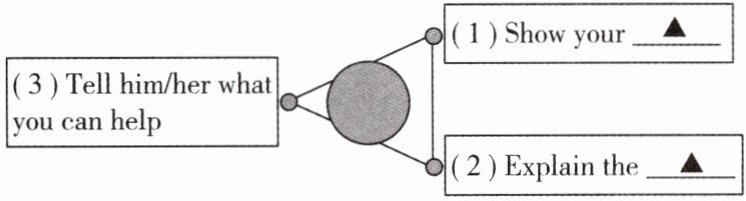
(2) Explain the
In most cases,when you show empathy(同情)with an understanding statement,explain the situation,and tell the person what you do,you will comfort that person. You will be effectively and politely saying "no" without causing anger and unhappiness.
1. How may people feel when they break the promise?
2. Who hasn't said "no" to friends?
3. What's the best way to learn how to say "no"?
4. Please fill in the blanks.
(1)
5. What do you think of the U-S-A method? Why do you think so?
根据短文内容,回答下列问题。
One of the challenges in communication is saying "no" when you need to. Often we promise to do things even when we should refuse. This leads to stress when we break our promise,and we then feel bad for not keeping our word and lose trust for not keeping our promise.
|Do you say "no" to your friends?|
|----|
|Charmer:Never. I come from India. For me,refusing people is difficult,especially when they are my friends. My parents also told me that refusing the elderly is considered disrespectful and discouraged.|
|Judy:No,I don't. I am afraid that every time I do this,I will disappoint someone,make them angry and hurt their feelings. The person might think I am unkind or rude.|
|John:Yes,I do. My value does not depend on how much I do for other people. And learning to say "no" has been one of the best things I have done for myself.|
Learning how to say "no" is a great thing you can do for yourself. You won't let your work overload,and you'll have time to do what really matters to you. Remember that the best way to learn how to say "no" is to practise more. But in saying "no" you still need some skills. The U-S-A method works very well here. It stands for:
Understanding:It is important to show the other persons that you understand the inconvenience they will experience. If they don't feel your understanding,they could become upset and difficult. Show understanding with a sincere statement(表述).
Situation:Explain exactly why you will have to refuse that person's request.
Action:It is acceptable to tell the person whom you are refusing,what you can and will do.
(3) Tell him/her what you can help(1) Show your
understanding
(2) Explain the
situation
In most cases,when you show empathy(同情)with an understanding statement,explain the situation,and tell the person what you do,you will comfort that person. You will be effectively and politely saying "no" without causing anger and unhappiness.
1. How may people feel when they break the promise?
They feel bad and lose trust.
2. Who hasn't said "no" to friends?
Charmer and Judy.
3. What's the best way to learn how to say "no"?
To practise more.
4. Please fill in the blanks.
(1)
understanding
(2)situation
5. What do you think of the U-S-A method? Why do you think so?
It's effective. Because it helps refuse requests politely while maintaining relationships.
答案:Ⅵ.【语篇解读】本文是一篇说明文,主要探讨了如何礼貌且有效地拒绝他人的请求,并介绍了“U - S - A”方法。
1. They feel bad and lose trust.
2. Charmer and Judy.
3. To practise more.
4. (1)understanding; (2)situation
5. It's effective. Because it helps refuse requests politely while maintaining relationships.(开放性试题,答案不唯一)
1. They feel bad and lose trust.
2. Charmer and Judy.
3. To practise more.
4. (1)understanding; (2)situation
5. It's effective. Because it helps refuse requests politely while maintaining relationships.(开放性试题,答案不唯一)
解析:
【分析】
1. 第1题:先在原文中定位“break the promise”相关内容,找到第一段最后一句,从中提取人们违背承诺后的感受。
2. 第2题:查看表格中三个人的表述,找出从未对朋友说“不”的人物。
3. 第3题:寻找原文中关于“学习说‘不’的最佳方法”的句子,直接提取答案。
4. 第4题:结合文中介绍的U-S-A方法的三个步骤(Understanding、Situation、Action),对应题目中的两个空,匹配对应的内容。
5. 第5题:结合原文最后一段对U-S-A方法的作用描述,总结该方法的特点并说明原因,答案合理即可。
【解析】
1. 根据第一段最后一句“This leads to stress when we break our promise,and we then feel bad for not keeping our word and lose trust for not keeping our promise.”,可知人们违背承诺后会感觉愧疚并且失去信任。
2. 查看表格内容,Charmer表示“Never”,Judy表示“No,I don't”,所以这两人从未对朋友说“不”。
3. 根据文中“Remember that the best way to learn how to say 'no' is to practise more.”,可知学习说“不”的最佳方法是多练习。
4. 文中U-S-A方法分别是Understanding(向对方表达理解)、Situation(解释自己的处境)、Action(告知能提供的帮助),对应题目中的(1)(2)空,分别填understanding和situation。
5. 根据最后一段“you will be effectively and politely saying 'no' without causing anger and unhappiness.”,可知该方法很有效,因为它能帮助人们礼貌地拒绝请求,同时维持良好的人际关系,答案符合这个方向即可。
【答案】
1. They feel bad and lose trust.
2. Charmer and Judy.
3. To practise more.
4. (1)understanding; (2)situation
5. It's effective. Because it helps refuse requests politely while maintaining relationships.(开放性试题,答案不唯一)
【知识点】
细节信息提取、实用社交技巧、开放性表达
【点评】
本文围绕“如何礼貌拒绝他人”这一社交话题展开,既考查了学生对文章细节的定位与提取能力,又通过开放性问题引导学生思考实用社交方法的价值,帮助学生掌握有效的沟通技巧,兼具知识性与实用性。
【难度系数】
0.6
1. 第1题:先在原文中定位“break the promise”相关内容,找到第一段最后一句,从中提取人们违背承诺后的感受。
2. 第2题:查看表格中三个人的表述,找出从未对朋友说“不”的人物。
3. 第3题:寻找原文中关于“学习说‘不’的最佳方法”的句子,直接提取答案。
4. 第4题:结合文中介绍的U-S-A方法的三个步骤(Understanding、Situation、Action),对应题目中的两个空,匹配对应的内容。
5. 第5题:结合原文最后一段对U-S-A方法的作用描述,总结该方法的特点并说明原因,答案合理即可。
【解析】
1. 根据第一段最后一句“This leads to stress when we break our promise,and we then feel bad for not keeping our word and lose trust for not keeping our promise.”,可知人们违背承诺后会感觉愧疚并且失去信任。
2. 查看表格内容,Charmer表示“Never”,Judy表示“No,I don't”,所以这两人从未对朋友说“不”。
3. 根据文中“Remember that the best way to learn how to say 'no' is to practise more.”,可知学习说“不”的最佳方法是多练习。
4. 文中U-S-A方法分别是Understanding(向对方表达理解)、Situation(解释自己的处境)、Action(告知能提供的帮助),对应题目中的(1)(2)空,分别填understanding和situation。
5. 根据最后一段“you will be effectively and politely saying 'no' without causing anger and unhappiness.”,可知该方法很有效,因为它能帮助人们礼貌地拒绝请求,同时维持良好的人际关系,答案符合这个方向即可。
【答案】
1. They feel bad and lose trust.
2. Charmer and Judy.
3. To practise more.
4. (1)understanding; (2)situation
5. It's effective. Because it helps refuse requests politely while maintaining relationships.(开放性试题,答案不唯一)
【知识点】
细节信息提取、实用社交技巧、开放性表达
【点评】
本文围绕“如何礼貌拒绝他人”这一社交话题展开,既考查了学生对文章细节的定位与提取能力,又通过开放性问题引导学生思考实用社交方法的价值,帮助学生掌握有效的沟通技巧,兼具知识性与实用性。
【难度系数】
0.6