B
(2025·南京三模改编)What if you could save an animal from extinction(灭绝)? A wildlife conservationist works to protect different environments and the animals that live there. This can involve making sure that habitats(栖息地)are safe from disease,harmful insects,fire and human destruction. He or she might also work to educate the public about the importance of caring for wildlife. A lucky,hard-working few might be part of a successful effort to bring a species back from the edge of extinction.
视频精讲
That was the case for wildlife conservationists at the San Diego Zoo,who have helped save several species from dying out. The giant panda's comeback is one of their more famous success stories. Working with experts in China,where pandas are from,the conservationists developed a milk formula for panda cubs that raised survival rates for cubs born in zoos from 0 to nearly 100 per cent! They continue to spend many hours each week observing pandas at the zoo,so that they can learn what pandas need to survive in the wild. Although giant pandas are still vulnerable(脆弱的),they were removed from the endangered species list in 2016.
The California condor(秃鹰)has also rebounded,thanks to the work of conservationists. The California condor,a type of vulture and the largest flying bird in North America,was down to a population of only 22 in 1982. The San Diego Zoo Global Wildlife Conservancy collected those birds and began using special techniques to help them breed. They learned that the birds had very high levels of lead in their bodies. They figured out the problem was a result of the birds eating the remains of animals shot by hunters who had used lead bullets. The conservancy spread the word about using different kinds of ammunition for hunting. Now,there are 480 California condors,about half of which live in the wild.
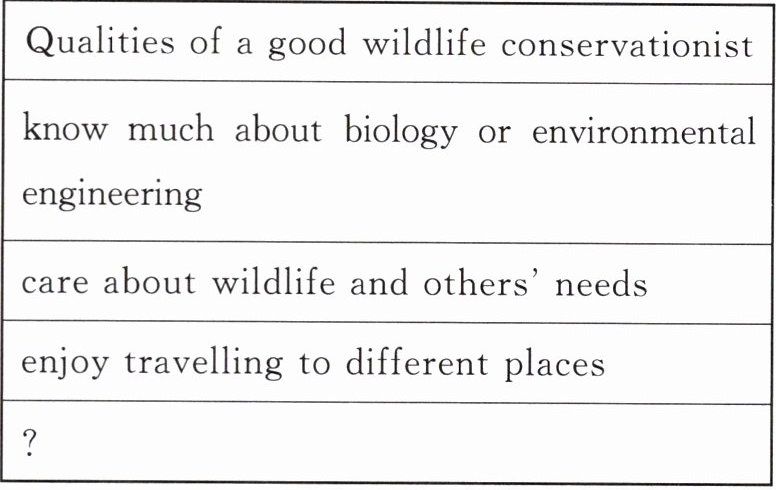
A wildlife conservationist must earn a college degree,often in biology or environmental engineering. He or she should also be someone who cares about the environment,is patient and likes to travel. "It takes a special kind of person to do it," says Mike Sides,an ambassador to the San Diego Zoo Global Wildlife Conservancy. "You have to really see the bigger picture and be able to step out of your bubble and look at others' needs ... It all comes from the heart."
Even if it's not the career you choose,you can get involved with conservation efforts. You can volunteer at a zoo,raise funds for charities that help animals and be mindful that the products you buy aren't harmful to wildlife habitats. "In any sense," says Mr Sides,"if you're involved in conservation efforts,you're doing something cool."
5. What can we know from the second paragraph?
A. Giant pandas are now on the endangered species list.
B. Wildlife conservationists should no longer study giant pandas.
C. Wildlife conservationists only work with animals from their own country.
D. Giant pandas have made a comeback because of efforts by wildlife conservationists.
6. 新考法 写作手法 How does the writer show conservationists' efforts to bring a species back from the edge of extinction?
A. By explaining cause and effect.
B. By comparing and contrasting.
C. By expressing different opinions.
D. By providing examples in detail.
7. 新考法 创新设问 According to the fourth paragraph,which of the following belongs in the empty box?
A. treat wild animals in a special way
B. remember humans' needs with heart
C. be willing to take on new challenges
D. be creative enough to draw bigger pictures
8. What's the purpose of the last paragraph?
A. To remind volunteers of wildlife conservation efforts.
B. To encourage people to take action to protect wildlife.
C. To advise readers to choose conservationist as a career.
D. To provide readers with environmentally-friendly products.
(2025·南京三模改编)What if you could save an animal from extinction(灭绝)? A wildlife conservationist works to protect different environments and the animals that live there. This can involve making sure that habitats(栖息地)are safe from disease,harmful insects,fire and human destruction. He or she might also work to educate the public about the importance of caring for wildlife. A lucky,hard-working few might be part of a successful effort to bring a species back from the edge of extinction.
视频精讲
That was the case for wildlife conservationists at the San Diego Zoo,who have helped save several species from dying out. The giant panda's comeback is one of their more famous success stories. Working with experts in China,where pandas are from,the conservationists developed a milk formula for panda cubs that raised survival rates for cubs born in zoos from 0 to nearly 100 per cent! They continue to spend many hours each week observing pandas at the zoo,so that they can learn what pandas need to survive in the wild. Although giant pandas are still vulnerable(脆弱的),they were removed from the endangered species list in 2016.
The California condor(秃鹰)has also rebounded,thanks to the work of conservationists. The California condor,a type of vulture and the largest flying bird in North America,was down to a population of only 22 in 1982. The San Diego Zoo Global Wildlife Conservancy collected those birds and began using special techniques to help them breed. They learned that the birds had very high levels of lead in their bodies. They figured out the problem was a result of the birds eating the remains of animals shot by hunters who had used lead bullets. The conservancy spread the word about using different kinds of ammunition for hunting. Now,there are 480 California condors,about half of which live in the wild.
A wildlife conservationist must earn a college degree,often in biology or environmental engineering. He or she should also be someone who cares about the environment,is patient and likes to travel. "It takes a special kind of person to do it," says Mike Sides,an ambassador to the San Diego Zoo Global Wildlife Conservancy. "You have to really see the bigger picture and be able to step out of your bubble and look at others' needs ... It all comes from the heart."
Even if it's not the career you choose,you can get involved with conservation efforts. You can volunteer at a zoo,raise funds for charities that help animals and be mindful that the products you buy aren't harmful to wildlife habitats. "In any sense," says Mr Sides,"if you're involved in conservation efforts,you're doing something cool."
5. What can we know from the second paragraph?
A. Giant pandas are now on the endangered species list.
B. Wildlife conservationists should no longer study giant pandas.
C. Wildlife conservationists only work with animals from their own country.
D. Giant pandas have made a comeback because of efforts by wildlife conservationists.
6. 新考法 写作手法 How does the writer show conservationists' efforts to bring a species back from the edge of extinction?
A. By explaining cause and effect.
B. By comparing and contrasting.
C. By expressing different opinions.
D. By providing examples in detail.
7. 新考法 创新设问 According to the fourth paragraph,which of the following belongs in the empty box?
A. treat wild animals in a special way
B. remember humans' needs with heart
C. be willing to take on new challenges
D. be creative enough to draw bigger pictures
8. What's the purpose of the last paragraph?
A. To remind volunteers of wildlife conservation efforts.
B. To encourage people to take action to protect wildlife.
C. To advise readers to choose conservationist as a career.
D. To provide readers with environmentally-friendly products.
答案:【答案】5 - 8 DDCB
5. D 解析:细节理解题。根据“the conservationists developed a milk formula for panda cubs that raised survival rates for cubs born in zoos from 0 to nearly 100 per cent”可知,因保护主义者和专家努力,大熊猫幼崽生存率上升,这有助于提升大熊猫数量。故选 D。
6. D 解析:写作手法题。通读原文可知,文章以圣地亚哥动物园保护大熊猫、加州秃鹰为例,详细阐述保护行动,D 选项“通过详细举例。”符合题意。故选 D。
7. C 解析:推理判断题。根据“You have to really see the bigger picture and be able to step out of your bubble and look at others' needs”可知第四段提到保护者需要“跳出舒适圈”,这意味着要面对未知的情况、接触不熟悉的领域,是“愿意接受新挑战”的体现。故选 C。
易错提醒 选项 A(以特殊方式对待野生动物):原文未提及“特殊对待动物”的相关表述,而是强调保护者的工作需要特殊的人来做。属于无中生有,排除。
选项 B(用心记住人类的需求):原文“look at others' needs”,“others”不仅包括人类,还可能涉及与保护工作相关的其他群体,且“remember”与原文“关注(look at)”语义不符,加深了重要性,排除。
选项 D(有足够的创造力画出更大的图):原文“see the bigger picture”是固定短语,意为“有大局观、着眼全局”,并非字面意思“画更大的图”,属于对短语的严重误解,排除。
8. B 解析:写作意图题。根据“Even if it's not the career you choose, you can get involved with conservation efforts... if you're involved in conservation efforts, you're doing something cool.”可知,最后一段鼓励人们参与保护行动,B 选项“鼓励人们采取行动保护野生动物。”符合题意。故选 B。
5. D 解析:细节理解题。根据“the conservationists developed a milk formula for panda cubs that raised survival rates for cubs born in zoos from 0 to nearly 100 per cent”可知,因保护主义者和专家努力,大熊猫幼崽生存率上升,这有助于提升大熊猫数量。故选 D。
6. D 解析:写作手法题。通读原文可知,文章以圣地亚哥动物园保护大熊猫、加州秃鹰为例,详细阐述保护行动,D 选项“通过详细举例。”符合题意。故选 D。
7. C 解析:推理判断题。根据“You have to really see the bigger picture and be able to step out of your bubble and look at others' needs”可知第四段提到保护者需要“跳出舒适圈”,这意味着要面对未知的情况、接触不熟悉的领域,是“愿意接受新挑战”的体现。故选 C。
易错提醒 选项 A(以特殊方式对待野生动物):原文未提及“特殊对待动物”的相关表述,而是强调保护者的工作需要特殊的人来做。属于无中生有,排除。
选项 B(用心记住人类的需求):原文“look at others' needs”,“others”不仅包括人类,还可能涉及与保护工作相关的其他群体,且“remember”与原文“关注(look at)”语义不符,加深了重要性,排除。
选项 D(有足够的创造力画出更大的图):原文“see the bigger picture”是固定短语,意为“有大局观、着眼全局”,并非字面意思“画更大的图”,属于对短语的严重误解,排除。
8. B 解析:写作意图题。根据“Even if it's not the career you choose, you can get involved with conservation efforts... if you're involved in conservation efforts, you're doing something cool.”可知,最后一段鼓励人们参与保护行动,B 选项“鼓励人们采取行动保护野生动物。”符合题意。故选 B。
解析:
【分析】
这是一组阅读理解题,解题时需先通读全文把握核心内容,再针对不同题型采用对应技巧:
1. 第5题为细节理解题:需定位到第二段,将选项与原文信息逐一比对,排除不符合原文的表述,锁定正确选项。
2. 第6题为写作手法题:梳理文章内容,观察作者的论证方式,结合文中具体案例判断写作手法。
3. 第7题为推理判断题:结合第四段对野生动物保护者的要求,理解原文语句的深层含义,逐一分析选项,排除无中生有、语义不符、误解短语的错误选项。
4. 第8题为写作意图题:聚焦最后一段内容,分析段落核心导向,判断作者的写作目的。
【解析】
5. 细节理解题:根据第二段“the conservationists developed a milk formula for panda cubs that raised survival rates for cubs born in zoos from 0 to nearly 100 per cent”以及“Although giant pandas are still vulnerable(脆弱的),they were removed from the endangered species list in 2016.”可知:
A选项与“大熊猫2016年被移出濒危名单”的原文信息不符;
B选项与“保护者仍在持续观察大熊猫”的原文内容矛盾;
C选项与“保护者和中国专家合作”的表述冲突;
D选项符合“保护者的努力让大熊猫数量恢复”的原文表述,故选D。
6. 写作手法题:文章第二段以圣地亚哥动物园保护大熊猫为例,详细介绍了研发奶粉提升幼崽存活率的举措;第三段以加州秃鹰为例,讲述了保护者解决秃鹰铅中毒、帮助其繁育的过程。作者通过这两个详细案例展示保护者的工作,属于“详细举例”的写作手法,故选D。
7. 推理判断题:根据第四段“You have to really see the bigger picture and be able to step out of your bubble and look at others' needs”,“step out of your bubble”意为跳出舒适圈,对应“愿意接受新挑战”:
A选项“以特殊方式对待野生动物”原文未提及,属于无中生有;
B选项“用心记住人类的需求”,原文“others”不仅指人类,且“remember”与原文“关注”语义不符;
D选项是对“see the bigger picture”(着眼全局)的字面误解;
因此选C。
8. 写作意图题:根据最后一段“Even if it's not the career you choose, you can get involved with conservation efforts... if you're involved in conservation efforts, you're doing something cool.”可知,作者鼓励人们通过多种方式参与野生动物保护,目的是号召人们采取行动保护野生动物,故选B。
【答案】
5. D
6. D
7. C
8. B
【知识点】
1. 细节理解
2. 推理判断
3. 写作手法分析
【点评】
这组题目围绕野生动物保护主题,覆盖阅读理解常见题型,既考查对原文细节的精准抓取,也考查对写作手法、作者意图的深层理解,还涉及对短语语境含义的解读,能全面锻炼学生的文本解读与逻辑分析能力。
【难度系数】
0.6
这是一组阅读理解题,解题时需先通读全文把握核心内容,再针对不同题型采用对应技巧:
1. 第5题为细节理解题:需定位到第二段,将选项与原文信息逐一比对,排除不符合原文的表述,锁定正确选项。
2. 第6题为写作手法题:梳理文章内容,观察作者的论证方式,结合文中具体案例判断写作手法。
3. 第7题为推理判断题:结合第四段对野生动物保护者的要求,理解原文语句的深层含义,逐一分析选项,排除无中生有、语义不符、误解短语的错误选项。
4. 第8题为写作意图题:聚焦最后一段内容,分析段落核心导向,判断作者的写作目的。
【解析】
5. 细节理解题:根据第二段“the conservationists developed a milk formula for panda cubs that raised survival rates for cubs born in zoos from 0 to nearly 100 per cent”以及“Although giant pandas are still vulnerable(脆弱的),they were removed from the endangered species list in 2016.”可知:
A选项与“大熊猫2016年被移出濒危名单”的原文信息不符;
B选项与“保护者仍在持续观察大熊猫”的原文内容矛盾;
C选项与“保护者和中国专家合作”的表述冲突;
D选项符合“保护者的努力让大熊猫数量恢复”的原文表述,故选D。
6. 写作手法题:文章第二段以圣地亚哥动物园保护大熊猫为例,详细介绍了研发奶粉提升幼崽存活率的举措;第三段以加州秃鹰为例,讲述了保护者解决秃鹰铅中毒、帮助其繁育的过程。作者通过这两个详细案例展示保护者的工作,属于“详细举例”的写作手法,故选D。
7. 推理判断题:根据第四段“You have to really see the bigger picture and be able to step out of your bubble and look at others' needs”,“step out of your bubble”意为跳出舒适圈,对应“愿意接受新挑战”:
A选项“以特殊方式对待野生动物”原文未提及,属于无中生有;
B选项“用心记住人类的需求”,原文“others”不仅指人类,且“remember”与原文“关注”语义不符;
D选项是对“see the bigger picture”(着眼全局)的字面误解;
因此选C。
8. 写作意图题:根据最后一段“Even if it's not the career you choose, you can get involved with conservation efforts... if you're involved in conservation efforts, you're doing something cool.”可知,作者鼓励人们通过多种方式参与野生动物保护,目的是号召人们采取行动保护野生动物,故选B。
【答案】
5. D
6. D
7. C
8. B
【知识点】
1. 细节理解
2. 推理判断
3. 写作手法分析
【点评】
这组题目围绕野生动物保护主题,覆盖阅读理解常见题型,既考查对原文细节的精准抓取,也考查对写作手法、作者意图的深层理解,还涉及对短语语境含义的解读,能全面锻炼学生的文本解读与逻辑分析能力。
【难度系数】
0.6