四、阅读理解
Many people may throw away the pits (果核) inside fruits after eating them, but inheritors of nut carving (核雕继承人) can turn them into artworks.
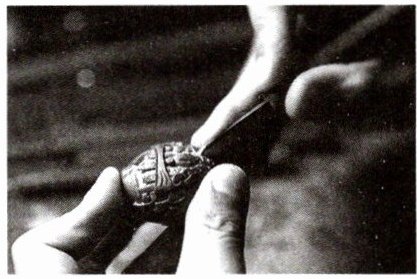
Weifang nut carving goes back to the Qing dynasty. During that time, an old imperial (皇家的) craftsperson Wang Dayan spread the skill to the local people in Shandong Province. Craftspeople at that time often used peach (桃) pits to show off their artistic skills. Because of great carving skills needed, the traditional culture and its colourful artistic theme (主题), Weifang nut carving was listed as a national intangible cultural heritage (国家非物质文化遗产) in 2008.
Tan Wanhai is an inheritor of Weifang nut carving. Tan says he has studied the art of nut carving for 25 years and has made many nut carvings.
However, the craftsperson said that bringing this kind of artwork to life is not easy. "Not like some pits which have a flat surface (平的表面), each peach pit has its own special texture (质地)," Tan says, adding that craftspeople have to study each peach pit to carefully plan out their artwork.
Thanks to their creative design and fresh ideas, Weifang nut carving artworks have been more and more popular in China. More people are learning the art and have even become inheritors to pass down the skill to young people.
"Now, the number of inheritors is about 1,000. But I believe there will be more in the future. More craftspeople now give up (放弃) the tradition of passing down the skill only through the family and open it up to anyone who is interested in learning the skill," says Tan.
(
① great carving skills
② its colourful artistic theme
③ the traditional culture
④ the popularity around the world
A. ①②③
B. ②③④
C. ①②④
D. ①②③④
(
A. Problems craftspeople have.
B. The cultural value of nut carving.
C. The inheritor and his carving artworks.
D. The information craftspeople have to know.
(
A. Weifang nut carving dates from the Ming dynasty.
B. Tan thinks there will be more inheritors of nut carving.
C. Each peach pit has a flat surface and it's easy to carve on it.
D. More craftspeople now give up the tradition of passing down the skill.
(
A. Tan's Works of Nut Carving
B. Amazing Artworks in China
C. Carving Artworks out of Nuts
D. The History of Nut Carving
Exercise 5 of Unit 4 of 7B Pronunciation & Integration (Ⅰ)
Many people may throw away the pits (果核) inside fruits after eating them, but inheritors of nut carving (核雕继承人) can turn them into artworks.
Weifang nut carving goes back to the Qing dynasty. During that time, an old imperial (皇家的) craftsperson Wang Dayan spread the skill to the local people in Shandong Province. Craftspeople at that time often used peach (桃) pits to show off their artistic skills. Because of great carving skills needed, the traditional culture and its colourful artistic theme (主题), Weifang nut carving was listed as a national intangible cultural heritage (国家非物质文化遗产) in 2008.
Tan Wanhai is an inheritor of Weifang nut carving. Tan says he has studied the art of nut carving for 25 years and has made many nut carvings.
However, the craftsperson said that bringing this kind of artwork to life is not easy. "Not like some pits which have a flat surface (平的表面), each peach pit has its own special texture (质地)," Tan says, adding that craftspeople have to study each peach pit to carefully plan out their artwork.
Thanks to their creative design and fresh ideas, Weifang nut carving artworks have been more and more popular in China. More people are learning the art and have even become inheritors to pass down the skill to young people.
"Now, the number of inheritors is about 1,000. But I believe there will be more in the future. More craftspeople now give up (放弃) the tradition of passing down the skill only through the family and open it up to anyone who is interested in learning the skill," says Tan.
(
A
) 1. Weifang nut carving was listed as a national intangible cultural heritage because of .① great carving skills
② its colourful artistic theme
③ the traditional culture
④ the popularity around the world
A. ①②③
B. ②③④
C. ①②④
D. ①②③④
(
A
) 2. What does the fourth paragraph mainly tell us?A. Problems craftspeople have.
B. The cultural value of nut carving.
C. The inheritor and his carving artworks.
D. The information craftspeople have to know.
(
B
) 3. What can we learn from the passage?A. Weifang nut carving dates from the Ming dynasty.
B. Tan thinks there will be more inheritors of nut carving.
C. Each peach pit has a flat surface and it's easy to carve on it.
D. More craftspeople now give up the tradition of passing down the skill.
(
C
) 4. What could be the best title for the passage?A. Tan's Works of Nut Carving
B. Amazing Artworks in China
C. Carving Artworks out of Nuts
D. The History of Nut Carving
Exercise 5 of Unit 4 of 7B Pronunciation & Integration (Ⅰ)
答案:1.A 2.A 3.B 4.C
解析:
【分析】
这是一篇介绍潍坊核雕这项国家级非物质文化遗产的说明文,解题时可以按照以下思路推进:1. 先快速通读全文,明确文章核心是介绍核雕技艺的发展历史、创作特点与传承现状;2. 细节类题目直接返回原文对应段落定位信息,逐一比对选项排除不符合原文的表述;3. 段落大意题需要重点关注对应段落的总起句,提炼段落核心内容;4. 主旨类选标题的题目要选择能覆盖全文核心、不会过于片面的选项,排除只覆盖局部内容的干扰项。
【解析】
1. 定位原文第二段末尾:"Because of great carving skills needed, the traditional culture and its colourful artistic theme, Weifang nut carving was listed as a national intangible cultural heritage in 2008.",可知列入非遗的原因对应①②③,原文并未提及④“全球流行”的相关表述,因此答案选A。
2. 第四段总起句点明"the craftsperson said that bringing this kind of artwork to life is not easy",后续内容介绍每个桃核都有独特质地,手艺人需要提前逐个研究规划作品,整段都在讲述核雕手艺人创作时面临的难点与问题,对应选项A。其余选项B的文化价值本段未提及,C是第三段的内容,D表述不符合段落核心,因此答案选A。
3. 逐一比对选项:A选项原文提到潍坊核雕追溯到清朝而非明朝,表述错误;B选项最后一段Tan明确提到"But I believe there will be more in the future",说明他认为未来会有更多核雕传承人,表述正确;C选项原文说明桃核大多没有平整表面、质地特殊,雕刻难度大,表述错误;D选项原文提到手艺人放弃的是“仅在家族内部传承”的旧传统,而非放弃传承技艺,表述错误。因此答案选B。
4. 全文围绕“将普通果核雕刻为精美艺术品的潍坊核雕”展开:A选项仅聚焦谭万海的作品,过于片面;B选项范围太宽泛,没有指向核雕这一核心对象;D选项仅覆盖核雕的历史部分,不能涵盖创作特点、传承现状等内容;C选项“从果核雕刻出艺术品”完美贴合全文核心,是最佳标题,因此答案选C。
【答案】
1.A 2.A 3.B 4.C
【知识点】
细节信息定位,段落大意归纳,主旨标题选择
【点评】
本题属于七年级下册的文化类阅读题,题材贴合中国非物质文化遗产的科普内容,既考察学生的基础阅读能力,也能帮助学生了解传统民间技艺。题目设置以细节考察为主,干扰项大多是对原文内容的偷换概念,学生只要耐心回原文比对信息,就能避开陷阱选出正确答案。
【难度系数】
0.7
这是一篇介绍潍坊核雕这项国家级非物质文化遗产的说明文,解题时可以按照以下思路推进:1. 先快速通读全文,明确文章核心是介绍核雕技艺的发展历史、创作特点与传承现状;2. 细节类题目直接返回原文对应段落定位信息,逐一比对选项排除不符合原文的表述;3. 段落大意题需要重点关注对应段落的总起句,提炼段落核心内容;4. 主旨类选标题的题目要选择能覆盖全文核心、不会过于片面的选项,排除只覆盖局部内容的干扰项。
【解析】
1. 定位原文第二段末尾:"Because of great carving skills needed, the traditional culture and its colourful artistic theme, Weifang nut carving was listed as a national intangible cultural heritage in 2008.",可知列入非遗的原因对应①②③,原文并未提及④“全球流行”的相关表述,因此答案选A。
2. 第四段总起句点明"the craftsperson said that bringing this kind of artwork to life is not easy",后续内容介绍每个桃核都有独特质地,手艺人需要提前逐个研究规划作品,整段都在讲述核雕手艺人创作时面临的难点与问题,对应选项A。其余选项B的文化价值本段未提及,C是第三段的内容,D表述不符合段落核心,因此答案选A。
3. 逐一比对选项:A选项原文提到潍坊核雕追溯到清朝而非明朝,表述错误;B选项最后一段Tan明确提到"But I believe there will be more in the future",说明他认为未来会有更多核雕传承人,表述正确;C选项原文说明桃核大多没有平整表面、质地特殊,雕刻难度大,表述错误;D选项原文提到手艺人放弃的是“仅在家族内部传承”的旧传统,而非放弃传承技艺,表述错误。因此答案选B。
4. 全文围绕“将普通果核雕刻为精美艺术品的潍坊核雕”展开:A选项仅聚焦谭万海的作品,过于片面;B选项范围太宽泛,没有指向核雕这一核心对象;D选项仅覆盖核雕的历史部分,不能涵盖创作特点、传承现状等内容;C选项“从果核雕刻出艺术品”完美贴合全文核心,是最佳标题,因此答案选C。
【答案】
1.A 2.A 3.B 4.C
【知识点】
细节信息定位,段落大意归纳,主旨标题选择
【点评】
本题属于七年级下册的文化类阅读题,题材贴合中国非物质文化遗产的科普内容,既考察学生的基础阅读能力,也能帮助学生了解传统民间技艺。题目设置以细节考察为主,干扰项大多是对原文内容的偷换概念,学生只要耐心回原文比对信息,就能避开陷阱选出正确答案。
【难度系数】
0.7