七、阅读短文,选择正确的答案。
If you want to have a good reading habit, here are some ways to help you.
Plan your time. You should give yourself about thirty minutes to read every day.
Start with a book you like. Look for interesting things in a book, like interesting characters, pictures or plots (情节). They can help you get into the habit of reading easily.
Find a quiet place. Find a quiet place and you can sit on a nice chair. When you read a book, no one can disturb you. There should be no TVs, computers or music.
Share your favourite books. After reading, you can share your favourite books with your family and friends.
Love books! They are your good friends.
(
A. 3 B. 4 C. 5
(
A. 30 B. 15 C. 20
(
A. 帮助 B. 服务 C. 打扰
(
A. It has interesting things. B. We can get into the habit of reading easily.
C. We can share with others.
(
A. We should plan our time well. B. We should read with some music.
C. Books are our good friends.
If you want to have a good reading habit, here are some ways to help you.
Plan your time. You should give yourself about thirty minutes to read every day.
Start with a book you like. Look for interesting things in a book, like interesting characters, pictures or plots (情节). They can help you get into the habit of reading easily.
Find a quiet place. Find a quiet place and you can sit on a nice chair. When you read a book, no one can disturb you. There should be no TVs, computers or music.
Share your favourite books. After reading, you can share your favourite books with your family and friends.
Love books! They are your good friends.
(
B
) 1. In the text, there are ways to help us have a good reading habit.A. 3 B. 4 C. 5
(
A
) 2. We should read for about minutes every day.A. 30 B. 15 C. 20
(
C
) 3. What does the underlined word “disturb” mean?A. 帮助 B. 服务 C. 打扰
(
B
) 4. Why should we start with a book we like according to the text?A. It has interesting things. B. We can get into the habit of reading easily.
C. We can share with others.
(
B
) 5. Which of the following is NOT true?A. We should plan our time well. B. We should read with some music.
C. Books are our good friends.
答案:1. B 2. A 3. C 4. B 5. B
解析:
【分析】
本题为英语阅读理解题,需先通读短文,定位每个问题对应的原文信息,逐一分析选项:
1. 第1题需统计培养阅读习惯的方法数量,逐句梳理短文给出的方法;
2. 第2题查找每日阅读时长的原文表述;
3. 第3题结合上下文语境猜测划线词词义;
4. 第4题定位“从喜欢的书开始”的原因原文;
5. 第5题判断不符合短文内容的选项,需逐一核对选项与原文是否一致。
【解析】
1. 短文共给出4种培养阅读习惯的方法:Plan your time、Start with a book you like、Find a quiet place、Share your favourite books,故选B;
2. 根据短文“Plan your time. You should give yourself about thirty minutes to read every day.”可知每日阅读约30分钟,故选A;
3. 划线词所在句意为“当你读书时,没人能______你”,结合前文“找安静的地方”,可知disturb意为“打扰”,故选C;
4. 根据短文“Start with a book you like. ... They can help you get into the habit of reading easily.”可知原因是能轻松养成阅读习惯,故选B;
5. 短文“Find a quiet place. ... There should be no TVs, computers or music.”说明不能有音乐,B选项“应该伴着音乐阅读”与原文不符,故选B。
【答案】
1. B 2. A 3. C 4. B 5. B
【知识点】
英语阅读理解、细节理解、词义猜测
【点评】
本题为基础英语阅读理解题,主要考查学生对短文细节的查找能力和词义猜测能力,题目难度较低,适合小学阶段学生练习。
【难度系数】
0.8
本题为英语阅读理解题,需先通读短文,定位每个问题对应的原文信息,逐一分析选项:
1. 第1题需统计培养阅读习惯的方法数量,逐句梳理短文给出的方法;
2. 第2题查找每日阅读时长的原文表述;
3. 第3题结合上下文语境猜测划线词词义;
4. 第4题定位“从喜欢的书开始”的原因原文;
5. 第5题判断不符合短文内容的选项,需逐一核对选项与原文是否一致。
【解析】
1. 短文共给出4种培养阅读习惯的方法:Plan your time、Start with a book you like、Find a quiet place、Share your favourite books,故选B;
2. 根据短文“Plan your time. You should give yourself about thirty minutes to read every day.”可知每日阅读约30分钟,故选A;
3. 划线词所在句意为“当你读书时,没人能______你”,结合前文“找安静的地方”,可知disturb意为“打扰”,故选C;
4. 根据短文“Start with a book you like. ... They can help you get into the habit of reading easily.”可知原因是能轻松养成阅读习惯,故选B;
5. 短文“Find a quiet place. ... There should be no TVs, computers or music.”说明不能有音乐,B选项“应该伴着音乐阅读”与原文不符,故选B。
【答案】
1. B 2. A 3. C 4. B 5. B
【知识点】
英语阅读理解、细节理解、词义猜测
【点评】
本题为基础英语阅读理解题,主要考查学生对短文细节的查找能力和词义猜测能力,题目难度较低,适合小学阶段学生练习。
【难度系数】
0.8
八、阅读图文,完成任务。
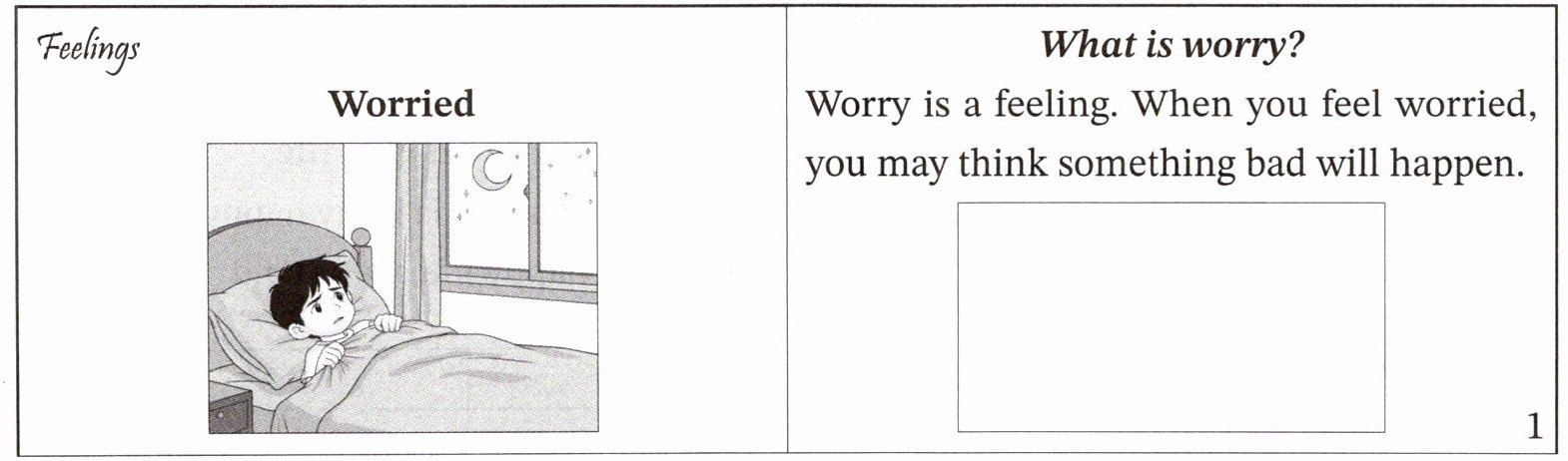
续表
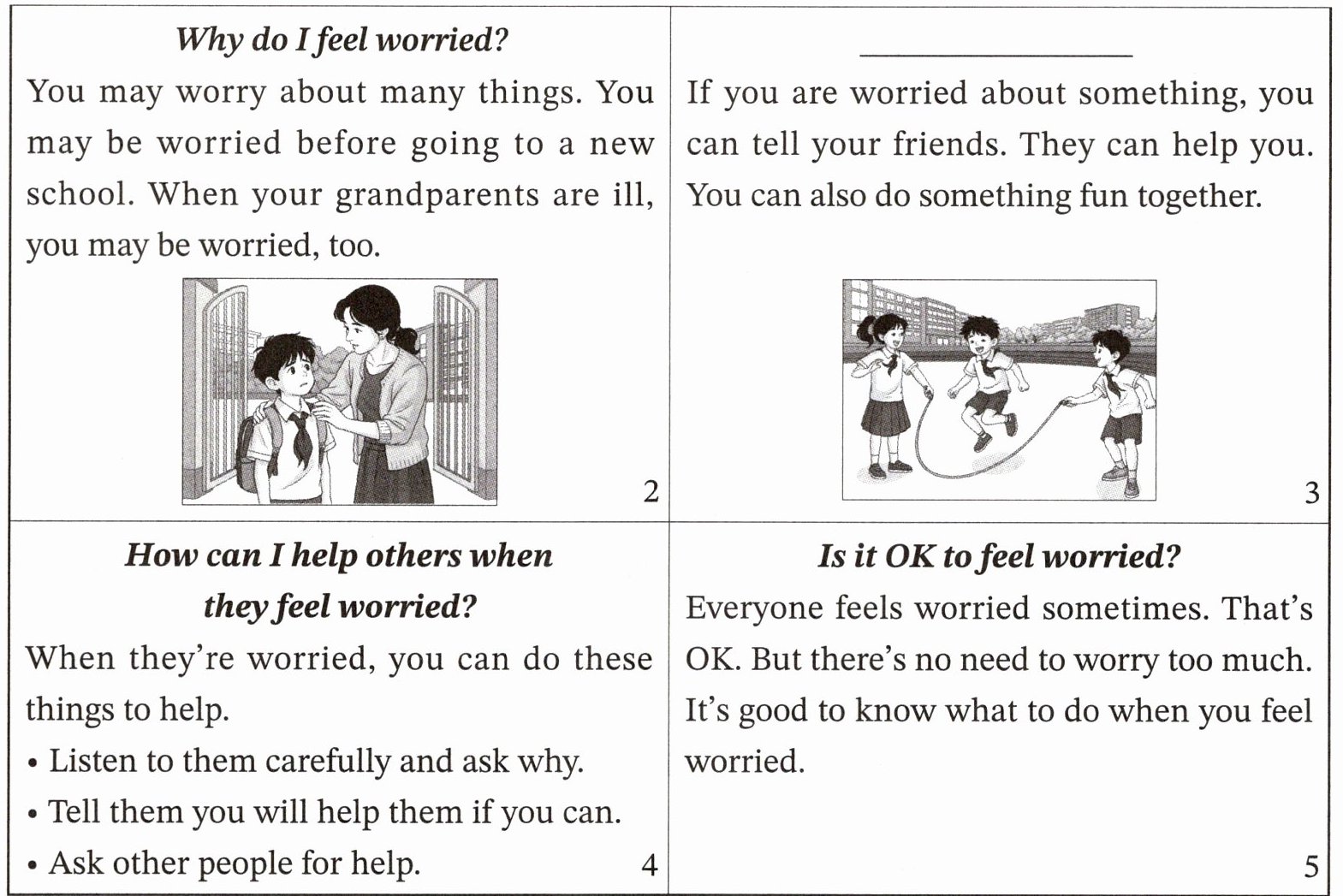
A. 根据图文内容,选择正确的答案。
(
A. B. C.
C.
(
A. How often do I feel worried? B. Who makes me feel worried? C. What can I do if I feel worried?
B. 根据图文内容,结合生活实际,回答问题。
1. Do you sometimes feel worried? Why?
2. When you feel worried, what do you do to feel good?
续表
A. 根据图文内容,选择正确的答案。
(
A
) 1. Choose the best picture for Page 1.A. B.
C.(
C
) 2. Choose the page title for Page 3.A. How often do I feel worried? B. Who makes me feel worried? C. What can I do if I feel worried?
B. 根据图文内容,结合生活实际,回答问题。
1. Do you sometimes feel worried? Why?
Yes. I feel worried because I’m not good at Maths.
2. When you feel worried, what do you do to feel good?
I often ask my parents and friends for help.
答案:A. 1. A 2. C
B.(答案仅供参考)
1. Yes. I feel worried because I’m not good at Maths.
2. I often ask my parents and friends for help.
B.(答案仅供参考)
1. Yes. I feel worried because I’m not good at Maths.
2. I often ask my parents and friends for help.
解析:
【分析】
A部分第1题需结合图文内容,选择对应Page1的最佳图片,根据图文逻辑匹配选项;第2题需分析三个选项的核心,结合Page3的内容定位标题。B部分为情景问答题,需结合自身实际用英语作答,答案合理即可。
【解析】
A. 1. 结合图文信息,Page1对应的最佳图片为选项A,故答案选A;2. 分析选项:A询问担心的频率,B询问导致担心的对象,C询问担心时的应对方法,Page3围绕解决担心的方法展开,故选C。
B. 1. 结合自身实际,说明是否有担心的情况及原因,示例答案符合要求;2. 说明缓解担心的方法,示例答案贴合生活实际。
【答案】
A. 1. A 2. C;B.(答案仅供参考)1. Yes. I feel worried because I’m not good at Maths. 2. I often ask my parents and friends for help.
【知识点】
英语阅读理解、信息匹配、情景问答
【点评】
本题考查学生的英语阅读理解能力及结合实际运用英语的能力,选择题需结合图文逻辑分析,主观题需贴合生活作答,难度适中。
【难度系数】
0.6
A部分第1题需结合图文内容,选择对应Page1的最佳图片,根据图文逻辑匹配选项;第2题需分析三个选项的核心,结合Page3的内容定位标题。B部分为情景问答题,需结合自身实际用英语作答,答案合理即可。
【解析】
A. 1. 结合图文信息,Page1对应的最佳图片为选项A,故答案选A;2. 分析选项:A询问担心的频率,B询问导致担心的对象,C询问担心时的应对方法,Page3围绕解决担心的方法展开,故选C。
B. 1. 结合自身实际,说明是否有担心的情况及原因,示例答案符合要求;2. 说明缓解担心的方法,示例答案贴合生活实际。
【答案】
A. 1. A 2. C;B.(答案仅供参考)1. Yes. I feel worried because I’m not good at Maths. 2. I often ask my parents and friends for help.
【知识点】
英语阅读理解、信息匹配、情景问答
【点评】
本题考查学生的英语阅读理解能力及结合实际运用英语的能力,选择题需结合图文逻辑分析,主观题需贴合生活作答,难度适中。
【难度系数】
0.6